 By Ethan Brooks
Updated November 2026
Getting the dudupet automatic pet feeder portion size right comes down to three things: knowing how much your pet should eat each day, dividing that total across the number of meals the feeder will dispense, and then checking the result against your pet’s body condition over the following weeks. This guide walks you through each step so you can program accurate meals and adjust them without guessing.
Why Portion Size Matters More With an Automatic Feeder
When you fill a bowl by hand, you can see how much is left and adjust on the spot. An automatic feeder removes that check. It dispenses the same measured amount on schedule whether your pet is hungry, sick, or already full from a treat. Small errors repeat every day, so a portion that is 10 percent too large can add up to noticeable weight gain over a few months. Accurate setup protects your pet’s weight and digestion, and it also keeps food fresh because the hopper is not overfilled.
Shopping for one? See our guide: Pit Pet Automatic Feeder Portion Size: 10 Best Picks Compared (2026).
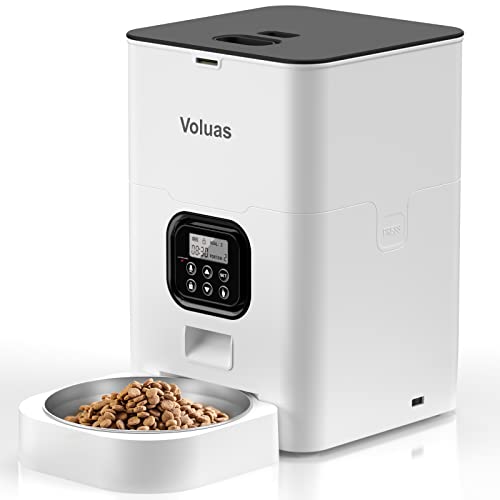
Dudupet units are designed for dry kibble in a hopper with timed compartments, so the portion you set is the amount released per feeding event. Your job is to translate your pet’s daily food needs into those event sizes.
Step 1: Find Your Pet’s Daily Calorie Target
Start with the number printed on your pet food bag. Most dry food labels list calories per cup or per kilogram (kcal/kg or kcal/cup). The feeding guideline on the bag is a starting point, but it is written for a general range of animals, so it often overestimates for indoor, neutered, or less active pets.
For a more personalized starting estimate, many veterinarians use a resting energy requirement formula:
- Calculate RER: 70 × (body weight in kg)0.75
- Multiply RER by a life-stage or activity factor. A typical adult neutered indoor cat or dog often falls near 1.2 to 1.6 times RER, while very active dogs or growing puppies can be higher.
- Divide the result by the food’s kcal per kilogram to get grams of food per day.
Treat this number as an estimate. Your veterinarian can give you a more precise target, especially for pets with medical conditions, and should be consulted before making major changes to diet or calorie intake.
Step 2: Convert Daily Food Into Grams Per Meal
Once you have a daily gram target, decide how many meals the feeder will dispense. Two or three smaller meals are easier on digestion than one large one, and many cats do better with several small portions. Divide the daily total by the number of feedings.
Example: a 4 kg adult cat with a daily target of 180 grams, split into four meals, receives 45 grams per feeding. A 20 kg adult dog with a daily target of 600 grams, split into two meals, receives 300 grams per feeding.
Measuring the Dispense Accurately
Do not rely on the scoop line on the food bag or a cup from your kitchen. Weigh the kibble on a kitchen scale. Fill the dudupet compartment or run a test dispense, weigh what comes out, and adjust the setting until the result matches your target within a few grams. Repeat the test with the same food each time, because kibble density varies by brand and formula. If you switch brands, measure again.
Step 3: Set Up the Schedule and Compartments
With grams per meal defined, program the feeder’s clock and meal times. Use these guidelines:
- Set the current time first. Feeding times depend on the internal clock, and a time-zone or daylight saving error will shift every meal.
- Space meals evenly across waking hours. For cats on four meals, a pattern such as 6 a.m., noon, 6 p.m., and 10 p.m. works for many households.
- Assign each meal to a compartment or slot, and confirm the portion for each.
- Run a manual dispense to make sure the motor and hopper are working before you leave the pet alone.
Step 4: Check the Result Over Several Weeks
Portion numbers are not final until you see how your pet responds. Weigh your pet at the same time each week, ideally on the same scale and before the morning meal. Track changes in body condition too: you should be able to feel the ribs with light pressure and see a waist when viewed from above.
| Observation | Likely meaning | Suggested adjustment |
|---|---|---|
| Weight rising steadily, ribs hard to feel | Portion too large | Reduce each meal by about 5 to 10 percent and recheck in two weeks |
| Weight falling, ribs and spine prominent | Portion too small or health issue | Increase slightly and consult your veterinarian |
| Food left in bowl after each meal | Portion larger than needed | Lower the portion, then monitor body condition |
| Pet hungry or vocal between meals | Portion too small or meals too spaced | Check total daily grams before adding extra food |
Common Mistakes
- Using the bag’s scoop guideline without checking calories. Scoops vary, and the bag rarely accounts for your pet’s activity or neutering status.
- Forgetting treats and table food. Count these toward the daily total, or the feeder portion will quietly overfeed.
- Changing food brand without re-measuring. Two kibbles at the same weight can have different calorie densities.
- Setting the clock wrong after a power outage. Check the time after any outage or time change.
- Filling the hopper too full. Moisture and humidity can affect dispensing and freshness, so fill only what the pet will eat in a day or two.
Tips for Reliable Portions
- Weigh your pet monthly, not just occasionally, and write the numbers down.
- Keep one feeder-setting log with the date, food brand, grams per meal, and any changes.
- Test the feeder with the exact kibble you use before relying on it.
- If your pet has a medical condition or is on a prescription diet, ask your veterinarian for the target before programming anything.
For a broader look at timers, motors, and how these feeders dispense food, see How Does an Automatic Pet Feeder Work? Timers, Motors and Portions. If you are comparing models, Dudupet Automatic Pet Feeder: 5 Best Picks Compared for Daily Meals (2026) covers several options, and Dudupet Automatic Pet Feeder Manual: A Practical Guide (2026) explains the menu steps in more detail. Owners who want a similar walkthrough for another brand can compare with Wopet Automatic Pet Feeder Meal Size: How to Set the Right Portions.
Recommended gear
A digital kitchen scale that reads in single grams is the most useful tool for checking dudupet portions, because it lets you confirm each dispense matches your calculated target. Look for one with a tare function so you can weigh the food alone.
A sturdy, tall-sided storage container keeps dry kibble fresh between refills and makes it easier to pour a known volume into the hopper.
A pet-specific body condition chart, often provided by veterinary clinics, helps you judge weight changes without relying on the scale alone. View on Amazon
A stainless steel or ceramic feeding bowl for wet food or treats keeps those extras separate from the automatic portions and makes it easier to track total intake. View on Amazon
FAQ
How do I know if my dudupet portion is too big?
Check body condition each week. If you cannot feel the ribs easily, the waist has disappeared, or your pet gains weight over several weeks, the portion is probably too large. Reduce it gradually and recheck.
Should I measure by scoop or by weight?
Weight is more accurate. Scoops vary in size and how tightly kibble packs, while a gram scale gives a repeatable number you can track over time.
How often should I reweigh my pet?
Monthly checks work well for most adult pets. Weigh more often during the first few weeks after setting a new portion, and weekly if your veterinarian has asked you to monitor closely.
Can I split the daily food into more than two meals?
Yes. Many cats do well on three to four small meals, while many dogs do well on two. Choose the number of meals that suits your pet’s digestion and your schedule, then divide the daily total evenly.
What if my pet is still hungry after each automatic meal?
First confirm the daily total in grams is correct and that no food is being lost to spillage. If the calculated amount is accurate and your pet is still hungry, discuss the feeding plan with your veterinarian rather than simply adding more food.
Does the feeder need to be set again if I change food?
Yes. Calorie density differs between brands and formulas, so weigh a fresh test dispense and recalculate the grams per meal for the new food.
Is an automatic feeder safe for a pet on a special diet?
It can be, but only after your veterinarian confirms the exact portion and meal schedule. Pets on prescription diets, with diabetes, or with other medical needs should not have their intake changed without professional guidance.
Conclusion
Accurate dudupet automatic pet feeder portion size comes from a clear calorie target, a weighed test dispense, evenly spaced meals, and regular checks on your pet’s body condition. Start with the calculation, verify with a scale, and adjust in small steps. With a simple log and monthly weigh-ins, the feeder can deliver consistent meals you can trust.
Ready to choose one?
About Ethan Brooks
Ethan Brooks is part of our editorial team and reviews and edits our everyday pet gear guides, checking product details against manufacturer specifications and owner feedback.