 By Ethan Brooks
Updated November 2026
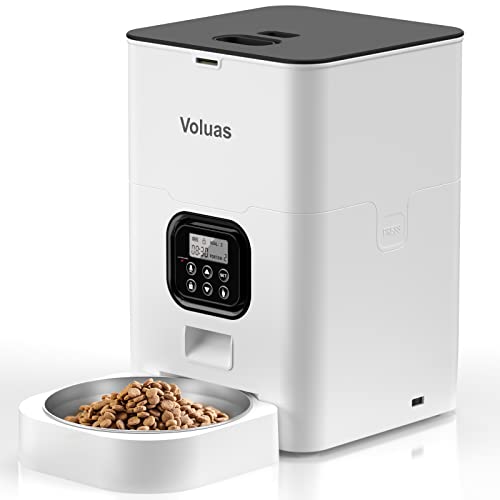
A pet prime automatic cat feeder can keep your cat on a steady feeding schedule even when you are at work, traveling or sleeping in. This guide walks you through choosing the right model, setting it up, programming portions and meal times, and avoiding the mistakes that cause most feeder problems. By the end, you will have a working routine you can trust.
What to Look for Before You Buy a Pet Prime Automatic Cat Feeder
Not every automatic feeder suits every household. Before you commit to a model, check how it will handle your cat’s food type, your schedule and your home layout. Start with these factors.
Shopping for one? See our guide: 4 Best Voluas Automatic Pet Feeder Models for Cats and Dogs (2026).
Food type: dry kibble versus wet food
Most automatic cat feeders are built for dry kibble. Wet food spoils quickly at room temperature and can clog a dispenser, so if your cat eats wet food, look for a model with a refrigerated or enclosed compartment, or plan to use it only for dry meals. Check the manufacturer’s listed food types before purchase.
Meal frequency and portion control
Ask how many meals per day you need. Some feeders offer only one or two programmed meals, while others allow four or more. Portion size is usually set in fixed increments, and manufacturers typically specify a range of grams or cups per serving. Measure your cat’s usual portion so you can match it to the feeder’s smallest and largest settings.
Bowl and hopper capacity
Capacity determines how long the feeder runs without a refill. For a single adult cat eating dry food, a larger hopper means fewer refills during a weekend away. Check whether the hopper is removable and dishwasher-safe, since cleaning is where many owners fall behind.
Power source and backup
Look for a battery backup or a way to keep the clock and programming intact during a power outage. Without backup, a short outage can reset your schedule, leading to missed or doubled meals.
Anti-jam and food-spill features
Kibble size matters. Some feeders jam with irregular or oversized pieces. Check the manufacturer’s note on compatible kibble shapes, and consider models with a rotating or auger-style dispenser if you feed mixed-size kibble.
Setting Up Your Pet Prime Automatic Cat Feeder
Setup is straightforward, but the order of steps matters. Work through the process below before filling the hopper with food for the first time.
Step 1: Unbox and inspect
Check that the feeder, bowl, lid, power adapter or battery compartment and any mounting hardware are all present. Look for damaged parts or loose seals before you plug anything in.
Step 2: Choose a stable, dry location
Place the feeder on a flat, hard surface away from direct sunlight, heating vents and water sources. Leave enough clearance around the unit so your cat can reach the bowl comfortably and so the lid opens fully. Keep it away from the litter box to reduce contamination.
Step 3: Set the clock and date
Set the current time before programming meals. Many feeders store schedules by time of day, so a wrong clock will shift every meal. Confirm AM or PM and the 12-hour or 24-hour format.
Step 4: Program meal times
Set meal times that match your cat’s natural rhythm. Many cats are most active around dawn and dusk, so a morning and an evening meal are a common starting point. Avoid scheduling a meal right after you leave for work if you want to observe how your cat responds the first few days.
Step 5: Set portion sizes
Enter portion sizes in the units the feeder uses. Start with your cat’s daily total divided by the number of meals. Then adjust gradually over several days based on your cat’s weight and body condition.
Step 6: Run a test cycle
Before leaving the feeder unattended, run a manual test dispense. Confirm the correct amount falls into the bowl, the lid seals properly and no kibble lodges in the mechanism.
Daily Routine: Filling, Monitoring and Adjusting
A feeder only works well if you keep it stocked, clean and checked. Build these habits into your week.
Refill the hopper on a fixed schedule
Estimate how many days one fill lasts by dividing the hopper’s capacity by your daily portion total. Refill a day before that, so the feeder never runs dry during a meal.
Keep food fresh
Dry food loses flavor and nutrients once exposed to air and humidity. Store bulk kibble in a sealed container and avoid pouring a full week’s supply into the hopper if you live in a humid climate.
Watch your cat’s response
Check the bowl after each scheduled meal for the first week. An untouched bowl can signal a jam, a dispensing error or a cat that does not like the feeder’s noise or lid. Note any changes in appetite, weight or litter box habits, and bring concerns to your veterinarian.
Adjust portions gradually
If your cat gains or loses weight, change portions in small steps rather than making a large jump. Your veterinarian can help you set a target weight and daily calorie range.
Common Mistakes to Avoid
- Skipping the clock check. A wrong time means every scheduled meal lands at the wrong hour.
- Using the wrong kibble size. Oversized or irregular pieces can jam the dispenser.
- Loading wet food into a dry-food hopper. Moisture causes clumping and spoilage.
- Letting the bowl go uncleaned. Residue builds up and can attract pests or cause odor.
- Ignoring low-battery warnings. A dead battery can cause missed meals and reset programming.
- Setting a single large meal. Cats generally do better with smaller, spaced meals.
- Leaving the feeder in direct sunlight. Heat can degrade kibble and affect electronics.
Tips for Getting the Best Results
- Introduce the feeder gradually by placing a few hand-fed pieces in the bowl before the first automated meal.
- Clean the bowl and hopper every one to two weeks, following the manufacturer’s instructions.
- Keep a simple log of meal times, portions and any missed dispenses for the first month.
- Test the feeder after any power outage or battery change.
- Consider a second feeding point in a multi-level home so your cat does not have to compete for access.
Recommended gear
These items support a smoother feeding setup and make daily maintenance easier.
- Airtight food storage container. Keeps bulk kibble dry and fresh between refills, and makes the hopper quicker to top up. View on Amazon
- Digital kitchen scale. Lets you weigh kibble accurately so portion settings match your cat’s actual daily target. View on Amazon
- Replacement feeder bowl or mat. A spare bowl lets you swap and clean without leaving your cat without a meal. View on Amazon
For more model comparisons and setup walkthroughs, see Petsafe Healthy Pet Simply Feed Automatic Cat Feeder: A Practical Guide (2026), Pet Feeder Automatic Cat: 6 Best Picks for Cats in 2026 and Automatic Pet Feeder for Two Cats: 7 Best Picks Compared (2026). If you share food between several cats, Automatic Pet Feeder for Multiple Cats: 5 Best Picks Compared (2026) covers the trade-offs.
FAQ
Can a pet prime automatic cat feeder handle wet food?
Most standard models are designed for dry kibble. Wet food can spoil at room temperature and may clog the mechanism. Only use wet food if the manufacturer specifies it is compatible, and remove uneaten portions promptly.
What happens if the power goes out?
Feeders with battery backup usually keep the clock and schedule running. Without backup, you may need to reset the time and check that meals dispensed correctly once power returns.
How often should I clean the feeder?
Wash the bowl and any removable hopper parts every one to two weeks, or sooner if you notice residue or odor. Follow the manufacturer’s guidance on which parts are dishwasher-safe.
How many meals per day should I program?
Many owners use two to four meals per day for adult cats, but the right number depends on your cat’s health, age and your veterinarian’s advice. Ask your vet before changing a feeding plan significantly.
Why did my cat not eat from the feeder?
Possible reasons include a jam, a wrong portion setting, noise that startles your cat, or simply a cat that needs time to adjust. Check the mechanism, run a test dispense and watch a few meals. If your cat stops eating altogether, contact your veterinarian promptly.
Can I use the feeder for a kitten?
Kittens need more frequent meals and a food formulated for growth. Automatic feeders can help, but portions and meal count should be set with your veterinarian’s guidance.
Is an automatic feeder safe to leave on all day?
Most owners run feeders while away from home, but a feeder should never replace monitoring your cat’s health. Check on your cat daily and consult a veterinarian for any changes in eating, drinking or litter box habits.
How do I know the portion size is right?
Track your cat’s body condition and weight over several weeks. Your veterinarian can assess whether your cat is at a healthy weight and recommend adjustments.
Conclusion
A pet prime automatic cat feeder works best when you match it to your cat’s food type, schedule and home layout. Set the clock carefully, program measured portions and keep the hopper and bowl clean. Check your cat’s eating habits during the first weeks, and consult your veterinarian before making major changes to your cat’s diet.
Ready to choose one?
About Ethan Brooks
Ethan Brooks is part of our editorial team and reviews and edits our everyday pet gear guides, checking product details against manufacturer specifications and owner feedback.