
 By Claire Whitaker
Updated November 2026
Choosing the best harness for a pulling dog comes down to three things: how well it fits, where the leash clips, and whether it gives you control without rubbing or choking. This guide compares six no-pull harnesses based on product listings, brand reputation, and common owner feedback about fit and walking behavior. Each pick is matched to a specific need so you can find the right one faster.
Our top picks at a glance
- 1
 TOP CHOICEBest overallPetSafe Easy Walk Harness, No Pull Dog HarnessView on Amazon
- 2
 TOP CHOICEBest for large dogsrabbitgoo Dog Harness, No Pull for Large Dogs with 2 Leash ClipsView on Amazon
- 3
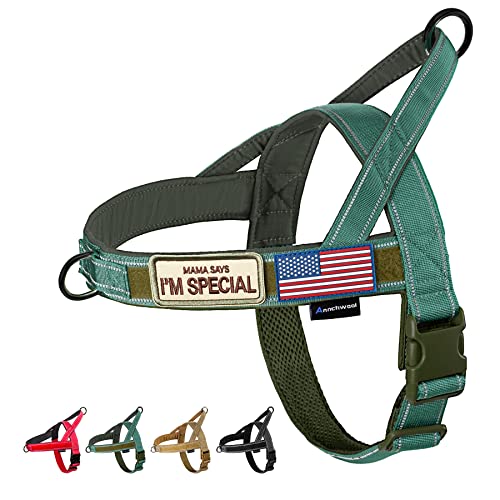 TOP CHOICEBest for training walksAnnchwool No Pull Dog Harness with Soft Padded Handle and Front ClipView on Amazon
- 4
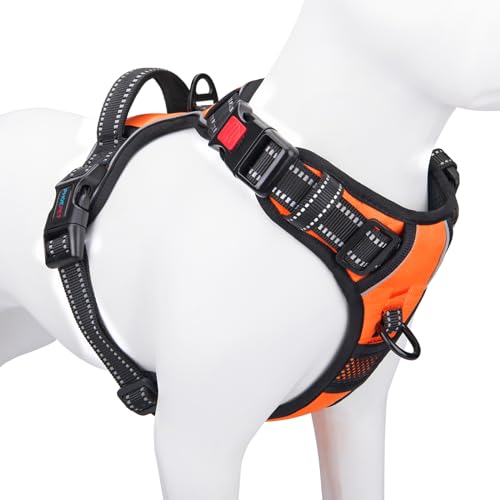 Best for medium dogsPHOEPET No Pull Dog Harness Medium Reflective Front Clip VestView on Amazon
- 5
 Best for heavy-duty useSlowTon No Pull Dog Harness and Leash Set Heavy DutyView on Amazon
- 6
 Best for durable everyday wearCarhartt Nylon Duck No Pull Dog HarnessView on Amazon
Our Top Picks
| Product | Best for | Key feature |
|---|---|---|
| PetSafe Easy Walk Harness | Best overall | Martingale loop, chest clip |
| rabbitgoo Dog Harness, No Pull | Large dogs | Two leash clips, top handle |
| Annchwool No Pull Dog Harness | Training walks | Reflective strip, quick fit |
| PHOEPET No Pull Dog Harness | Medium dogs | Adjustable metal rings |
| SlowTon No Pull Dog Harness | Heavy-duty use | Neck and chest adjustment |
| Carhartt Nylon Duck No Pull Harness | Durable everyday wear | Quick control handle |
PetSafe Easy Walk Harness, No Pull Dog Harness
PetSafe Easy Walk Harness, No Pull Dog Harness, Raspberry, Medium/Large | Patented Martingale Loop Gives Gradual Shoulder Pressure to Stop Pulling, Front-Chest Leash Clip Prevents Gagging
Best for: Best overall
A strong all-round option for owners who want a front-clip design that turns the dog gently when it lunges. Owners often report that the front-chest clip reduces gagging compared with a collar.
Pros
- Martingale loop applies gradual shoulder pressure
- Front-chest clip keeps the leash away from the throat
Cons
- Sizing can run snug on deep-chested breeds
rabbitgoo Dog Harness, No Pull for Large Dogs with 2 Leash Clips
rabbitgoo Dog Harness, No Pull for Large Dogs with 2 Leash Clips, Pet Vest | No Choke with Handle, Adjustable Soft Padded, Reflective, Easy Control for Walking, Black, Large
Best for: Best for large dogs
Suited to owners of strong, large dogs who need a secure handle and two attachment points. The top handle gives you a quick grip for lifting or steadying a dog at curbs.
Pros
- Two leash clips for front and back attachment
- Reflective trim for low-light walks
Cons
- Bulkier than lightweight options
Annchwool No Pull Dog Harness with Soft Padded Handle and Front Clip
Annchwool No Pull Dog Harness with Soft Padded Handle & Front Clip(Green,L) | Reflective Strip,Escape Proof,Quick Fit to Adjust Dog Harness,Easy for Training Walking,for Small & Medium and Large Dogs
Best for: Best for training walks
A practical choice for owners working on loose-leash habits, especially with small to large dogs. The quick-adjust straps make it easy to put on before a training session. For another angle, check out 5 Best Dog Harness for Pulling Dogs of 2026.
Pros
- Soft padded handle and front clip
- Reflective strip and quick-fit adjustment
Cons
- Fit can take a few tries to dial in
PHOEPET No Pull Dog Harness Medium Reflective Front Clip Vest
PHOEPET No Pull Dog Harness Medium Reflective Front Clip Vest with Handle | Adjustable 2 Metal Rings 3 Buckles,[Easy to Put on & Take Off](M, Orange)
Best for: Best for medium dogs
Fits owners of medium dogs who want a vest-style design that is easy to step into. The adjustable metal rings let you fine-tune the fit around the chest.
Pros
- Adjustable metal rings and three buckles
- Easy to put on and take off
Cons
- Lighter build may not suit very strong pullers
SlowTon No Pull Dog Harness and Leash Set Heavy Duty
SlowTon No Pull Dog Harness and Leash Set – Heavy Duty, Soft Padded | Neck & Chest Adjustable, Tactical Pet Vest with Front Clip for Large Medium Sized Dogs, for Easy Walk & Training, Green L
Best for: Best for heavy-duty use
A good fit for owners who want a harness and leash bundle with adjustable neck and chest sections. The padded construction suits daily walks with larger, stronger dogs. For another angle, check out Gentle Leader Harness Dog: 4 Best Options for Calm Walks (2026).
Pros
- Neck and chest adjustment for a custom fit
- Soft padding and front clip for training
Cons
- Multiple straps mean more adjusting at first
Carhartt Nylon Duck No Pull Dog Harness
Carhartt Nylon Duck No Pull Dog Harness Carhartt Brown M | Fully Adjustable Dog Harness with Quick Control Handle and Reflective Accents
Best for: Best for durable everyday wear
Aimed at owners who want a sturdy, workwear-style harness that holds up to frequent use. The quick control handle is useful for managing a dog during busy walks.
Pros
- Nylon duck construction built for daily wear
- Fully adjustable with reflective accents
Cons
- Fewer padding details than softer designs
Buying Guide
Fit and sizing
Measure your dog’s chest at the widest point behind the front legs, then compare that to the manufacturer’s size chart. Two fingers should slide under each strap without pressure.
FAQ
Will a no-pull harness stop my dog from pulling completely?
A no-pull harness reduces pulling by redirecting your dog’s forward momentum, but it is not a cure on its own. Most dogs still need consistent leash training, short practice sessions, and rewards for loose-leash walking. Think of the harness as a tool that makes training easier, not a replacement for it.
How do I know if a harness fits my dog correctly?
You should be able to slip two fingers under each strap, and the harness should sit snugly on the chest and behind the front legs without shifting when your dog moves. Check the listed size chart against your dog’s chest girth and neck measurements rather than relying only on weight. Watch for chafing or rubbing under the arms after the first few walks.
Is a front-clip harness better than a back-clip harness for pulling?
A front-clip harness is generally better for dogs that pull because the leash attachment on the chest turns your dog gently toward you when they lunge forward. A back-clip harness is more comfortable for everyday walks with calm dogs and is often better for dogs that are already walking well. Many owners use a front-clip harness for training and switch to a standard one once walks are calmer.
Can I use a no-pull harness on a small dog?
Many no-pull harnesses are sized for small, medium, and large dogs, but you should confirm that the chest and neck measurements match your dog’s body. Small dogs can have delicate shoulders, so a softly padded, lightweight design with a secure but gentle fit is usually the best choice. Avoid oversized harnesses that slide around and reduce control.
How often should I check my dog’s harness for wear?
Inspect the harness every few weeks, especially the buckles, stitching, and D-rings or metal loops where the leash attaches. Replace it right away if you notice fraying webbing, bent hardware, or buckles that no longer lock firmly. Regular checks help prevent a harness from failing during a sudden pull.
Should I still use a collar with a no-pull harness?
Many owners keep a collar on for identification tags, even when the harness is doing the walking work. Leash pressure should go through the harness, not the collar, to protect your dog’s neck and throat. If your dog has any neck or breathing sensitivity, ask your veterinarian which setup is best.
Conclusion
If you want a proven, widely used option for a dog that pulls on most walks, the PetSafe Easy Walk Harness is a strong starting point, and the rabbitgoo model suits owners with large dogs who need added strength and control. The Annchwool, PHOEPET, and SlowTon harnesses are good fits for owners who want padded comfort, reflective visibility, or extra handle control for training, while the Carhartt option works well for owners who prefer a rugged, fully adjustable design.
Start by measuring your dog carefully, then choose the harness whose size chart and features match your dog’s size, strength, and walking style. Pair the right harness with short, consistent training sessions, and you will see calmer walks sooner.
Related reading
- Top 3 Dog Leads for Harness and Collar Picks for Everyday Walks
- Lifting Harness for Dog: 3 Best Options for Senior and Injured Dogs (2026)
- Gentle Lead Dog Harness: 3 Best Options for Calm Walks (2026)
About Claire Whitaker
Claire Whitaker is part of our editorial team and reviews and edits our everyday pet gear guides, checking product details against manufacturer specifications and owner feedback.






