 By Ethan Brooks
Choosing a pit pet automatic feeder portion size that fits your dog is less about the feeder’s marketing and more about how precisely it measures, how reliably it dispenses, and how well its meal schedule matches your dog’s weight, age, and activity level. Pit bulls and other muscular breeds often need carefully measured portions, and a feeder that drops food in inconsistent amounts can easily lead to overfeeding or underfeeding. This guide compares ten automatic feeders with an eye toward portion control, programmable schedules, and everyday reliability. Our selection criteria include adjustable portion increments, the number of daily meals supported, how the unit handles jams and clumping kibble, power backup, and how much owners generally report that the dispensed amount matches the setting. We researched manufacturer specifications, brand reputation, and common owner feedback patterns. We did not test these products ourselves, so treat the details below as a starting point and verify current specifications before you buy.
Our Top Picks
Quick Comparison
| Product | Best for | Key feature |
|---|---|---|
| PetSafe Smart Feed 2.0 | Owners who want app-based control | Smartphone scheduling and portion tracking |
| PetLibro Air | Owners who want Wi-Fi monitoring | Wi-Fi app with meal logs and alerts |
| PetSafe Two Meal Automatic Pet Feeder | Households feeding two meals a day | Two programmable meals with a simple dial |
| Petmate Pet Mate Automatic Feeder | Budget-conscious buyers | Basic timer with adjustable portion dial |
| Wopet Automatic Pet Feeder | Dry kibble in consistent portions | Digital timer with multiple daily meals |
| Pitpet Automatic Pet Feeder | Large-breed dogs needing bigger portions | Large food capacity with programmable meals |
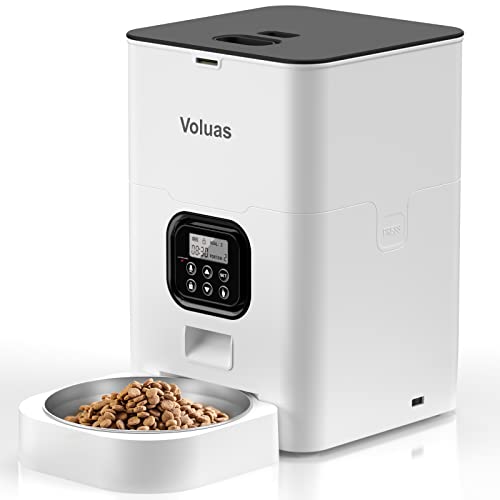
| Voluas Automatic Pet Feeder | Owners who want fine portion increments | Adjustable portion settings with a clear display |
| Andoll Home Automatic Pet Feeder | Multi-meal daily schedules | Multiple programmable meal times |
| Westlink Automatic Pet Feeder | Households with a power backup need | Battery backup to keep schedules running |
| Pawise Automatic Pet Feeder | Simple daily routines | Straightforward programming and dispensing |
PetSafe Smart Feed 2.0
This feeder suits owners who want to schedule and adjust meals from a phone, especially if they are away from home for long stretches. It is a practical choice when you need to change portions without standing at the unit.
Key specs
- App-based meal scheduling via smartphone
- Adjustable portion settings per meal
- Dry kibble design
Pros
- Remote schedule changes make portion updates quick
- Clear per-meal control helps track daily intake
- Works well for owners with irregular schedules
Cons
- Depends on a Wi-Fi connection and app setup
- Owners often mention that app features take time to learn
PetLibro Air
Owners who want to monitor feeding from anywhere, and who appreciate a log of when meals were dispensed, will find this model useful. It is a good match for households with more than one caregiver.
Key specs
- Wi-Fi connectivity with a companion app
- Programmable meal schedules
- Designed for dry kibble
Pros
- Meal logs help confirm the dog is eating on schedule
- Remote alerts support monitoring while you are out
- Scheduling is flexible for changing routines
Cons
- Requires a stable home network
- Owners sometimes report a learning curve in the app
PetSafe Two Meal Automatic Pet Feeder
This is a straightforward option for owners who feed a fixed morning and evening routine and prefer a manual dial without an app. It fits households that want simple, predictable portions.
Key specs
- Two programmable meals per day
- Manual portion adjustment
- Designed for dry kibble
Pros
- Simple setup with no app required
- Two-meal schedule matches common feeding routines
- Easy for family members to operate
Cons
- Fewer meal slots than multi-meal models
- Portion precision depends on how well the dial is set
Petmate Pet Mate Automatic Feeder
Buyers who want a basic timer and a simple portion dial, without extra features, may find this a practical match. It is a reasonable pick for a single dog on a steady diet.
Key specs
- Basic programmable timer
- Adjustable portion dial
- Dry kibble design
Pros
- Uncomplicated operation
- Budget-friendly option for basic feeding
- Few settings to learn
Cons
- Limited scheduling flexibility
- No remote monitoring or logs
Wopet Automatic Pet Feeder
This model suits owners who want a digital timer and several daily meal slots for dry kibble. It works well for dogs on a split-meal plan.
Key specs
- Digital timer with multiple daily meals
- Adjustable portion settings
- Designed for dry food
Pros
- Multiple meal slots suit split feedings
- Digital display makes programming clearer
- Good fit for consistent kibble portions
Cons
- Owners sometimes report kibble size affects dispensing accuracy
- Setup may take a few attempts to get right
Pitpet Automatic Pet Feeder
Owners of large or high-energy dogs who need bigger portions per meal will find this a sensible option. Its larger capacity reduces how often you need to refill.
Key specs
- Larger food capacity
- Programmable meal times
- Adjustable portion settings
Pros
- Large capacity suits bigger dogs
- Programmable schedule supports regular meals
- Fewer refills for multi-day coverage
Cons
- Larger footprint than compact models
- Heavier kibble may need checking for clumping
Voluas Automatic Pet Feeder
Owners who want finer control over how much food goes into each meal will appreciate this model’s adjustable settings. It is well suited to dogs on measured diets managed by a veterinarian.
Key specs
- Adjustable portion settings
- Clear display for programming
- Dry kibble design
Pros
- Portion settings support measured feeding
- Display makes setup easier to verify
- Suits structured diets
Cons
- Owners sometimes report that portions should be checked by weighing
- Fine settings can take time to dial in
Andoll Home Automatic Pet Feeder
Households that feed several small meals across the day, rather than one or two large ones, may prefer this model’s multiple scheduling options. It works for owners managing a gradual feeding plan.
Key specs
- Multiple programmable meal times
- Adjustable portion control
- Designed for dry kibble
Pros
- Multiple daily meals support split feeding
- Flexible scheduling for changing routines
- Straightforward portion adjustment
Cons
- Owners sometimes mention a few setup steps to memorize
- Verify portion accuracy with a food scale at first
Westlink Automatic Pet Feeder
This is a good pick for homes where a power outage could interrupt feeding. Battery backup helps keep the schedule running, which matters for dogs on strict timing.
Key specs
- Battery backup to maintain schedules
- Programmable meal times
- Adjustable portion settings
Pros
- Backup power protects the feeding schedule
- Useful for areas with frequent power interruptions
- Programmable meals suit regular routines
Cons
- Batteries need periodic replacement
- Battery life varies with usage
Pawise Automatic Pet Feeder
Owners with a simple daily routine and a dog on a steady, unchanging diet may find this model easy to live with. Its straightforward programming keeps the focus on consistent meals.
Key specs
- Straightforward programming
- Adjustable portion dispensing
- Dry kibble design
Pros
- Easy to learn and operate
- Suits stable feeding routines
- Minimal settings to manage
Cons
- Fewer advanced features than app-connected models
- Limited flexibility for complex schedules
Buying Guide
Selection Criteria
Portion size matters most when the feeder can reliably dispense the same amount each time. Start by deciding what you need the feeder to do. Some owners need precise portions for a veterinary diet, while others simply want meals delivered on time while they are at work. Match the feeder to that need before comparing extras like apps or cameras.
Important Features
- Portion increment: Look for settings small enough to match your dog’s measured daily amount. Finer increments make weight-based feeding easier.
- Meals per day: Confirm the number of programmable slots. Two meals suit most adult dogs, while some plans call for three or more.
- Food capacity: Larger bins reduce refills but take up more counter or floor space.
- Jam resistance: Check how the feeder handles kibble size and clumping. Owners often report jams with irregular or oversized pieces.
- Power backup: Battery backup keeps the timer running during outages.
- Connectivity: App control and logs help if you want remote oversight.
Specs to Check
- Minimum and maximum portion per meal, in cups or grams
- Number of programmable meals per day
- Hopper capacity in cups
- Compatible food type (dry kibble only, or other textures)
- Power source and backup battery type
- Dimensions and weight, especially if you have limited space
Choosing by Need
If you want to adjust meals from your phone, prioritize app-based models. If you feed a fixed two-meal routine, a simpler dial-based unit is usually enough. Large dogs or multi-pet homes should favor higher capacity and clear portion settings. Households with unreliable power should look for battery backup.
Things to Watch Out For
- Do not assume the dial setting equals the exact weight dispensed. Verify portions by weighing several servings with a kitchen scale and adjusting as needed.
- Moist food, humidity, and oversized kibble can cause clumping and jams.
- Keep the hopper sealed and dry to protect food quality.
- If your dog has a medical condition or needs a specific calorie target, confirm the portion plan with your veterinarian before relying on the feeder.
FAQ
How do I set the right portion size for my pit bull on an automatic feeder?
Start with the daily amount recommended on your dog’s food label or set by your veterinarian, then divide it across your planned meals. Set the feeder to that portion, run a test dispense, and weigh the output. Adjust the setting until the weight matches your target, and recheck periodically as your dog’s weight changes.
Are automatic feeders accurate enough for measured diets?
Accuracy varies by model and by food. Owners often report that uniform kibble dispenses more consistently than irregular shapes. Weighing a few test portions is the most reliable way to confirm accuracy before you depend on the feeder.
How many meals should a pit bull eat per day?
Many adult dogs do well on two meals per day, while puppies usually need more frequent feedings. The right schedule depends on age, health, and your veterinarian’s guidance, so confirm the plan before choosing a feeder with a specific number of slots.
Can an automatic feeder handle wet food?
Most models in this guide are designed for dry kibble. Wet food can clump, spoil, or jam the mechanism, so check the manufacturer’s specifications before using any non-dry food.
What happens if the power goes out?
Units without backup power may stop running their schedule during an outage. Models with battery backup can keep the timer running, but batteries need regular replacement. Confirm how long the backup lasts according to the manufacturer.
Why does my feeder dispense different amounts on different days?
Humidity, kibble size, and clumping can all affect how much food falls through the mechanism. Keep the hopper dry, use consistent kibble, and recheck portions with a scale if the amounts seem off.
Should I consult a veterinarian before setting portions?
Yes. Dogs with weight issues, medical conditions, or prescription diets need portion plans tailored to their needs. A veterinarian can provide a calorie target and help you set the feeder correctly.
Conclusion
For precise, app-managed control, the PetSafe Smart Feed 2.0 and PetLibro Air are the strongest options among these ten. Owners who prefer a simple two-meal routine without an app may find the PetSafe Two Meal Automatic Pet Feeder sufficient. Large dogs need the capacity of the Pitpet Automatic Pet Feeder, while the Voluas Automatic Pet Feeder suits measured diets that demand fine increments. If power interruptions are a concern, the Westlink Automatic Pet Feeder’s battery backup is worth considering. Whichever you choose, weigh several test portions and confirm the plan with your veterinarian. For more detail on setup, see Voluas Automatic Pet Feeder Portion Size Chart: How to Set Portions (2026) and Automatic Pet Feeders: Timers, Portions and Backup Power.
Related reading
- Pitpet Automatic Pet Feeder Portion Size: 8 Best Picks Compared
- Andoll Home Automatic Pet Feeder Portion Size: 8 Best Picks Compared
About Ethan Brooks
Ethan Brooks is part of our editorial team and reviews and edits our everyday pet gear guides, checking product details against manufacturer specifications and owner feedback.