 By Ethan Brooks
Anyone who has bought an automatic pet feeder knows that the portion chart is where the real decisions happen. A pawple automatic pet feeder portion chart tells you how many grams or cups a feeder dispenses per meal, and whether those numbers match what your pet actually needs. If you are trying to cut overfeeding, split a day’s ration across several small meals, or keep a cat on a measured routine while you are at work, the chart matters more than the marketing photo on the box. This guide focuses on how portions are set, how accurate the dispensing is likely to be, and which feeders suit different feeding routines.
Our selection criteria were drawn from manufacturer specifications, long-running brand reputation, and the patterns owners tend to report in reviews. We did not run any feeders ourselves, so treat the picks below as research-based recommendations rather than hands-on verdicts. We weighed four things most heavily: how portions are defined (by weight, by volume, or by a preset step), how many meals and schedule slots a unit supports, whether it has a backup power source for outages, and how easily the portion settings can be adjusted as a pet’s weight or appetite changes. Because portion charts vary between models, always check the chart that ships with your specific unit before trusting its numbers.
Our Top Picks
Quick Comparison
| Product | Best for | Key feature |
|---|---|---|
| PetSafe Smart Feed 2.0 | Owners who want app-based scheduling and portion tracking | Wi-Fi scheduling with meal logs |
| PetSafe 2 Meal Automatic Pet Feeder | Households splitting a daily ration into two fixed meals | Two independent meal programs |
| PetLibro Air Automatic Pet Feeder | Owners who want Wi-Fi control and a camera-free, app-driven setup | Smartphone portion control with meal history |
| Petmate Automatic Pet Feeder | Budget-minded owners with a single dog or cat | Simple timer with adjustable portion settings |
| Petlibro Granary Automatic Feeder | Multi-meal routines with larger kibble volumes | Large food capacity and multiple daily meals |
| Wopet Automatic Pet Feeder | Owners who want a battery backup for outages | Battery backup to keep schedules running |
| Pawise Automatic Pet Feeder | Cat owners needing small, precise portions | Small-increment portion settings |
PetSafe Smart Feed 2.0
This suits owners who want to adjust portions from a phone and review what was dispensed over time. It is a reasonable pick for multi-person households where more than one person needs to change the schedule.
Key specs
- Wi-Fi app connectivity for scheduling and portion changes
- Programmable meal times with per-meal portion settings
- Stainless steel bowl and food hopper for kibble
Pros
- Portion changes can be made remotely without touching the unit
- Meal logs help you spot missed or skipped feedings
- Works well when several people share feeding duties
Cons
- Depends on a stable Wi-Fi connection to use the app features fully
- Owners report that app setup takes some patience at first
PetSafe 2 Meal Automatic Pet Feeder
This is aimed at households that need to split one daily ration into two set meals, such as a dog on a twice-daily routine. The chart is straightforward, which makes it easy to match portions to a vet’s feeding guidance.
Key specs
- Two independent meal programs per day
- Adjustable portion settings per meal
- Manual timer with a clear display for schedule review
Pros
- Two-meal structure fits the most common dog feeding schedule
- Portion settings are easy to read against a printed chart
- Straightforward programming for non-technical owners
Cons
- Limited to two meals, which may not suit cats needing frequent small feedings
- No app control, so changes must be made at the unit
PetLibro Air Automatic Pet Feeder
This suits owners who want smartphone control and a detailed meal history without relying on a camera. It is a good fit for people who check their pet’s feeding routine from work and want to adjust portions without visiting the feeder.
Key specs
- Wi-Fi app control for portion and schedule changes
- Multiple daily meal slots with individual portion settings
- Meal history viewable from the app
Pros
- Remote portion adjustment saves trips to the feeder
- Meal history helps track consistency across the week
- Setup guides are generally clear in owner feedback
Cons
- Requires a 2.4 GHz Wi-Fi network, which some owners find inconvenient
- App features are only useful if you keep the phone connected
Petmate Automatic Pet Feeder
This is a practical choice for one dog or cat on a steady routine. It keeps the setup simple and avoids features most single-pet households will not use.
Key specs
- Timer-based programming with adjustable portion settings
- Single-bowl design with a food storage hopper
- No app or Wi-Fi requirement
Pros
- Simple timer is quick to understand and program
- No connectivity to troubleshoot
- Works well as a basic, no-frills option
Cons
- Fewer meal slots and less flexibility than app-based models
- Owners sometimes report that portion precision varies with very small kibble sizes
Petlibro Granary Automatic Feeder
This suits households with larger dogs or multi-meal routines that need a bigger food reservoir. A larger hopper means fewer refills, which matters when you are measuring large daily rations.
Key specs
- Large food storage capacity for extended intervals between refills
- Multiple daily meal programs with per-meal portion settings
- Designed for dry kibble
Pros
- Large capacity reduces how often you need to refill
- Handles several meals per day with separate portions
- Suits bigger dogs or multi-pet feeding
Cons
- Larger footprint than compact feeders
- Stored food should be kept dry and fresh, which requires regular attention
Wopet Automatic Pet Feeder
This is a sensible pick for owners worried about power outages interrupting scheduled meals. A battery backup keeps the timer running so a missed portion is less likely.
Key specs
- Battery backup to maintain scheduled feedings during outages
- Programmable meal times with adjustable portion sizes
- Designed for dry kibble
Pros
- Battery backup helps protect the feeding schedule
- Portion settings are easy to change at the unit
- Suitable for everyday single-pet use
Cons
- Batteries need periodic replacement, which owners should track
- Fewer advanced scheduling options than app-based models
Pawise Automatic Pet Feeder
This suits cat owners who need small, precise portions and frequent feedings. Finer portion increments make it easier to keep a cat’s calorie intake close to a vet’s recommendation.
Key specs
- Small-increment portion settings suited to cat-sized meals
- Multiple daily meal programs
- Compact footprint for smaller spaces
Pros
- Small portion increments suit cats and small dogs
- Compact size fits kitchen counters and corners
- Frequent meal slots support smaller, spread-out feedings
Cons
- Not designed for large-breed portions
- Owners report that clumped or oversized kibble can jam the dispenser
Buying Guide
Selection Criteria
Start with how the portion is defined. Some feeders dispense by a preset step or by volume, while others are calibrated closer to weight. A portion chart is only as useful as the feeder’s dispensing accuracy, so compare the chart’s units with the way your pet’s food is measured. Next, count meals. A dog on two meals and a cat on four or more need different slot counts. Finally, consider power backup and how easily portions can be changed.
Important Features
- Portion increment size, especially for cats and small dogs
- Number of daily meal slots and whether each slot has its own portion
- Battery backup or outage protection
- Hopper capacity and how often it needs refilling
- Ease of changing portions as your pet’s weight changes
Specs to Check
Check the kibble size the feeder accepts, since oversized or irregular pieces can jam the dispenser. Confirm the hopper capacity in cups or grams. Look for whether the portion chart lists output per meal and whether it has been calibrated for your food type. Check Wi-Fi requirements if you want app control, including band support.
Choosing by Need
For a single dog on two meals, a two-meal timer model keeps things simple. For cats on frequent small feedings, prioritize fine portion increments and multiple meal slots. For households where several people manage feeding, app-based models make portion changes easier to coordinate. For homes that worry about outages, look for battery backup.
Things to Watch Out For
- Portion charts that do not state the food type they were built for
- Kibble that is much larger or smaller than the feeder’s intended size
- Battery and Wi-Fi dependencies you did not plan for
- Humidity that can cause kibble to clump in the hopper
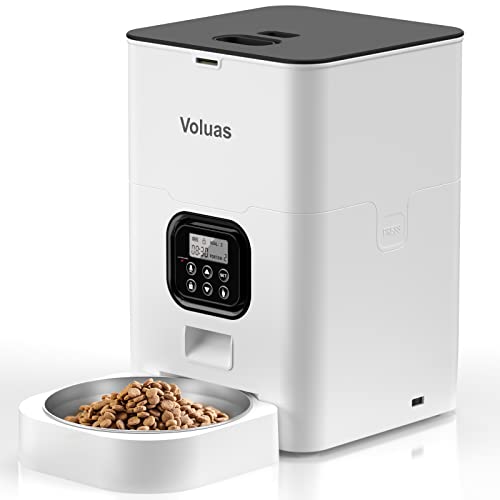
For guidance on setting portions from a pet’s weight and activity, ask your veterinarian before changing a feeding plan. You can also read our Voluas Automatic Pet Feeder Portion Size Chart: How to Set Portions (2026) for a worked example of matching a chart to daily calorie needs. Our overview Automatic Pet Feeders: Timers, Portions and Backup Power covers the power and scheduling trade-offs in more depth.
FAQ
How do I read a pawple automatic pet feeder portion chart?
Find the row matching your pet’s weight or the food’s calorie density, then match that to the portion setting on the feeder. Charts usually list grams or cups per meal. Confirm the units match your food packaging before setting anything.
Is the portion chart accurate for every kibble?
Not necessarily. Charts are typically built around a particular food type and density. Different kibbles can dispense differently and carry different calories per cup, so recheck the numbers against your own bag.
How many meals should I schedule per day?
Many dogs do well on two meals, while cats often benefit from several smaller meals. Your veterinarian can recommend a schedule based on age, health, and activity level.
What happens if the power goes out?
Without battery backup, scheduled meals can be missed. Feeders with battery support help keep the timer running. Check whether your model has this feature and keep spare batteries on hand.
Can I use wet food in an automatic feeder?
Most automatic feeders are designed for dry kibble. Wet food can spoil in the hopper and may not dispense reliably, so check the manufacturer’s guidance before using it.
How often should I check the feeder?
Check the feeder daily to confirm meals are dispensing, the hopper has food, and the bowl is clean. Refill and clean on the schedule the manufacturer recommends.
Should I adjust portions as my pet’s weight changes?
Yes. Portions should be revisited when your pet gains or loses weight, ages, or changes activity level. Consult your veterinarian before making significant adjustments.
Conclusion
The right pawple automatic pet feeder portion chart depends on how your pet eats and how your household runs. For app-based scheduling and shared control, the PetSafe Smart Feed 2.0 and PetLibro Air are the strongest fits. For a simple two-meal routine, the PetSafe 2 Meal is a clear choice. The Petmate suits a single pet on a steady timer, the Petlibro Granary handles larger rations, the Wopet adds outage protection, and the Pawise fits cats needing small, precise portions. Whichever you choose, verify the portion chart against your own food and confirm any changes with your veterinarian.
Related reading
About Ethan Brooks
Ethan Brooks is part of our editorial team and reviews and edits our everyday pet gear guides, checking product details against manufacturer specifications and owner feedback.