 By Ethan Brooks
Getting automatic pet feeder portion size right is one of the most practical decisions an owner can make, because the number of grams or cups a feeder dispenses per meal is what actually controls how much your dog or cat eats each day. A feeder that dispenses in coarse increments may not suit a small cat, while a unit with a tiny hopper may run out too quickly for a large dog. This guide looks at six widely available automatic feeders and explains how to judge portion control, meal scheduling and capacity before you buy. Our selection is based on manufacturer specifications, brand reputation and patterns that owners commonly report, not on hands-on testing.
Our Top Picks
Quick Comparison
| Product | Best for | Key feature |
|---|---|---|
| PetSafe Smart Feed 2.0 | Single-cat or small-dog households | App-based portion and schedule control |
| Petmate Pet Mate Programmable Feeder | Budget-minded owners with one or two pets | Simple, multi-meal programming |
| Petlibro Capacity Feeder | Medium dogs and multi-meal routines | Large food capacity with adjustable portions |
| Whisker Litter-Robot Feeder Series | Owners who want a connected, app-managed feeder | Connected scheduling and feeding logs |
| Staywell Programmable Dog Feeder | Large-breed dogs | High-capacity food storage |
| Iseebiz Automatic Cat Feeder | Cats and multi-pet homes needing separate meals | Compartmented, timed dispensing |
PetSafe Smart Feed 2.0
This feeder suits owners who want precise, repeatable portions and the ability to adjust them from a phone. It is most often recommended for cats and small dogs whose daily food amounts are measured in small increments.
Key specs
- App-based meal scheduling and portion adjustment
- Dispenses in set portion increments that the app controls
- Designed for dry kibble
Pros
- Portion sizes can be changed without touching the hardware
- Feeding history is available through the companion app
- Good fit for households with one or two pets
Cons
- Relies on Wi-Fi and the app for full functionality
- Smaller hopper may need refilling for large dogs
Petmate Pet Mate Programmable Feeder
A straightforward option for owners who want to set two or three meals a day without connecting to an app. It works well for dogs and cats on steady, measured diets.
Key specs
- Programmable meal times with portion settings on the unit
- Dry food only
- Manual control panel
Pros
- No app or Wi-Fi required
- Simple button-based programming
- Easy to clean bowl and hopper
Cons
- Portion increments are less granular than app-based models
- Limited tracking of what was actually eaten
Petlibro Capacity Feeder
Owners of medium-sized dogs or households that need several meals a day often look at this type of feeder for its larger food storage and adjustable dispensing. Owner feedback commonly highlights how long a full hopper lasts between refills.
Key specs
- Large-capacity food container
- Adjustable portion settings per meal
- Scheduled multi-meal programming
Pros
- Fewer refills for larger dogs
- Multiple daily meals can be scheduled
- Portion settings are easy to change
Cons
- Larger footprint than basic models
- Some owners report needing to dry kibble-only, as wet food can jam the mechanism
Whisker Litter-Robot Feeder Series
This connected feeder is aimed at owners who want scheduling, portion control and feeding logs managed from one app, often alongside other smart pet products from the same brand.
Key specs
- App-managed scheduling and portion control
- Feeding activity logs
- Designed for dry kibble
Pros
- Clear feeding history for vet visits
- Portion changes can be made remotely
- Fits well into a connected-home setup
Cons
- Requires a stable Wi-Fi connection
- More features than some owners need
Staywell Programmable Dog Feeder
Large-breed dog owners often look for a feeder with generous food storage and enough dispensing power for bigger portions. This type of unit is a common choice for households with a single large dog.
Key specs
- High-capacity food storage
- Programmable meal times
- Designed for dry kibble
Pros
- Holds enough food for extended periods
- Suited to large portion sizes
- Straightforward programming
Cons
- Bulky, so it needs a dedicated spot on the floor or counter
- Portion increments may be coarse for small pets
Iseebiz Automatic Cat Feeder
Households with more than one cat, or with a cat and a dog that need separate meals, often look at compartmented feeders that dispense on a timer. This is a sensible starting point for those needs.
Key specs
- Timed dispensing in set portions
- Compartmented or separate-meal design
- Designed for dry cat food
Pros
- Helpful for keeping meals separate in multi-pet homes
- Simple timer-based setup
- Compact footprint
Cons
- Smaller capacity suits fewer daily meals
- Portion control is less precise than app-managed models
Buying Guide
Automatic pet feeder portion size depends on three things: how much your pet should eat in grams or cups per day, how many meals you want to schedule, and how the feeder measures each portion. Start with your veterinarian’s recommended daily amount, then check whether the feeder can match it in practical steps.
Selection Criteria
- Portion increment: Smaller increments give finer control for cats and small dogs.
- Meals per day: Confirm the feeder can schedule the number of meals you need.
- Hopper capacity: Compare how long a full hopper lasts at your pet’s daily amount.
- Food type: Most automatic feeders are designed for dry kibble; check the manufacturer’s guidance before using wet food.
- Power backup: Battery backup keeps scheduled meals running during outages.
Important Features
- Adjustable portion settings per meal
- Programmable meal times
- Removable, dishwasher-safe bowl or tray (confirm with the manufacturer)
- Jam-resistant dispensing mechanism
- Companion app or manual controls, depending on your preference
Specs to Check
- Minimum and maximum portion size per dispense
- Total hopper capacity in cups or grams
- Number of programmable meals per day
- Power source and backup battery type
- Recommended food types and kibble size limits
Choosing by Need
- Calculate your pet’s daily food amount from the food label or your vet’s guidance.
- Divide that amount by the number of meals you plan to schedule.
- Check that the smallest portion setting on the feeder can deliver that per-meal amount.
- Confirm the hopper holds enough food for at least several days between refills.
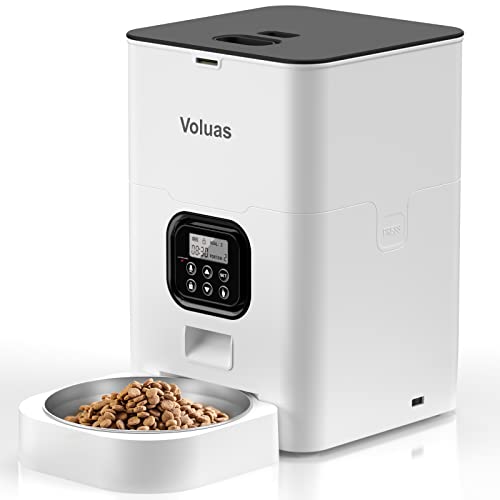
For a more detailed walkthrough of setting amounts, see Voluas Automatic Pet Feeder Portion Size Chart: How to Set Portions (2026) and Automatic Pet Feeders: Timers, Portions and Backup Power.
Things to Watch Out For
- Kibble that is too large or irregular can jam the dispenser.
- Humidity can cause dry food to clump in the hopper.
- Portion settings are not a substitute for monitoring your pet’s weight and body condition.
Always check with your veterinarian before changing your pet’s diet or portion amounts, especially for puppies, kittens, seniors or pets with medical conditions.
FAQ
How do I figure out the right automatic pet feeder portion size?
Start with the daily amount on your pet food label or the amount your veterinarian recommends. Divide that total by the number of meals you plan to schedule, then choose a feeder whose smallest portion setting matches that per-meal amount.
Can an automatic feeder handle wet food?
Most automatic feeders are designed for dry kibble. Wet food can stick to the mechanism and cause jams or spoilage, so check the manufacturer’s instructions before using anything other than dry food.
How many meals a day should I program?
Many adult dogs and cats do well on two meals a day, but the right schedule depends on your pet’s age, health and your veterinarian’s guidance. Puppies and kittens often need more frequent meals.
What happens if the power goes out?
Feeders with battery backup can keep running scheduled meals during an outage. Without backup, a missed meal is possible, so check the backup specifications before you buy.
Is a larger hopper always better?
A larger hopper means fewer refills, but it also means food sits in the container longer. Keep food fresh by sealing it and refilling regularly, and match hopper size to how quickly your pet eats.
How do I know if the portion size is working?
Track your pet’s weight, energy and body condition over several weeks. If your pet is gaining or losing weight unexpectedly, speak with your veterinarian and adjust the portion settings with their guidance.
Do app-based feeders give more accurate portions?
App-based feeders often allow finer adjustments and keep a feeding log, but accuracy still depends on the food type, kibble size and how the feeder is calibrated. Always verify the dispensed amount with a measuring cup during setup.
Conclusion
Choosing the right automatic pet feeder portion size comes down to matching your pet’s daily amount with a feeder that offers fine portion control, enough meal slots and reliable dispensing. For cats and small dogs, a model with small, app-adjustable increments such as the PetSafe Smart Feed 2.0 is a strong fit. For households wanting simple, no-app scheduling, the Petmate Pet Mate Programmable Feeder is a practical choice. Owners of medium or large dogs who want fewer refills may lean toward the Petlibro Capacity Feeder or the Staywell Programmable Dog Feeder. Connected-home users who want feeding logs might consider the Whisker Litter-Robot Feeder Series, while multi-cat homes often benefit from the Iseebiz Automatic Cat Feeder. Whichever you choose, confirm the portion settings against your veterinarian’s guidance before relying on them.
Related reading
- Pitpet Automatic Pet Feeder Portion Size: 8 Best Picks Compared
- Andoll Home Automatic Pet Feeder Portion Size: 8 Best Picks Compared
- 8 Best Voluas Automatic Pet Feeder Portion Size Options Compared
About Ethan Brooks
Ethan Brooks is part of our editorial team and reviews and edits our everyday pet gear guides, checking product details against manufacturer specifications and owner feedback.