 By Claire Whitaker
Updated November 2026
An easy walk dog harness is designed to reduce pulling by giving you steering control at the chest rather than relying on the neck. This guide explains how these harnesses work, how to measure and fit one, and what to check before your dog heads out the door. Most dogs adjust within a few walks once the fit is right. A related read: Dog Harness Wonder Walker: How to Fit and Use It for Calm Walks.
How an Easy Walk Harness Reduces Pulling
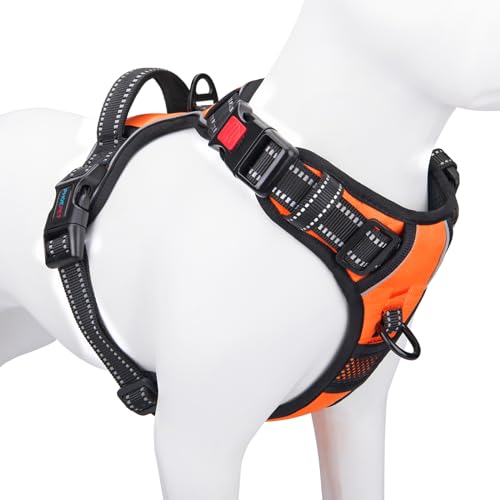
Most easy walk designs use a leash attachment on the front of the chest, usually on a strap that crosses the dog’s sternum. When the dog lunges forward, the harness gently turns the body toward you instead of letting the dog drive into the leash. Many owners find this more comfortable than a collar, especially for dogs with thin necks or tracheal sensitivities. It does not replace training, but it makes steering easier while you teach loose-leash walking.
Shopping for one? See our guide: 5 Best Automatic Pet Feeders for Dogs Compared (2026).
How to Measure and Fit the Harness
Sizing matters more than brand. Manufacturers typically list sizes by chest girth, measured around the widest part of the ribcage just behind the front legs, along with neck circumference and weight ranges. Use these steps: A related read: Freedom Harness Dog Harness: How to Fit and Use One for Calm Walks.
- Measure chest girth with a soft tape, keeping it snug but not tight.
- Compare against the brand’s size chart, not a generic size, and choose the size whose range includes your number.
- Put the harness on and fit two fingers flat between each strap and your dog’s body.
- Check that the chest plate sits centered on the breastbone and does not ride up toward the throat.
- Walk your dog indoors for a few minutes and watch for rubbing at the armpits or chafing behind the legs.
Watch for Signs of a Poor Fit
A harness that is too loose will shift and may slip over the head, while one that is too tight can restrict shoulder movement and cause sores. If your dog stops, sits, or keeps turning to bite at the straps, pause and re-check the adjustments. For another angle, check out Crash Test Dog Harness: What It Means and How to Choose One.
Checklist Before Your First Walk
- Chest girth measured and matched to the size chart
- Two-finger gap under all straps
- Leash clipped to the front ring, not the back
- Buckles closed and tails tucked so they cannot catch
- A reflective or light-up accessory if you walk at dusk (see Reflective and Light-Up Gear for Walking Dogs at Night)
Front-Clip Versus Back-Clip for Walks
Front-clip designs are the core of the easy walk approach, but back-clip harnesses suit other tasks such as light hiking or dogs that already walk well. If you are weighing the two styles, Front-Clip vs Back-Clip Dog Harness: Which One Is Better? covers the trade-offs in more depth. For general fit guidance across harness types, see How to Choose and Fit a Dog Harness.
Common Mistakes
- Buying by weight alone instead of measuring chest girth.
- Clipping to the back ring during a pulling phase, which undoes the steering benefit.
- Leaving the harness on an active dog unsupervised, where straps can catch on fences or furniture.
- Expecting a harness to fix pulling without loose-leash training.
- Ignoring wear: replace straps or clips that fray or loosen.
Recommended Gear
A well-fitting front-clip harness is the main item. A sturdy, short leash, such as those covered in Best Dog Leashes for Everyday Walks, keeps steering responsive. A reflective strip or clip-on light helps with visibility on evening walks.
- Easy walk style front-clip harness with a padded chest plate: helps redirect pulling at the chest. View on Amazon
- Reflective walking leash with a padded handle: keeps grip comfortable and visible after dark. View on Amazon
- Clip-on LED dog light for harness rings: makes your dog easier to see from driveways and roads. View on Amazon
FAQ
Will an easy walk harness stop my dog from pulling completely?
Not on its own. It makes steering easier and reduces forward pressure, but consistent loose-leash training is still needed for lasting results. You may also like 6 Best Backpack Harness for Dog Picks for Hiking and Daily Walks.
How do I know if the harness fits properly?
You should fit two fingers under each strap, the chest plate should sit centered without riding up, and your dog should move its legs freely without chafing. For another angle, check out Top 5 Arcadia Trail Dog Harness Picks for Daily Walks.
Can I use an easy walk harness on a puppy?
Yes, but choose a size based on current measurements and re-check the fit often, since puppies grow quickly. If you have concerns about your dog’s joints or breathing, consult your veterinarian.
Conclusion
An easy walk dog harness works best when it is measured correctly, fitted with the two-finger check, and paired with steady training. Re-check the fit every few weeks, especially for growing dogs. With those basics in place, walks become easier to steer and more relaxed for both of you.
Related reading
Ready to choose one?
About Claire Whitaker
Claire Whitaker is part of our editorial team and reviews and edits our everyday pet gear guides, checking product details against manufacturer specifications and owner feedback.