 By Claire Whitaker
Updated November 2026
A pet carrier from a pet smart store can handle everyday vet trips, car rides and short flights, but only if it fits your animal and your routine. In this guide you will learn how to measure your pet, compare soft and hard carriers, check features that matter in daily use, and avoid the mistakes that make carriers uncomfortable or unsafe.
Step 1: Decide How You Will Use the Carrier
Before you look at any pet carrier pet smart shelf or listing, decide what the carrier needs to do most often. A carrier for weekly vet visits has different priorities than one for cross-country travel.
- Vet and grooming trips: Lightweight, easy to carry, with a top or front opening.
- Car travel: Stable base, secure latch, and room for a water bowl or pad.
- Air travel: Must meet the airline’s size limits for under-seat stowage. Check the airline’s written rules before you buy.
- Outdoor walks or city life: Backpack or sling styles keep your hands free.
If you are unsure which style fits, our overview of Soft vs Hard Pet Carriers (and Backpacks vs Totes) walks through the tradeoffs in more detail.
Step 2: Measure Your Pet Correctly
Sizing is where most people go wrong. A carrier that is too small causes stress and can injure a pet, while one that is too large lets a pet slide and tip during transport.
- Measure your pet’s length from the base of the neck to the base of the tail, not including the tail.
- Measure height from the floor to the top of the head while the pet stands normally, or from the floor to the top of the shoulders for a cat or small dog.
- Measure width at the widest point, usually the hips or shoulders.
- Add 2 to 4 inches to length and height so your pet can turn around and lie down comfortably.
- Compare the result with the carrier’s interior dimensions, not the exterior ones. Manufacturers list both, and the difference can be several inches.
For airline use, compare the carrier’s outer dimensions with the airline’s under-seat limit. Airlines measure the outside, including wheels and handles where applicable.
Step 3: Compare Soft and Hard Carriers
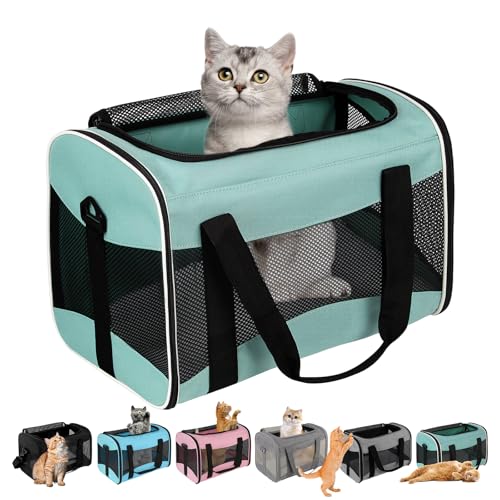
Soft carriers are usually lighter and fold flat for storage. They suit calm pets and short trips. Hard carriers protect better in a crash or a rough baggage handling environment, and they are easier to clean.
| Feature | Soft Carrier | Hard Carrier |
|---|---|---|
| Weight | Light, easy to carry | Heavier, more structure |
| Storage | Folds flat | Takes up fixed space |
| Crash protection | Limited | Stronger |
| Airline fit | Often flexible under the seat | Fixed size, check carefully |
| Cleaning | Machine washable on many models | Wipe clean, easier to disinfect |
For a closer look at soft options, see Soft-Sided Pet Carriers: Airline Travel, Sizing and Comfort.
Step 4: Check Ventilation, Latches and Floor Support
Good ventilation keeps air moving on all sides, not just the top. Look for mesh panels on at least two walls and openings that stay clear when the carrier is placed on the floor or a seat.
Latches and Locks
Choose two-point locking or a secure zipper with a second clip. Cheap clips can pop open under pressure. Test the latch with the carrier empty, then with a weight of similar size to your pet.
Floor and Base
A firm, flat base with a removable pad helps your pet stay steady on turns. Check whether the pad can be washed or replaced.
Step 5: Plan for Travel Extras
Wheels help if you travel through airports, though not every carrier is built for wheels. If you are weighing that option, read Wheels for Pet Carrier (2026): Which Should You Choose? before you decide.
For flights, confirm the rules for your specific airline and route. Some airlines publish detailed carrier specifications, and a few are stricter than the International Air Transport Association standard. What Is the International Air Transport Association Pet Carrier Standard? explains what that baseline covers.
Checklist Before You Buy
- Pet length, height and width measured, with 2 to 4 inches added
- Interior dimensions compared with the pet’s measurements
- Outer dimensions checked against any airline or vehicle limit
- Ventilation on at least two sides
- Secure, two-point or double-clip latch
- Firm base with a washable or replaceable pad
- Easy-open door, top or front, for getting your pet in and out
- Carry handle or strap that fits your grip and body
Common Mistakes to Avoid
- Buying for the pet’s current size only: Puppies and kittens may outgrow a carrier within a year.
- Ignoring the interior size: Exterior measurements can mislead you on fit.
- Skipping a trial run: Place a treat inside and let your pet go in and out for a few minutes at home before the first trip.
- Using a carrier with a loose latch: Test the closure every time before you lift the carrier.
- Forgetting ventilation in the car: Keep the carrier out of direct sun and never leave a pet inside a parked vehicle.
Recommended Gear
These products are commonly used with carriers on daily routines. Confirm current specifications on the listing before you buy.
- Petmate Top Load Pet Carrier: A top-opening hard carrier that many owners use for vet visits, since it lets you lift a pet in and out without forcing them through a front door. View on Amazon
- Yudodo Pet Sling Carrier: A hands-free sling that suits small pets on walks and short errands, with the pet supported close to the body. View on Amazon
- Sleepypod Air In Cabin Pet Carrier: Designed with air travel in mind, with a structured shell and a fit intended for under-seat stowage. Check the airline’s dimensions before buying. View on Amazon
For a broader comparison of flight-ready options, see Top 5 Pet Carriers for Flights Picks: Airline-Approved Soft Carriers Compared.
FAQ
Can I buy a pet carrier at a pet smart store and use it on a plane?
You can, but only if the carrier meets the specific airline’s size and construction rules. Check the airline’s published carrier dimensions and compare them with the carrier’s outer measurements before you travel.
How do I know if my pet has enough room?
Your pet should be able to stand, turn around and lie down without touching the top or sides. If the pet cannot do this comfortably, the carrier is too small.
Are soft carriers safe for car travel?
Soft carriers can be safe when they are secured with a seat belt or placed on a stable surface. They offer less protection in a sudden stop than a hard carrier, so secure them firmly in place.
How often should I clean a pet carrier?
Wipe the interior after each trip and wash the pad weekly if your pet uses it daily. Deep clean the full carrier monthly or after any accident.
My pet hates the carrier. What should I do?
Leave the carrier open in a common area, add bedding and treats, and feed meals near or inside it. Short practice sessions with the door closed for a few seconds help build comfort over time.
Should I choose a top-opening or front-opening carrier?
Top-opening carriers make it easier to lower a nervous pet inside. Front-opening carriers are useful for pets that reach out to be picked up. Many carriers combine both.
Is a carrier with wheels worth it?
Wheels help on long walks through terminals or apartment buildings, but they add weight and may not fit under every airline seat. Compare the total dimensions before you buy.
When should I ask a professional for help?
If your pet becomes severely anxious, injures itself in a carrier, or has a medical condition that makes travel risky, consult your veterinarian before the trip.
Conclusion
The right pet carrier starts with accurate measurements, a clear idea of how you will use it, and a check of the features that keep your pet secure and comfortable. Compare soft and hard styles against your routine, confirm any airline or vehicle limits on the official source, and test the carrier at home before you need it. A well-chosen carrier makes every trip easier for both you and your pet.
Related reading
- How to Fly with a Pet in the Cabin: Carrier and Planning Tips
- How to Evaluate Pet Carriers and Car Gear
- Hard-Sided Pet Carriers and Kennels: Sizing, Latches and Cleaning
Ready to choose one?
About Claire Whitaker
Claire Whitaker is part of our editorial team and reviews and edits our everyday pet gear guides, checking product details against manufacturer specifications and owner feedback.