 By Ethan Brooks
Nobody has a single, well-documented inventor of the automatic pet feeder. The idea grew out of a long line of mechanical food dispensers, timed gravity feeders, and later electronic timers, and no one patent or person is credited with the whole concept. If you are asking who invented the automatic pet feeder, the honest answer is that it was built up gradually by many tinkerers, manufacturers, and pet owners over several decades.
Why there is no single inventor
Automatic feeding is a combination of three older technologies: a storage hopper, a way to release portions, and a timer. Each piece existed long before anyone put them together for animals. Gravity-fed hoppers were common in livestock and poultry farming, and clockwork timers were used in household appliances well before electronics arrived. When someone first pointed a timed dispenser at a dog or cat bowl, the step was small enough that it likely happened in many workshops at once.
Shopping for one? See our guide: Automatic Pet Feeder Petsafe (2026): Pros, Cons & Verdict.
Patent records reflect this. Pet feeding devices appear in patent filings across different eras, but they tend to describe improvements on earlier mechanisms rather than a clean first invention. That makes a single origin story hard to verify, and anyone claiming one should be asked for a specific, checkable source.
The main factors that shaped the early designs
Several practical problems drove the development of timed feeders, and they explain why the design looks the way it does today:
- Portion control. Owners who worked long days wanted meals released at set times rather than left out all day.
- Food freshness. Dry kibble exposed to air and humidity loses quality, so sealed hoppers and desiccant-friendly lids became standard.
- Power reliability. Early units depended on mains power, which led to battery backups and, later, rechargeable designs.
- Jam and clog problems. Kibble size and shape affected whether the auger or gate would release cleanly, which pushed manufacturers toward adjustable outlets.
Understanding these pressures makes the history easier to follow. Each generation of feeders was largely a response to a complaint that owners kept raising.
How the technology evolved
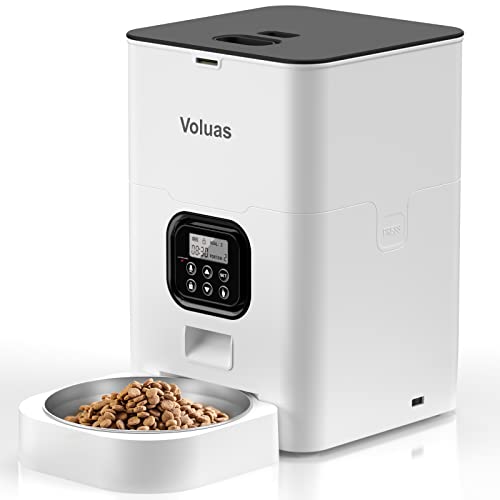
Early versions were mechanical: a spring or gravity gate opened on a simple timer. Electronic timers then allowed more precise scheduling, and digital controllers added the ability to program multiple meals per day with set portion sizes. Modern units often connect to a phone app, record meal logs, or include a camera so owners can check on their pets remotely. Each step built on the last rather than replacing it.
For a broader look at how current models compare, see Wirecutter Automatic Pet Feeder: 10 Best Picks Compared in 2026, which walks through the range of feature sets now on the market.
What to do if you want to trace a specific feeder’s history
If your interest is in a particular brand rather than the whole category, the history is usually easier to find. Manufacturers often publish product timelines, and patent databases list filed designs with dates and inventor names. Here are some practical steps:
- Search patent databases for terms like “automatic animal feeder” or “timed pet food dispenser” and filter by date range.
- Check the manufacturer’s website for an “about” or company history page.
- Look at the product manual’s model number and firmware version to understand which generation of design you are looking at.
- Be skeptical of undated online claims, since many popular histories are repeated without sources.
Practical tips for choosing a feeder today
History is interesting, but most owners care about how a feeder works in their own routine. Consider these points before buying:
- Match the portion size to your pet’s weight and the feeder’s smallest adjustable increment.
- Choose a hopper capacity that covers your absences; two to three days is a common comparison point.
- Test the feeder with your specific kibble, since shape and size affect jamming.
- For diet-sensitive or medical needs, check with your veterinarian before setting portions.
If you are comparing options after learning the background, Westlink Automatic Pet Feeder: 9 Best Picks for Every Routine (2026) and Smart Feed Automatic Pet Feeder: 6 Best Picks Compared (2026) show how different designs handle scheduling and capacity.
What we’d use
For a straightforward timed feeder with reliable portion control, the PetSafe Smart Feed 2.0 is a practical choice to look at. View on Amazon
If you want app-based control and meal tracking, look at the Petlibro Granary Feeder for a model that pairs scheduling with phone alerts. View on Amazon
Related questions
Was the first automatic pet feeder electric?
Not necessarily. Early timed dispensers relied on mechanical or gravity mechanisms, and electric versions came later as timers became affordable and reliable.
Can I trust a feeder’s history claims?
Treat undated or unsourced claims with caution. Patent records and manufacturer timelines are the most reliable places to check.
Do automatic feeders replace a vet’s advice on portions?
No. Portion sizes should match your pet’s age, weight, and health status. Consult your veterinarian before changing a feeding plan.
How much food should a feeder hold?
It depends on how long you will be away. Many owners look for capacity that covers two to three days, but check your pet’s daily intake first.
Why does kibble jam in some feeders?
Kibble size, shape, and moisture all affect flow. Test your food with the feeder before relying on it for unattended meals.
Ready to choose one?
About Ethan Brooks
Ethan Brooks is part of our editorial team and reviews and edits our everyday pet gear guides, checking product details against manufacturer specifications and owner feedback.