 By Claire Whitaker
Updated November 2026
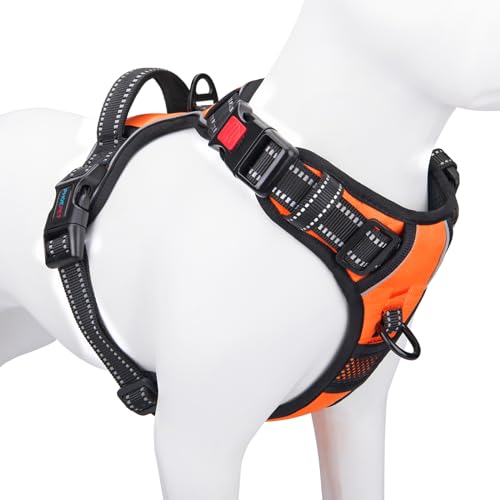
Learning how to use a dog harness correctly means fitting it snugly, putting it on in the right order, clipping the leash to the right ring, and checking the fit after a few minutes of walking. Done well, the harness distributes pressure across the chest and shoulders instead of the neck, which keeps your dog comfortable and gives you better control. The steps below cover the whole process from measuring to the first walk.
Measure Your Dog Before You Put the Harness On
Most harness problems start with the wrong size. Measure your dog’s chest at the widest point, just behind the front legs, and check the manufacturer’s size chart, since sizing varies by brand. Some harnesses also list a neck measurement, so take that too if it’s given. Don’t guess based on weight alone, because a deep-chested breed and a barrel-shaped dog of the same weight can need very different sizes. For a broader look at sizing and styles, see How to Choose and Fit a Dog Harness.
Shopping for one? See our guide: Buddy Belts Dog Harness vs Standard Step-In Harness: Which Should You Choose?.
Put the Harness On Step by Step
Work through these steps in order so the harness sits flat and nothing pinches:
- Lay the harness on the floor with the chest plate facing up and the buckle undone.
- Guide your dog’s front legs through the openings, one at a time, rewarding calm cooperation.
- Bring the chest plate up and across the chest, keeping the strap centered over the breastbone.
- Fasten the buckle on the side or back, depending on the design.
- Run a finger under each strap. You should fit two fingers flat between the strap and your dog’s body.
Check the Fit and Adjust for Comfort
A correct fit is snug but not restrictive. Look for these signs:
- The chest plate sits high on the chest, not down near the front legs or against the throat.
- Straps lie flat with no twisting, bunching or gaps.
- Your dog can sit, lie down and walk without the straps shifting toward the shoulders or belly.
- No raw spots, fur rubbing or flattened hair appear after the first wear.
Adjust the sliding straps in small increments and recheck the two-finger gap each time. Plan a short indoor test session before your first outdoor walk so you can spot problems early.
Clip the Leash Correctly and Walk Safely
Most harnesses have a front clip on the chest and a back clip between the shoulders. A front clip gives you more steering control and reduces pulling, while a back clip is generally used for relaxed walking and is less effective for pulling dogs. Use the ring your harness design recommends for your training goals, and keep the leash short enough that your dog can’t dart into traffic. Attach the leash before you open a door or step outside, and hold it with a relaxed grip rather than wrapping it around your wrist.
| Clip point | Best use |
|---|---|
| Front chest ring | Steering and reducing pulling during walks |
| Back ring between shoulders | Relaxed walking with a dog that already walks well |
| Dual ring (front and back) | Flexible use, often with a two-clip leash for training |
Common Mistakes
- Buying by weight instead of chest measurement, which often leads to a loose or tight fit.
- Leaving the harness on all day. Remove it at night and after walks to prevent rubbing.
- Tightening straps so much that the dog’s breathing or movement is restricted.
- Clipping only to the back ring on a strong puller, which can make pulling worse.
- Ignoring signs of soreness, such as licking, limping or reluctance to walk.
Recommended Gear
A no-pull style harness with a front clip helps many owners manage pulling during daily walks. Look for one with a padded chest plate for comfort on longer outings. A reflective or lightweight leash can improve visibility on early morning or evening walks. View on Amazon
FAQ
How tight should a dog harness be?
You should be able to slide two fingers flat between the strap and your dog’s body. Recheck the fit after a few minutes of walking, since straps can loosen or shift.
Can I leave a harness on my dog all day?
It’s best to remove it after walks and at night. Prolonged wear can cause rubbing or matting, especially in dogs with thick coats. If you have concerns about skin irritation, consult your veterinarian.
Which clip ring should I use for walking?
The front chest ring offers more control for pulling dogs, while the back ring suits relaxed walkers. Choose based on your dog’s behavior and your training goals.
Conclusion
Measure your dog accurately, fit the harness in the correct order, and check the two-finger gap before every walk. Clip the leash to the ring that matches your training needs and watch for signs of discomfort. With a good fit and a consistent routine, most dogs settle into harness walks quickly.
Related reading
- Easy Walk Dog Harness: How to Pick and Fit One for Calm Walks
- Front-Clip vs Back-Clip Dog Harness: Which One Is Better?
Ready to choose one?
About Claire Whitaker
Claire Whitaker is part of our editorial team and reviews and edits our everyday pet gear guides, checking product details against manufacturer specifications and owner feedback.