By Claire Whitaker
Updated November 2026
A front range dog harness is a harness with a leash attachment point on the chest, usually between the front legs, which helps steer your dog gently rather than letting them pull against their neck or body. In this guide, you will learn what the term generally means, how to measure your dog, how to judge a good fit, and how to check your harness before every walk. The steps work for most everyday harnesses, though you should always follow the specific sizing chart from the manufacturer you buy from.
What “Front Range” Usually Means in Harness Terms
When people search for a front range dog harness, they are generally looking for a harness whose main leash ring sits on the front of the chest rather than on the back. Front-clip designs are popular for dogs that lunge, pull or tend to dart ahead on walks. Because the leash pulls from the front, a sideways or forward tug turns the dog’s body rather than yanking them forward. If you are still deciding between clip positions, the comparison in Front-Clip vs Back-Clip Dog Harness: Which One Is Better? explains the trade-offs in more detail.
Shopping for one? See our guide: Top 5 Dog Harness Clips in Fronts for Easy Walks.
The term is not a formal standard. Different brands use “front range,” “front clip,” or “no-pull” to describe similar designs, so read the product description and look for a chest-ring location rather than relying on the name alone.
Step 1: Decide What You Need the Harness to Do
Before you measure anything, think about how your dog walks and where you walk. A harness that works well for a calm dog on sidewalks may not suit a strong puller on trails, or a dog who needs a lift or extra support.
- Daily neighborhood walks: A lightweight nylon or mesh front-clip harness with padding is usually enough.
- Strong pullers: Look for a front-clip design with a sturdy buckle, a secure chest strap and a second leash point if you want a backup.
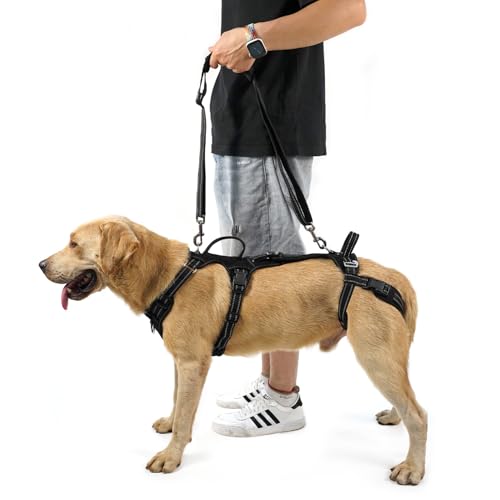
- Travel and outdoor use: Choose a durable, water-resistant material with reflective trim and a handle on the back.
- Small or sensitive dogs: Prioritize soft, low-profile straps that do not press on the shoulders or chest.
If your dog has joint, breathing or mobility concerns, check with your veterinarian before choosing a harness, since some designs restrict movement at the shoulders.
Step 2: Measure Your Dog Correctly
Most sizing problems start with inaccurate measurements. Use a soft tape measure and a helper if your dog is wiggly.
- Chest girth: Measure around the widest part of the ribcage, just behind the front legs. Keep the tape snug but not tight, with one finger able to slide underneath.
- Neck circumference: Measure where a collar would sit, if you plan to use one alongside the harness.
- Length (if listed): Some brands ask for back length, from the base of the neck to the base of the tail. Check the chart.
- Weight: Use it only as a rough guide. Two dogs of the same weight can have very different builds.
Always compare your measurements to the brand’s size chart rather than the size name. A “Medium” from one company may fit very differently from a “Medium” from another.
Step 3: Check the Fit on Your Dog
Once the harness arrives, put it on your dog indoors before you go outside. Adjust the straps slowly, and check these points:
| Check | What a good fit looks like | Warning sign |
|---|---|---|
| Chest strap | Two fingers fit flat under the strap | Strap digs in or slides up toward the neck |
| Armpit straps | Snug, no rubbing, legs move freely | Rubbing, chafing or restricted gait |
| Chest ring position | Centered on the breastbone, between the front legs | Ring sits high on the neck or off to one side |
| Overall movement | Dog walks, sits and lies down normally | Dog stiffens, paws at the harness or backs away |
Watch your dog move for a few minutes. Look for hitching in the stride, repeated scratching or reluctance to sit. Any of these means the fit needs adjusting or the size may be wrong.
Step 4: Attach the Leash and Do a Short Test Walk
Clip the leash to the front ring and walk your dog in a low-distraction area, such as a quiet driveway or hallway. Notice whether they turn toward you when they pull, and whether the harness shifts. A good front-clip harness should redirect the dog gently without forcing them into an awkward position.
For detailed walking technique, including how to handle a dog who lunges, see Walking Dog with a Harness: Step-by-Step Guide for Safe, Comfortable Walks.
Step 5: Build a Pre-Walk Routine
Harnesses loosen, buckles shift and straps can twist with use. A quick check before each walk prevents problems:
- Confirm all buckles are fully latched and the straps are not twisted.
- Check the chest ring for wear, fraying or stitching loosened from the webbing.
- Make sure your dog’s coat is not caught under the straps.
- Test the fit with two fingers after the first few minutes outside.
Common Mistakes to Avoid
- Buying by weight alone. Always use chest girth and the brand’s chart.
- Leaving a harness too tight to “stop pulling.” A tight harness causes discomfort and does not solve the underlying behavior.
- Clipping to the back ring during a pulling phase. Use the front ring for steering, and the back ring only where the design is meant for it.
- Ignoring rubbing. Red patches or fur loss under the straps mean the fit or padding needs attention.
- Using a harness with a worn or damaged buckle. Replace it before the next walk.
Tips for Getting the Most From Your Harness
- Introduce the harness gradually. Let your dog wear it at home for short periods with treats.
- Remove it after walks so skin can breathe, especially in warm weather.
- Wash the harness according to the manufacturer’s instructions to keep straps and padding clean.
- Keep a spare buckle or strap on hand if the harness uses replaceable parts.
- If your dog seems uncomfortable for more than a day or two, consult your veterinarian or a certified trainer.
Recommended gear
These types of products can help with the steps above. Choose by fit and construction rather than by brand alone.
- Soft tape measure: A flexible fabric or vinyl tape makes it easier to get an accurate chest girth reading on a wriggling dog. View on Amazon
- Padded front-clip harness: Padding along the chest and underarm straps reduces rubbing during daily walks. View on Amazon
- Reflective dog leash: A leash with reflective stitching improves visibility on early morning and evening walks. View on Amazon
FAQ
How tight should a front range dog harness be?
You should be able to slide two fingers flat under the chest strap and any armpit straps. If you can fit more, tighten it. If you cannot fit two fingers, loosen it.
Can I use a front range harness on a puppy?
Many brands offer puppy sizes, but puppies grow quickly. Check the fit every few weeks and follow the manufacturer’s guidance on adjustment range.
Will a front-clip harness stop my dog from pulling?
It can reduce pulling by turning the dog’s body when they lunge, but it does not replace training. Pair the harness with consistent loose-leash practice.
How often should I replace a harness?
Replace it if you see fraying webbing, cracked buckles, loose stitching or a stretched chest ring. Heavy daily use wears gear faster than occasional walks.
Should I use a collar and a harness together?
Many owners do, using the collar for ID tags and the harness for walking. Make sure the collar is not too tight and that the two do not rub against each other.
Is a front range harness safe for dogs with breathing problems?
Front-clip designs usually avoid pressure on the throat, which is one reason they are often suggested. However, dogs with breathing or joint conditions should be cleared by a veterinarian before using any harness.
My dog backs out of the harness. What should I do?
Check the fit first, since a loose chest strap is the usual cause. If the fit is correct, try a different style or size, and consider a professional fitting or training session.
Conclusion
A well-chosen front range dog harness makes everyday walks more comfortable and easier to manage. Measure your dog carefully, check the fit with two fingers, and run a short test walk before heading out. Build a quick pre-walk routine, watch for rubbing or stiffness, and replace worn parts promptly. If your dog has health concerns, check with your veterinarian before making the switch.
Related reading
- Dog Harness Front Clip No Pull: 5 Best Picks for Calm Walks (2026)
- 6 Best Front Clipping Dog Harness for Loose-Leash Walks (2026)
- How to Choose and Fit a Dog Harness
- Wild Ones Dog Harness: How to Choose and Fit One for Daily Walks
- Voyager Step in Air Dog Harness: How to Fit and Use It Correctly
- Two Hounds Dog Harness: How to Choose and Fit One for Daily Walks
Ready to choose one?
About Claire Whitaker
Claire Whitaker is part of our editorial team and reviews and edits our everyday pet gear guides, checking product details against manufacturer specifications and owner feedback.