 By Ethan Brooks
Shoppers searching for a wopet automatic pet feeder red light are usually trying to solve a specific problem: they want a feeder that dispenses meals on schedule, shows a clear status indicator when something needs attention, and stays reliable when they are away from home for a workday or a weekend. A red light on a feeder can mean many things, from a low battery to a jammed food chute or an empty hopper, so the indicator matters as much as the portion control. This guide compares nine feeders in the same category, with an emphasis on indicator lights, programming simplicity, portion accuracy and how each model handles dry kibble over time.
Our Top Picks
Quick Comparison
| Product | Best for | Key feature |
|---|---|---|
| PetSafe Two Meal Automatic Pet Feeder | Owners who want two daily meals with simple programming | Two-meal scheduling with a visible status light |
| PetLibro Air Automatic Pet Feeder | Owners who want app control and a camera-free status view | Wi-Fi app with schedule and alert notifications |
| Petmate Automatic Pet Feeder | Budget-minded owners with a single daily meal | Straightforward timer and simple status indicator |
| Meowant Automatic Pet Feeder | Cat owners needing small, frequent portions | Multi-meal timer suited to small kibble |
| Pawise Automatic Pet Feeder | Households with one dog and one cat | Adjustable portion dial with clear indicator |
| Bsemax Automatic Pet Feeder | Owners wanting a compact footprint | Slim design with a backup power option |
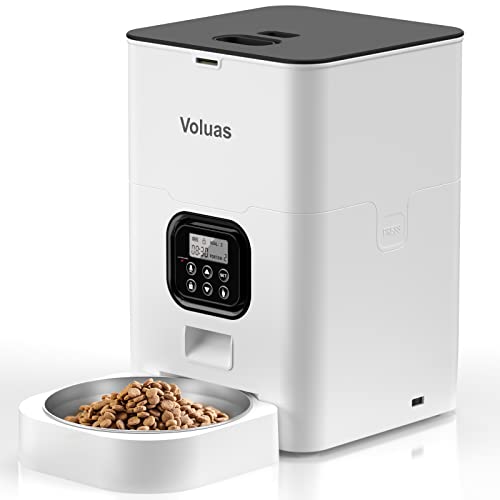
| Voluas Automatic Pet Feeder | Owners who prioritize portion control | Fine portion steps for measured feeding |
| Pitpet Automatic Pet Feeder | Multi-pet homes that need separate meals | Programmable schedules across several meal slots |
| Westlink Automatic Pet Feeder | Owners wanting a larger hopper for long absences | Large-capacity food storage |
PetSafe Two Meal Automatic Pet Feeder
This model suits households that feed a dog or cat twice a day and want a feeder that stays simple to program. Owners often report that the two-meal schedule covers typical morning and evening routines without extra setup.
Key specs
- Two programmable meal times per day
- Portion control set by the manufacturer’s measured settings
- Status light for power and dispensing activity
Pros
- Easy two-meal programming for daily routines
- Clear status light makes it easy to spot a power or dispensing issue
- Consistent portions with dry kibble of the recommended size
Cons
- Limited to two meals per day, so it does not suit frequent feeders
- Sticky or oily food can clog the chute, as with most gravity feeders
PetLibro Air Automatic Pet Feeder
Owners who want to check meal status from a phone, or change a schedule while away, will find this model’s app features useful. It fits well for busy households where the feeding routine shifts from day to day.
Key specs
- Wi-Fi connectivity with a companion app
- Scheduled meals with per-meal portion settings
- Status alerts for feeding events and certain fault conditions
Pros
- Remote schedule changes from a phone
- Notifications help confirm that meals were dispensed
- Suits irregular schedules better than manual timers
Cons
- Requires a stable home Wi-Fi network for app features
- Routine app updates can change menu layouts over time
Petmate Automatic Pet Feeder
This is a sensible match for owners with one pet who eats a single measured meal per day and wants a feeder that does not require a learning curve. Its timer interface is intentionally basic.
Key specs
- Single or limited daily meal timer
- Simple dial-based portion setting
- Battery-powered operation
Pros
- Minimal programming steps
- Simple design is easy to clean
- Works well for predictable single-pet routines
Cons
- Fewer scheduling options than multi-meal models
- Limited indicator detail compared with app-connected feeders
Meowant Automatic Pet Feeder
Cat owners who want several small portions across the day often look at this type of feeder. Owners of smaller pets generally find that finer portion steps reduce overfeeding.
Key specs
- Multi-meal daily timer
- Small-kibble compatible dispensing
- Indicator light for active schedules
Pros
- Supports several small meals per day
- Suitable for cats and very small dogs
- Compact enough for a kitchen counter
Cons
- Not designed for large kibble or heavy daily volumes
- Requires careful portion checks when switching foods
Pawise Automatic Pet Feeder
Homes with one dog and one cat can use this feeder’s adjustable dial to match different portion sizes. It is a practical pick when two pets eat at different times in the same space.
Key specs
- Adjustable portion dial
- Scheduled dispensing with indicator lighting
- Designed for dry kibble
Pros
- Flexible portion adjustment
- Indicator light makes status easy to read at a glance
- Works for mixed-pet households
Cons
- Dial settings can shift slightly if the unit is bumped
- Not all models include a backup power option
Bsemax Automatic Pet Feeder
Owners with limited counter space or a small kitchen often look for a slim footprint. This feeder is generally described as compact, which fits apartments and smaller homes.
Key specs
- Slim, compact housing
- Scheduled meal dispensing
- Indicator light for operating status
Pros
- Small footprint suits tight spaces
- Simple scheduling for routine feeding
- Easy to move between rooms
Cons
- Smaller food capacity means more frequent refills
- Limited for large dogs or high-volume feeding
Voluas Automatic Pet Feeder
Owners managing a pet’s weight or following a vet-directed diet often prioritize portion accuracy. This model’s finer portion steps make measured feeding more manageable.
Key specs
- Fine-step portion control
- Multi-meal scheduling
- Status light for dispensing events
Pros
- Fine portion steps support measured feeding
- Consistent dispensing with dry kibble
- Scheduling is straightforward
Cons
- Portion accuracy depends on kibble size and shape
- Requires a calibration check after changing foods
Pitpet Automatic Pet Feeder
Multi-pet households needing separate meal times for several animals can use a feeder with multiple scheduled slots. This type of model suits homes where feeding must be staggered.
Key specs
- Multiple programmable meal slots
- Portion control per slot
- Indicator light for active programs
Pros
- Supports staggered feeding for several pets
- Per-slot portions help manage different diets
- Indicator shows which program is running
Cons
- More programming steps than single-meal models
- Owners often need to test each slot to confirm timing
Westlink Automatic Pet Feeder
Owners who expect to be away for a full day or longer may value a larger food hopper. A higher-capacity model reduces the number of refills needed between visits.
Key specs
- Large-capacity food storage hopper
- Scheduled meal dispensing
- Battery or power backup options vary by configuration
Pros
- Larger hopper reduces refill frequency
- Suits larger dogs and longer absences
- Scheduled dispensing keeps routine consistent
Cons
- Bulkier footprint on a counter or floor
- Stored food can go stale if the hopper is not sealed and refilled regularly
Buying Guide
Choosing the right feeder comes down to a few practical questions: How many meals does your pet need each day? How much food should each meal contain? What happens when the light turns red? Answering these before shopping keeps the choice focused.
Selection Criteria
The picks above were compared using manufacturer specifications, general brand reputation and patterns that owners commonly describe in reviews. Nothing here reflects personal testing or lab results. The main criteria were indicator clarity, scheduling flexibility, portion accuracy, capacity and ease of cleaning.
Important Features
- Status indicator: A red light usually signals a fault or an empty hopper. Check the manual for what each color or blink pattern means on your specific model.
- Meal scheduling: Confirm how many meal times the feeder supports and whether you can set different portions for each.
- Portion control: Look for fine adjustment steps if your pet needs measured feeding.
- Power backup: Battery backup keeps the schedule running during a short outage.
- Anti-clog design: Wide chutes and dry-only use reduce jams.
Specs to Check
- Hopper capacity in cups or grams
- Number of programmable meals per day
- Minimum and maximum portion size per meal
- Compatible kibble size
- Power source: AC adapter, batteries, or both
- Connectivity: Wi-Fi app support or manual only
Choosing by Need
- Single meal, one pet: A basic timer model is usually enough.
- Two meals, one pet: A two-meal feeder with a clear status light fits most routines.
- Frequent small meals for cats: Choose a feeder with fine portion steps.
- Multiple pets: Look for multiple meal slots so each animal can be fed at its own time.
- Long absences: Prioritize hopper capacity and a reliable backup power option.
Things to Watch Out For
- Do not feed wet or oily food in a gravity feeder, since it can clog the chute.
- Check the red light immediately. A jam or empty hopper will stop meals silently otherwise.
- Re-check portions after switching kibble brands, because density changes the dispensed weight.
- Clean the hopper regularly to prevent mold or pests.
If your pet has a medical condition or requires a prescription diet, consult your veterinarian before setting portions or changing feeding schedules.
FAQ
What does a red light on an automatic pet feeder mean?
A red light commonly indicates a fault, such as an empty hopper, a jam, or low battery. The exact meaning varies by model, so check your manual for the specific color and blink pattern.
How do I fix a red light on my feeder?
Start by checking the food hopper and dispensing chute for blockages. Confirm the power source and battery level, then restart the unit. If the light stays red, follow the troubleshooting section of the manufacturer’s manual.
Can an automatic feeder work during a power outage?
Only models with battery backup can keep the schedule running during an outage. Feeders without backup will stop dispensing until power returns, so check this feature before buying.
How often should I clean an automatic pet feeder?
Most manufacturers recommend cleaning the hopper and food path at least once a week, and more often in humid conditions. Always unplug the unit before cleaning.
Is an automatic feeder safe for cats and small dogs?
Many models are suitable for small pets when set with appropriate portions. Choose a feeder with fine portion steps and confirm kibble size compatibility. Consult your veterinarian about the correct daily amount.
Can I use wet food in an automatic pet feeder?
Most gravity-style automatic feeders are designed for dry kibble only. Wet food can spoil quickly and clog the mechanism. Check the manufacturer’s guidance before using any non-dry food.
How do I know if the feeder is dispensing the right amount?
Weigh a test dispense on a kitchen scale and compare it with the manufacturer’s stated portion. Repeat the check after changing food brands, since kibble density affects the measured amount.
Conclusion
For a single meal and a simple routine, a basic timer model such as the Petmate Automatic Pet Feeder keeps things uncomplicated. Owners who want two meals with a clear status light may prefer the PetSafe Two Meal Automatic Pet Feeder. Those who want remote schedule changes should look at the PetLibro Air Automatic Pet Feeder, while cat owners needing small portions will find the Meowant Automatic Pet Feeder and Voluas Automatic Pet Feeder well suited to measured feeding. Multi-pet homes can compare the Pitpet Automatic Pet Feeder and Pawise Automatic Pet Feeder, and owners planning long absences should prioritize the Westlink Automatic Pet Feeder for its larger hopper. Whatever you choose, read the manual’s guide to red light codes before you rely on the feeder.
Related reading
- Wopet Automatic Pet Feeder Setup: 7 Best Picks Compared (2026)
- Wopet Automatic Pet Feeder Manual: Setup, Programming and Troubleshooting Guide
- Wopet Automatic Pet Feeder Manual Pdf: Setup and Program Steps
- Voluas Automatic Pet Feeder Setup: 6 Best Picks Compared (2026)
- Voluas Automatic Pet Feeder Review: Features and Performance
About Ethan Brooks
Ethan Brooks is part of our editorial team and reviews and edits our everyday pet gear guides, checking product details against manufacturer specifications and owner feedback.