 By Graham Fisher
Updated November 2026
A dog harness size chart matches your dog’s chest girth, and sometimes neck size and weight, to a harness size code such as XS, S, M or L. Measure your dog, compare the numbers to the manufacturer’s chart, and you will have a starting size. The fit still needs a final check, because brands cut their harnesses differently. A related read: Dog Harness 2 Hounds Design: How to Fit and Choose the Right Size.
Measure Your Dog Before Using Any Size Chart
Charts only work when the measurements are accurate. Use a soft cloth tape measure and take each reading twice.
Shopping for one? See our guide: Buddy Belts Dog Harness vs Standard Step-In Harness: Which Should You Choose?.
- Chest girth: Wrap the tape around the widest part of the chest, just behind the front legs. Keep the tape level and snug, not tight.
- Neck: Measure where a collar normally sits, usually where the neck meets the head. Leave room for two fingers.
- Weight: Use a scale when you can. Weight is a rough backup only, since a deep-chested dog and a barrel-shaped dog can weigh the same and need different sizes.
- Length (if listed): Some brands use back length, from the base of the neck to the tail. Note it only if the chart asks for it.
Read the Chart Against Your Measurements
Every brand publishes its own chart, and the ranges do not match across companies. A dog measuring 22 inches at the chest might fit a medium in one line and a large in another. Always compare against the chart for the specific harness you plan to buy.
Look for these details on the chart:
- Whether the range is based on chest girth, neck, weight or a combination.
- Whether the chart lists adjustable ranges, which usually means a single size covers several inches.
- Whether the manufacturer recommends sizing up for thick coats or sizing down for slim, narrow-chested breeds.
Check the Fit After Putting It On
A harness that matches the chart can still fit poorly. Once it is on, check these points:
- You can slide two fingers flat under every strap.
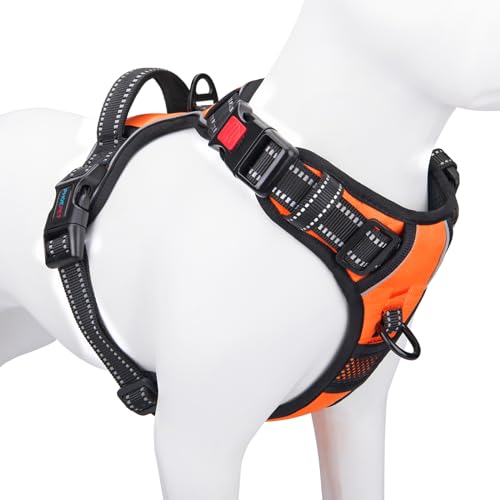
- The chest plate sits centered on the breastbone and does not ride up toward the throat.
- The straps do not rub the armpits or press into the shoulders when your dog walks.
- Your dog can sit, lie down and move its legs freely without the harness shifting.
If the fit is off, try adjusting the straps before changing sizes. Many harnesses have a range of adjustment that covers small differences in girth. For guidance on walking with the harness once it fits, see Walking Dog with a Harness: Step-by-Step Guide for Safe, Comfortable Walks.
Common Mistakes When Using a Dog Harness Size Chart
- Measuring over a thick winter coat, which inflates the reading and leads to an oversized harness.
- Choosing by weight alone, which ignores chest shape.
- Pulling the tape tight, which gives a number smaller than the real girth.
- Assuming a size from one brand fits the same way in another.
- Ignoring fit changes in puppies, which grow fast and may need a new size every few months.
Recommended gear
A soft flexible tape measure is the simplest tool for accurate girth readings, and it costs little to keep in a drawer. View on Amazon
A digital pet scale helps when you want to confirm weight against a chart that uses it as a reference. View on Amazon
If you are comparing several harness styles, a sizing guide that covers multiple dog gear types can help you keep measurements organized. View on Amazon
FAQ
Should I size my dog by chest or neck measurement?
Chest girth is the most common basis for harness sizing because it determines whether the harness can fit around the body safely. Neck measurement matters mainly for collar and combined harness-collar designs.
What if my dog falls between two sizes?
Try the smaller size first if the straps adjust enough to fit comfortably, since an oversized harness can slip. If the chest plate presses or the straps are fully extended, move up a size.
How often should I re-measure my dog?
Re-measure every few months for puppies and any time your dog gains or loses significant weight. Adult dogs with stable weight usually need a check once a year or when the harness starts to feel loose or tight. We also found Dog Harness Sizing Guide: How to Measure and Fit Your Dog (Step-by-Step) useful on this point.
Conclusion
Measure your dog’s chest girth carefully, compare it to the chart for the exact harness you are buying, and then check the fit by hand once it is on. A good match is one that stays in place and lets your dog move freely. If you have a health condition or mobility issue, ask your veterinarian or a certified trainer to confirm the right style and fit.
Related reading
- Dog Harness Top Paw: How to Choose and Fit the Right Size (2026)
- Rough Wear Dog Harness: How to Pick One That Lasts
- Lifting Harness for Dog: 3 Best Options for Senior and Injured Dogs (2026)
- How to Wear a Harness for Dog: A Step-by-Step Guide for Beginners
Ready to choose one?
About Graham Fisher
Graham Fisher is part of our editorial team and reviews and edits our everyday pet gear guides, checking product details against manufacturer specifications and owner feedback.