 By Claire Whitaker
Updated November 2026
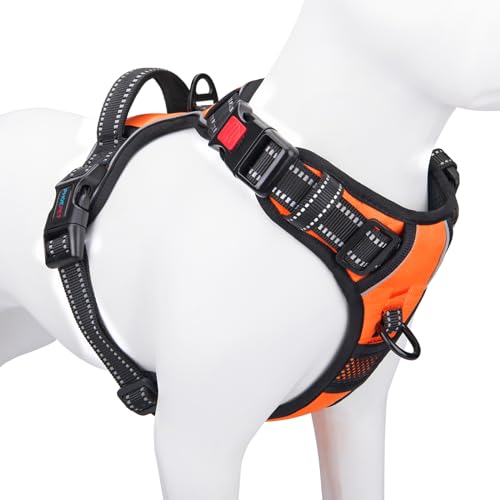
A rough wear dog harness is built to handle daily abuse: pulling on walks, rolling in the yard, scrambling over rocks and getting tugged by a determined dog. This guide shows you what to look for in materials, stitching and hardware so you can pick a harness that holds up over months of use, not just weeks.
Start With the Materials
Most failures in a harness begin with the webbing. Look for nylon or polyester webbing that is listed as heavy-duty or tactical grade, and check that the product page gives a width. Wider webbing spreads load more evenly across the chest and shoulders. Padding matters too, but it should not be so thick that it traps moisture or heat. Water-resistant coatings help if your dog swims or walks in wet weather, and they make the harness easier to rinse clean after mud season.
Shopping for one? See our guide: Buddy Belts Dog Harness vs Standard Step-In Harness: Which Should You Choose?.
Check the Stitching and Load Points
Stitching is where rough wear usually shows up first. Turn the harness over and look at the seams where the straps meet the chest plate and where the leash attachment is anchored.
- Look for bar-tacked stitching, which is a dense block of thread at stress points, rather than a single line of straight stitching.
- Check that the thread is a bonded or UV-resistant type if the manufacturer mentions it.
- Run a finger along the seams. Loose threads or uneven spacing are early warning signs.
- Confirm that the leash ring is sewn into a fixed loop of webbing, not just attached through a single layer.
Evaluate the Hardware
Buckles and D-rings take a lot of force during pulling and sudden stops. Metal hardware, usually stainless steel or aluminum alloy, tends to outlast plastic under constant tension. Plastic side-release buckles are convenient, but many owners find them the weakest point on a harness that gets heavy use. Look for hardware that is rated or described as load-bearing, and make sure the buckles click fully closed with no gaps.
Fit the Harness Correctly for Long-Term Wear
A harness that fits poorly wears out faster because straps rub unevenly and stress concentrates in the wrong places. Measure your dog’s girth at the widest point of the chest, just behind the front legs, and compare it to the manufacturer’s size chart. Most harnesses should allow two fingers to slide under each strap. Adjust the straps so the harness sits flat and does not shift when your dog walks. For more on sizing, see How to Choose and Fit a Dog Harness.
Chest placement also affects wear. Front-clip designs place the leash ring on the chest, while back-clip designs keep it on the spine. Each one loads the webbing differently, so check Front-Clip vs Back-Clip Dog Harness: Which One Is Better? if you are deciding between them.
Recommended gear
A few types of gear pair well with a durable harness and help it last longer:
- A sturdy nylon leash with a reinforced clip keeps the load off the harness ring. View on Amazon
- A soft-bristle rinse brush helps remove grit from the webbing after muddy walks, which slows abrasion. View on Amazon
- A spare harness in the same size lets you rotate between two, so one can dry fully between walks. View on Amazon
Common Mistakes
- Choosing a harness by color or style before checking webbing width and stitching.
- Skipping the size chart and buying based on your dog’s weight alone.
- Clipping a leash to a worn or frayed ring, which can fail under a sudden lunge.
- Leaving a wet harness on your dog for hours, which weakens fibers and encourages odor.
- Ignoring fraying or loose hardware. Replace the harness as soon as you see it.
FAQ
How long should a rough wear dog harness last?
Lifespan depends on use, climate and dog size, but a well-made harness on a daily walking routine often lasts a year or more. Check it every few weeks for frayed webbing and loose stitching.
Can a heavy-duty harness hurt my dog?
Stiff or overly thick harnesses can rub or restrict movement, so fit matters as much as strength. If your dog shows redness, limping or sores, stop using the harness and consult your veterinarian. You may also like 4 Best Dog Harness for Cars Picks for Safer Rides.
Should I use a harness or a collar for pulling dogs?
Many trainers recommend a well-fitted harness for dogs that pull, because it spreads force across the chest rather than the neck. If pulling persists, a certified trainer or veterinary behaviorist can help.
Conclusion
A rough wear dog harness earns its place through strong webbing, reinforced stitching and dependable hardware, all fitted correctly to your dog’s body. Inspect your harness regularly, rotate spares when possible and replace it at the first sign of damage. Good gear pays off every time you walk out the door.
Related reading
- Easy Walk Dog Harness: How to Pick and Fit One for Calm Walks
- Dog Hair Cutting Harness vs Grooming Rake: Which Should You Choose?
- Chest Harness for Dog (2026): Which Should You Choose?
- When to Replace a Dog Toy: Signs a Toy Is No Longer Safe
Ready to choose one?
About Claire Whitaker
Claire Whitaker is part of our editorial team and reviews and edits our everyday pet gear guides, checking product details against manufacturer specifications and owner feedback.