 By Claire Whitaker
Updated November 2026
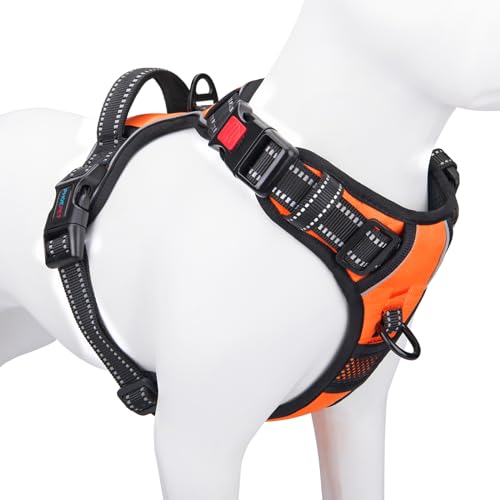
Learning how to put on harness on dog takes only a few minutes once you know the right order. You will fit the harness so it sits correctly on your dog’s chest and back, fasten it without pinching, and check that it will stay put on the walk. The method below works for most step-in and over-the-head harnesses.
Before You Start: Check the Fit and Gather Supplies
A harness that fits poorly is the most common reason dogs slip out or get sore, so take a minute to check sizing first. Measure your dog’s chest at its widest point just behind the front legs, and compare that number with the manufacturer’s size chart. For more on sizing, see How to Choose and Fit a Dog Harness.
Shopping for one? See our guide: Buddy Belts Dog Harness vs Standard Step-In Harness: Which Should You Choose?.
Have these ready:
- The harness, with all buckles and straps unfastened
- A leash and a few small treats
- A flat, quiet spot where your dog can stand comfortably
Step-by-Step: How to Put a Dog Harness On
- Lay the harness flat. Spread it on the floor with the chest piece facing up and the adjustment straps loosened so the opening is wide.
- Invite your dog to step in. For a step-in harness, lift each front paw into its matching loop, one at a time, and reward after each paw.
- Bring the strap up and over the back. Pull the harness up the chest and fasten the buckle along the back, keeping the strap centered over the spine.
- Check the chest strap. The chest plate should sit flat against the breastbone, not down near the throat or up on the neck.
- Adjust for fit. You should be able to slide two fingers flat under each strap. Tighten or loosen the side adjusters so the harness stays snug without pressure marks.
- Clip the leash and test. Attach the leash to the clip your walk requires, then take a few steps indoors to confirm the harness does not shift or rub.
Putting On an Over-the-Head Harness
For over-the-head styles, hold the chest piece open, guide your dog’s head through, then drop the front panel into place. Close the buckle behind the neck and adjust the side straps afterward. Dogs with a strong dislike of having things near their head often accept this style better when you start with the harness on the floor and let them sniff it first.
Common Problems and Quick Fixes
| Problem | Likely cause | Fix |
|---|---|---|
| Harness slides toward the neck | Chest strap too high or too loose | Lower the chest plate and tighten the side straps |
| Dog backs out of it | Too loose, or wrong style for the dog’s build | Check the fit and try a different size or style |
| Dog freezes or resists | Harness is new or the dog is anxious | Practice short sessions with treats before walks |
Tips for a Smoother Harness Routine
- Use the same putting-on method every time so your dog learns the cue.
- Reward calm behavior, not just the final fastening.
- Remove the harness after walks and check for rubbing under the legs and behind the front legs.
- Never leave a harness on an unsupervised dog if it has loose straps or a snag risk.
- If your dog has a neck or back condition, ask your veterinarian which harness style is appropriate.
Recommended Gear
- Step-in harness: Its wide leg loops make it easy for dogs who dislike having things over their head. View on Amazon
- Adjustable padded harness: Padding and multiple adjustment points help you dial in a snug, comfortable fit. View on Amazon
- Reflective leash clip set: Clips that match your harness’s attachment points keep the leash secure during walks. View on Amazon
FAQ
How tight should a dog harness be?
You should be able to slide two fingers flat under each strap without the harness shifting or sliding up. If it is loose enough to rotate, tighten it further.
Can I put a harness on a dog that doesn’t like being handled?
Yes, but go slowly. Use treats, short sessions and a consistent routine, and consider a professional trainer if the resistance is strong.
How long can a dog wear a harness?
Remove it when your dog is resting or unsupervised, and check the skin under the straps regularly. If you notice redness or hair loss, consult your veterinarian.
Conclusion
Knowing how to put on harness on dog correctly keeps walks safer and more comfortable. Start with a proper fit, follow the same steps each time, and reward calm cooperation. Once the routine feels easy, you can focus on enjoying the walk.
Related reading
- How to Choose and Fit a Dog Harness
- Easy Walk Dog Harness: How to Pick and Fit One for Calm Walks
- Front-Clip vs Back-Clip Dog Harness: Which One Is Better?
- Dog Hair Cutting Harness vs Grooming Rake: Which Should You Choose?
- Chest Harness for Dog (2026): Which Should You Choose?
- How to Wash a Dog Bed
Ready to choose one?
About Claire Whitaker
Claire Whitaker is part of our editorial team and reviews and edits our everyday pet gear guides, checking product details against manufacturer specifications and owner feedback.