 By Claire Whitaker
Updated November 2026
A good pet carrier for a medium dog gives your dog enough room to stand, turn around and lie down, while still fitting where you need it to go. This guide walks you through measuring your dog, choosing between soft and hard styles, and checking the features that matter for everyday use. Most owners can narrow their choices to two or three options within about 20 minutes.
Step 1: Measure Your Dog Correctly
Sizing is where most carrier purchases go wrong. Manufacturers list interior dimensions, so you need measurements that match what the dog will actually do inside. For a deeper look, Southwest Pet Carrier Dimensions: How to Measure and Choose a Fit covers this in detail.
- Length: Measure from the base of the neck to the base of the tail, then add 2 to 4 inches so your dog can turn around.
- Height: Measure from the floor to the top of the head while your dog is sitting upright, then add 2 inches.
- Width: Measure at the widest point of the shoulders or hips, then add about 2 inches.
Compare these numbers to the interior size listed by the manufacturer, not the exterior. Many soft carriers list only outside dimensions, so check the product page or the spec sheet before ordering.
Step 2: Choose Soft or Hard Construction
Soft-sided carriers are lighter and fold flat, which helps with car trips and carrying. Hard-sided carriers offer better impact protection and are easier to clean, but they take more space. For a medium dog, the right choice depends on how you travel and how often the carrier is used.
For a deeper comparison, see Soft vs Hard Pet Carriers (and Backpacks vs Totes). If you plan to fly, Soft-Sided Pet Carriers: Airline Travel, Sizing and Comfort covers how soft designs handle tight seat spaces.
Step 3: Check Airline and Travel Limits
If your dog will fly in the cabin, the carrier must fit under the seat in front of you. Airline dimension limits vary, and medium dogs often exceed them. Medium dogs usually cannot fly in cabin, so confirm with your airline before booking. Check the airline’s current pet policy directly, since rules change.
For background on size standards, read What Is the International Air Transport Association Pet Carrier Standard?. For one carrier’s measurements, see JetBlue Pet Carrier Measurements: What Size Fits Under the Seat?
Step 4: Evaluate Daily-Use Features
Once the size works, look at the details that affect everyday use:
- Zippers that run the full length of the door and have two pulls for ventilation
- A removable, washable bed or pad
- Sturdy base with a waterproof lining
- Mesh panels on at least two sides for airflow
- Secure leash or tether attachment points
Wheels and carrying straps matter more for heavier dogs. If you walk your dog to and from transport, Wheels for Pet Carrier (2026): Which Should You Choose? explains when wheels are worth it.
Common Mistakes to Avoid
- Buying based on weight alone instead of measured interior length and height.
- Forgetting to add room for the dog to stand and turn.
- Choosing a carrier with a single front door when a top or side opening would make loading easier.
- Skipping a test run at home before a trip.
- Assuming an airline-approved label means your dog will fit the seat space.
Recommended Gear
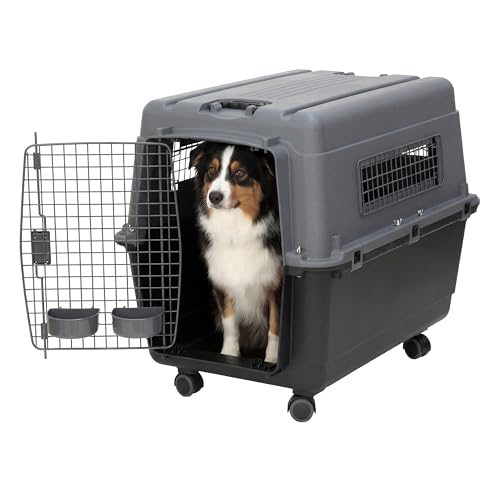
A carrier with a removable washable pad and two-way zippers makes daily cleaning and ventilation easier. Look for a sturdy hard-sided model if your dog is an anxious traveler and needs more solid walls.
- Petmate Top Load Pet Carrier: Top-loading design helps you lift a reluctant dog in without pushing through a narrow door. View on Amazon
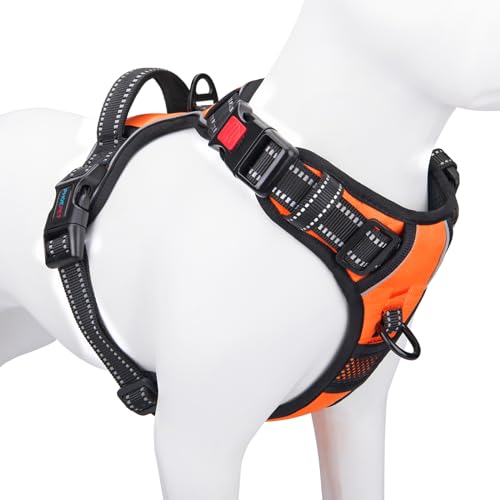
- Pettecc Tractive GPS 3G Pet Tracker: A tracker clipped to a harness or collar helps locate a dog that escapes during transfers. View on Amazon
FAQ
How big should a pet carrier be for a medium dog?
The carrier should allow your dog to stand, turn around and lie down comfortably. Measure length, height and width, then add 2 to 4 inches of room. Always compare against the manufacturer’s interior dimensions.
Can a medium dog fly in the cabin?
Most airlines restrict cabin travel for dogs of this size, so check the airline’s current policy before booking. If cabin travel isn’t allowed, ask about cargo options and confirm details directly with the airline.
Are soft or hard carriers better for a medium dog?
Soft carriers are lighter and easier to store, while hard carriers offer more protection and easier cleaning. Choose based on how you travel and how your dog handles confinement.
Conclusion
Measure your dog carefully, use interior dimensions to compare options, and pick a style that matches how you travel. Test the carrier at home before any trip so your dog learns it is a safe place. Check with your airline or veterinarian for travel rules specific to your situation.
Ready to choose one?
About Claire Whitaker
Claire Whitaker is part of our editorial team and reviews and edits our everyday pet gear guides, checking product details against manufacturer specifications and owner feedback.