By Claire Whitaker
Updated November 2026
To walk dog on leash well, hold the leash in your hand with a loose curve, keep your dog beside you at your left or right side, and reward him for staying near you. Most leash problems come from a leash that is too tight, too long, or started without any practice at a standstill. Short, consistent sessions fix most of them within a few weeks.
Why Dogs Pull When You Walk Them on Leash
Dogs pull because pulling works. If forward movement gets them to a smell, another dog or the end of the block, they learn to lean into the leash. A tight leash also creates resistance, so the dog pushes back harder. Excitement, young age and an unfamiliar route all make it worse. Some dogs pull because they are simply under-exercised and need to burn energy before they can focus.
Shopping for one? See our guide: Dog Leash With Chain vs Nylon Leash (2026): Which Is Better for Daily Walks?.
Your own body language matters too. If you lean forward, walk fast or stare at the sidewalk ahead, your dog reads urgency and moves faster. Keeping your posture relaxed helps more than most people expect.
Factors That Affect How the Walk Goes
Four things shape how well a walk goes: leash length, hardware, your dog’s energy level and the environment.
- Leash length: A standard 4- to 6-foot leash gives you the most control in busy areas. Longer leashes give freedom but make pulling easier to start.
- Hardware: A fixed leash is more predictable than a retractable cord. Retractable leashes can snap back, wrap around legs or lose tension suddenly, so many trainers avoid them for daily walks. See our guide to Retractable Leashes: Cord vs Tape and When a Fixed Leash Is Safer for details.
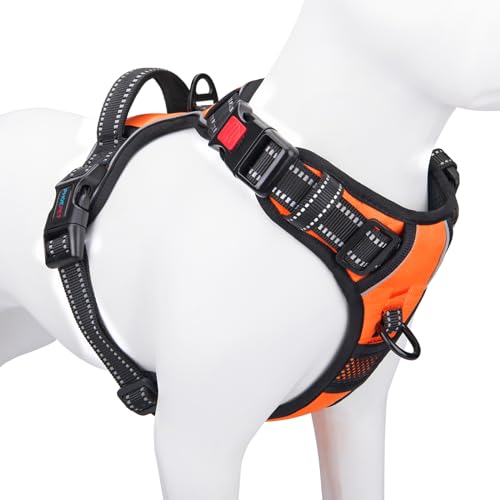
- Harness vs collar: A well-fitted harness spreads pressure across the chest instead of the neck. Read Easy Walk Dog Harness: How to Pick and Fit One for Calm Walks before deciding.
- Environment: Traffic, other dogs and food on the ground raise arousal. Start training in quiet spaces and move to busier streets gradually.
How to Fix Leash Walking Problems
Good leash manners are taught, not inherited. Work in short blocks of five to ten minutes, a few times a day, and reward calm position often.
- Start indoors or in a quiet yard with the leash attached and a handful of treats ready.
- Stand still. When your dog is beside you with a loose leash, mark it with “yes” and give a treat.
- Take one step. If the leash stays slack, reward. If your dog surges ahead, stop and wait until he returns to your side.
- Change direction often, so your dog has to keep checking where you are.
- Gradually increase distance and distractions. Reward more often at first, then less often as the behavior holds.
- Keep the leash short enough that it never goes tight. Holding the handle close to your body makes this easier.
If pulling is severe, or your dog reacts aggressively to people or animals, consult a certified professional dog trainer or a veterinary behaviorist for a tailored plan.
What We’d Use
A fixed nylon or leather leash in the 4- to 6-foot range is the most dependable choice for daily walks; search for a View on Amazon to compare options.
For dogs that pull hard, a front-clip harness discourages lunging by turning your dog gently toward you; look for a View on Amazon sized by chest measurement.
FAQ
How long should I practice leash walking each day?
Two or three sessions of five to ten minutes each is enough for most dogs. Short, frequent practice beats one long session because it keeps your dog focused.
Is it okay to use a retractable leash for walks?
Retractable leashes can work for open areas, but they offer less control and can cause injuries if they snap back suddenly. A fixed leash is usually safer for everyday walking.
Why does my dog walk nicely at home but pull outside?
Outdoor walks have far more smells, sounds and movement. Dogs generalize slowly, so practice gradually in new places and expect some regression at first.
Related reading
- Dog Leash No Pull vs Standard Leash (2026): Which Is Better for Daily Walks?
- Bungee Cord Dog Leash vs Standard Leash (2026): Which Is Better for Daily Walks?
Ready to choose one?
About Claire Whitaker
Claire Whitaker is part of our editorial team and reviews and edits our everyday pet gear guides, checking product details against manufacturer specifications and owner feedback.