 By Ethan Brooks
Updated November 2026
An automatic pet feeder double setup, meaning a feeder with two bowls or two food compartments, lets you schedule and portion meals for two animals, or for one pet that needs a separate diet. This guide walks through what a double automatic pet feeder does well, how to choose one that fits your household, how to program it, and where people tend to go wrong. By the end, you should be able to pick a model, set accurate portions for each bowl and run a feeding routine that holds up on busy weekdays.
What a Double Automatic Pet Feeder Actually Does
A double automatic pet feeder typically uses two separate food chambers, each with its own lid, dispensing mechanism or rotating carousel. Some models use one motor to rotate a tray past two outlets, while others have independent compartments that open at scheduled times. Most owners use this kind of feeder for one of three reasons: they have a multi-pet household where one animal eats faster or needs a different food, they have a pet on a prescription or weight-management diet, or they want a backup compartment for a second meal so a single day can be split into two timed portions.
Shopping for one? See our guide: 4 Best Automatic Pet Feeder PetSafe Models Compared (2026).
The main advantage is separation. Each compartment holds its own food, so you can keep a cat’s wet food away from a dog’s kibble, or give one pet a diet that is measured differently. The main limitation is that a double feeder still depends on an internal clock and a motor, so it needs the same care as any single-bowl unit: clean sealed compartments, reliable batteries and a schedule you check periodically.
Step 1: Decide Whether You Need Two Compartments or Two Feeders
Before you shop, confirm that a single dual-compartment unit is really the right tool. Two separate single-bowl feeders are sometimes easier to manage, especially if your pets are in different rooms or have very different schedules. A double unit works best when:
- Both pets are in the same room and can be fed close together without one stealing from the other.
- You want one set of batteries, one app or one control panel instead of two.
- The pets eat roughly the same schedule, even if the portions differ.
- Counter or floor space is limited and a single footprint is preferable.
If one pet has a medical diet, consider whether the second compartment can be sealed or whether a separate feeder keeps the food cleaner. Ask your veterinarian before changing a diet or splitting portions for a pet with health conditions.
Step 2: Choose a Model Based on Lid Design, Capacity and Power
Once you know you want a dual setup, compare models on the features that affect daily use. Manufacturers list specifications such as total capacity, compartment volume, power source and timer resolution. Pay attention to these points:
- Compartment capacity: Check the volume of each bowl. Many dry-food users find that a bowl holding roughly 1 to 2 cups of kibble covers a full day for a medium dog or cat, but larger dogs need more. Measure your pet’s daily food in cups and confirm the compartment holds at least one full meal.
- Lid and seal: Sealed or tight-fitting lids help keep moisture and pests out. Lids that snap shut between meals reduce odor and keep one pet from accessing the other’s bowl.
- Power: Battery-only models are convenient but should be checked monthly. Models with a power adapter and battery backup avoid missed meals during outages.
- Timer increments: Finer timer steps let you schedule meals at exact times, which matters if you are working around a medication or a split feeding plan.
- Cleaning access: Removable bowls and dishwasher-safe parts save time. Hard-to-reach corners tend to harbor residue.
Step 3: Set Up the Feeder Correctly
Setup mistakes account for many of the problems owners report with double feeders. Work through these steps in order:
- Place the feeder on a flat, stable surface away from direct sun, heat sources and water bowls.
- Insert batteries or connect the adapter, and set the clock to your current time zone. A wrong clock shifts every meal.
- Test each compartment’s dispensing mechanism with a small amount of food before loading full portions. This confirms the rotation or door opens cleanly.
- Load each compartment with its own pet’s food. Keep wet food, dry food and treats separate, since moisture can cause clumping.
- Program the first meal for each compartment and run a single cycle while you watch. Confirm the right bowl opens at the right time.
- Label the compartments clearly, especially if the pets are on different diets. Masking tape with the pet’s name works well.
Step 4: Set Portions and Schedules for Each Pet
Portion control is where a double feeder earns its keep, but only if the numbers are accurate. Use this approach:
- Confirm the daily amount with your veterinarian or the food manufacturer’s feeding guide, which usually gives cups or grams based on body weight.
- Divide the daily total by the number of meals you plan to schedule. Two meals per day is common for adult dogs, while cats often do better with several small portions.
- Program each compartment separately. Enter the time, then the portion size for that specific bowl.
- Run the schedule for at least three days and check how much food is left. If a bowl is empty before the next meal, increase the portion slightly or add a meal. If food accumulates, reduce it.
- Adjust gradually. Body weight, activity and age change over time, so review the schedule every few months.
Sample Feeding Plan for a Two-Pet Household
| Pet | Daily Food (approx.) | Meals Per Day | Per Meal | Suggested Times |
|---|---|---|---|---|
| Medium adult dog | 2 cups dry kibble | 2 | 1 cup | 7:00 AM, 6:00 PM |
| Indoor adult cat | 1/2 cup dry food | 3 | about 1/6 cup | 7:00 AM, 1:00 PM, 9:00 PM |
The figures above are illustrative only. Actual amounts depend on the food’s calorie density, your pet’s weight and activity level, so check the packaging and confirm with your veterinarian.
Step 5: Maintain the Feeder Between Meals
A feeder left unattended for weeks can develop residue, pest access or mechanical jams. A simple routine prevents most problems:
- Empty and wipe each compartment at least once a week, and wash removable parts with warm water and mild dish soap.
- Check that the lids seal and that no crumbs are trapped in the rotation track.
- Replace batteries on a schedule, or sooner if the display dims or the motor slows.
- Confirm the clock after power interruptions.
- Watch both bowls each day, at least for the first week after any change.
Common Mistakes to Avoid
- Loading wet and dry food together. Moisture from wet food can clump kibble and jam the mechanism. Use the compartment designed for each food type.
- Skipping the clock check. A feeder set to the wrong time, especially after a daylight-saving change, sends meals at odd hours.
- Assuming equal portions. Two pets rarely need identical amounts. Program each bowl to its own pet’s needs.
- Ignoring the first-day test. Running a full schedule without testing each bowl first often leads to a missed or double dispense.
- Letting one pet guard the other’s bowl. If a dominant pet eats from both compartments, separate the feeding areas or use a timer that opens each bowl at a different time.
- Forgetting the vet. Prescription diets, weight loss plans and medical conditions require measured amounts. Confirm any split feeding plan with your veterinarian.
Tips for Getting the Most From a Double Feeder
- Stagger the two bowls by 15 to 30 minutes so the pets are less likely to compete.
- Keep a short log for the first two weeks noting the time, amount dispensed and whether the bowl was empty. Patterns show up quickly.
- Use a dedicated outlet or a surge-protected power strip for the adapter to reduce the chance of an unplugged feeder.
- Keep spare bowls and lids on hand so one can be cleaned while the other is in use.
Recommended gear
A few accessories make a double feeder setup easier to run day to day. These are general categories rather than endorsements of a specific model:
- A dual-compartment automatic feeder with sealed lids: Look for independent compartments with tight-fitting lids so each pet’s food stays separate. View on Amazon
- A digital kitchen scale: Weighing dry food in grams gives more accurate portions than scooping by the cup. View on Amazon
- A small set of replacement bowls: Spares let you swap during cleaning without interrupting the schedule. View on Amazon
- A surge-protected power strip: Protects the feeder’s adapter from outages and surges. View on Amazon
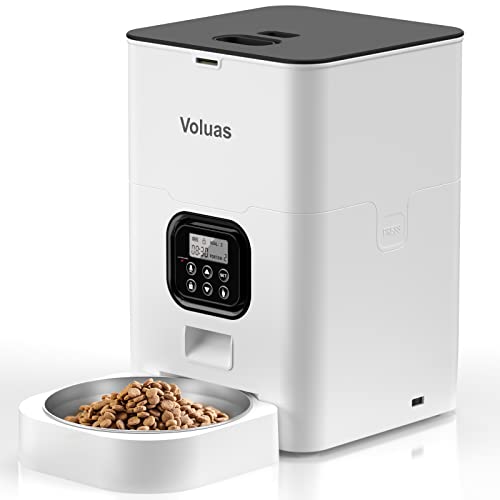
If you are comparing models in more detail, these related guides cover setup and buying decisions: Wopet Automatic Pet Feeder: 4 Best Picks Compared in 2026, Wopet Automatic Pet Feeder Setup: 7 Best Picks Compared (2026), Wopet Automatic Pet Feeder Meal Size: How to Set the Right Portions, and Voluas Automatic Pet Feeder Portion Size Chart: How to Set Portions (2026). For a step-by-step walkthrough of programming, see Wopet Automatic Pet Feeder User Manual: Step-by-Step Setup Guide.
FAQ
Can one automatic pet feeder double really feed two pets?
Yes, as long as each compartment holds enough food for that pet’s meal and the two pets can eat without interfering with each other. Check each bowl’s capacity against your pet’s per-meal amount.
How do I stop one pet from eating from the other’s bowl?
Stagger the dispensing times, place the feeder where only one pet can reach each bowl, or use separate feeding areas. Some owners also separate the pets during meal times for the first few weeks.
Is a double automatic pet feeder safe for wet food?
Many models are designed for dry kibble only. Wet food can spoil quickly at room temperature and can clog the mechanism. Check the manufacturer’s guidance before loading wet food, and confirm with your veterinarian.
How often should I clean a double feeder?
Empty and wipe each compartment at least weekly, and wash removable parts more often if you notice residue, odor or moisture.
What if one bowl dispenses more food than the other?
Run a test cycle and weigh the output. Confirm each compartment is programmed for the correct portion and that the dispensing mechanism is clear of debris.
Do I need a backup power source?
If you travel or live where outages are common, a model with battery backup reduces the risk of missed meals. Check the batteries monthly regardless.
Should I change my pet’s portions when I switch to a double feeder?
Not by default. Keep the amounts your veterinarian or food label recommends, then adjust based on body condition and how much food is left after each meal. Any diet change should be discussed with a professional.
Conclusion
A double automatic pet feeder can simplify feeding for households with two pets or for a pet that needs separate, measured meals. Choose a model with sealed compartments and accurate timing, test each bowl before relying on the schedule, and review portions every few months. Confirm any medical or diet-related feeding plan with your veterinarian.
Ready to choose one?
About Ethan Brooks
Ethan Brooks is part of our editorial team and reviews and edits our everyday pet gear guides, checking product details against manufacturer specifications and owner feedback.