 By Claire Whitaker
Updated November 2026
A dog lead for harness and collar use needs to clip securely, hold up to daily pulling, and keep your dog under control without rubbing or pinching. This comparison looks at three options built for different walking problems. The selection criteria were clip security, compatibility with both harnesses and collars, the type of control each design gives, and the consistency of feedback owners tend to share about fit and durability.
Our top picks at a glance
- 1
 TOP CHOICEBest overallBARKLESS Soft Dog Head Collar, Patented Padded No Pull Training Head HalterView on Amazon
- 2
 Best for strong pullersHarness Lead No Pull Dog Harness and Leash Set, Anti Pull Dog HarnessView on Amazon
- 3
 Best for backup safetyPetBonus Dog Collar Safety Clip, Handmade Prong Collar to Harness ConnectorView on Amazon
Our Top Picks
| Product | Best for | Key feature |
|---|---|---|
| BARKLESS Soft Dog Head Collar | Head control on walks | Padded nose loop, safety link |
| Harness Lead No Pull Dog Harness and Leash Set | Strong pullers | One-piece cushioned rope |
| PetBonus Dog Collar Safety Clip | Backup connection | Double-ended escape-proof clasp |
BARKLESS Soft Dog Head Collar, Patented Padded No Pull Training Head Halter
BARKLESS Soft Dog Head Collar, Patented Padded No Pull Training Head Halter | Nose Lead with Safety Link for Medium Large Dogs, Adjustable | Reflective Muzzle Leash, Easy Control for Walking, Black M
Best for: Head control on walks
This suits owners of medium and large dogs who want to steer the head instead of fighting the body. It works best alongside a well-fitted harness or collar as a backup.
Pros
- Padded nose loop reduces pressure on the muzzle
- Includes a safety link and reflective leash
Cons
- Most dogs need a short adjustment period before they accept it
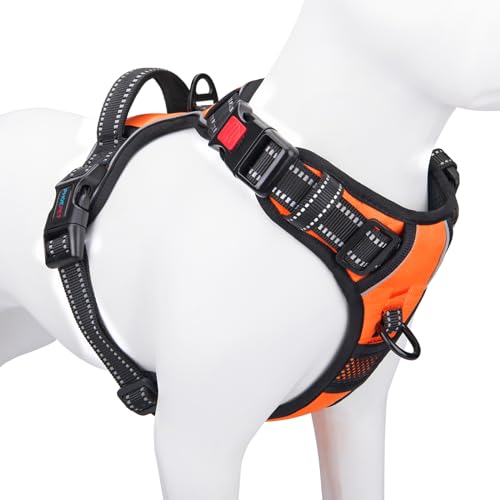
Harness Lead No Pull Dog Harness and Leash Set, Anti Pull Dog Harness
Harness Lead No Pull Dog Harness and Leash Set, Anti Pull Dog Harness, One-Piece Cushioned Rope Safely Prevents Escaping and Pulling (Medium/Large, Rainforest)
Best for: Strong pullers
This fits owners who want a single set that handles pulling at the chest rather than the neck. Owners of medium and large dogs tend to mention the cushioned rope as a comfort point.
Pros
- One-piece cushioned construction with fewer weak joints
- Front attachment discourages lunging
Cons
- Sizing needs careful measuring of chest girth
PetBonus Dog Collar Safety Clip, Handmade Prong Collar to Harness Connector
PetBonus Dog Collar Safety Clip, Handmade Prong Collar to Harness Connector | Dog Leash Backup Safety Strap, Escape Proof, Double Ended Clasp, Lead Connector for Pinch Collar, Harness (Black)
Best for: Backup connection
This works for owners who already use a collar or harness and want a secondary connection in case the primary clip fails. It is a useful addition rather than a standalone lead.
Pros
- Double-ended clasp adds a second point of security
- Connects collar and harness to a single lead
Cons
- It is a connector, so it does not replace a leash
Buying Guide
Clip Security
Check that the clip is rated for your dog’s weight and that the gate closes fully. A spring clip that does not lock is a common point of failure on busy walks.
Compatibility With Harness and Collar
Confirm whether the lead attaches to a D-ring, a front ring, or both. Some leads only work with specific harness designs, so match the hardware before you buy.
Length and Control
A standard lead of about 4 to 6 feet suits most daily walks. Shorter leads give better control near traffic, while longer leads suit open areas but need more attention.
Material and Durability
Nylon webbing and braided rope hold up well to daily use. Inspect stitching and hardware regularly, especially on dogs that chew or pull hard.
Good picks for this: Harness Lead No Pull Dog Harness and Leash Set, PetBonus Dog Collar Safety Clip
FAQ
Can I use one lead with both a harness and a collar?
Yes, if the lead has a clip that fits both attachment points. A connector such as a safety clip can bridge the two when the lead itself does not.
Is a head collar safe for every dog?
Most dogs adapt with gradual introduction, but dogs with neck or spinal issues should be evaluated first. Consult your veterinarian or a certified trainer before use.
How do I know if a lead is too heavy for my dog?
A lead should feel comfortable in your hand without pulling your dog’s collar or harness out of position. If it drags or causes discomfort, choose a lighter material.
Conclusion
For general head control, the BARKLESS head collar is a solid starting point. Strong pullers do better with the chest-attaching harness set, and owners who want an extra safety layer should add the PetBonus safety clip to whatever primary setup they already use.
Sources
- Guidance on humane dog handling, leash use and walking equipment from the American Veterinary Medical Association (avma.org)
- Pet safety and behavior resources covering collars, harnesses and safe walking practices (aspca.org)
Related reading
- How to Put Harness Collar on Dog: A Step-by-Step Guide for Beginners
- Walking Dog with a Harness: Step-by-Step Guide for Safe, Comfortable Walks
- Rough Wear Dog Harness: How to Pick One That Lasts
- PetSafe Easy Walk No-Pull Dog Harness: Fit and Use Guide (2026)
- Lifting Harness for Dog: 3 Best Options for Senior and Injured Dogs (2026)
About Claire Whitaker
Claire Whitaker is part of our editorial team and reviews and edits our everyday pet gear guides, checking product details against manufacturer specifications and owner feedback.