 By Claire Whitaker
Updated November 2026
The PetSafe Easy Walk no-pull dog harness is designed to reduce pulling by redirecting your dog’s forward momentum toward your side. This guide explains how to size it, put it on correctly, and adjust it so your dog walks more comfortably. Follow these steps and you should see less lunging on most routine walks.
Why the Front Clip Changes Walking
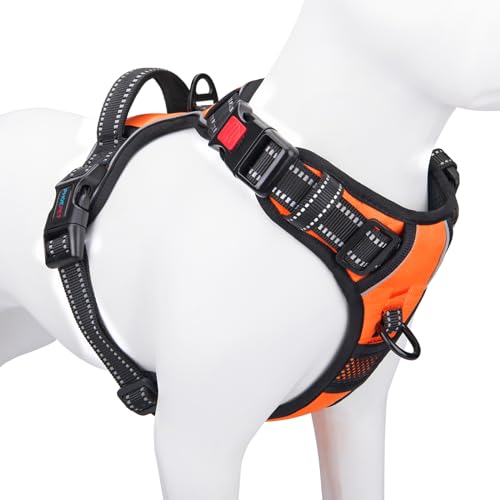
The Easy Walk uses a leash attachment on the chest, which is the main feature that discourages pulling. When a dog pulls forward, the chest ring gently turns the dog’s body toward you instead of letting it drive into the line. Manufacturers note that the harness is meant for training and daily use, not as a substitute for teaching loose-leash walking.
Shopping for one? See our guide: 3 Best Dog Harness No Pull Large Dog Options for Daily Walks (2026).
How to Fit the PetSafe Easy Walk Harness
Fit matters more than most owners expect. A harness that is too loose can slide toward the neck or shoulders, and one that is too tight can rub the armpits.
- Measure your dog’s girth at the widest point behind the front legs, using a soft tape.
- Compare that number to the size chart on the packaging, and check the weight range too.
- Loosen all straps fully before putting the harness on.
- Slip the neck loop over the head, then fasten the belly strap and buckle.
- Tighten the chest strap until you can fit two fingers flat underneath it.
- Check that the chest ring sits centered on the breastbone, not up near the throat.
Adjusting the Harness for Daily Walks
After the first fit, walk your dog for two or three minutes indoors and recheck. Harnesses often settle after a few minutes of movement, so a snug first fit may loosen slightly. Watch for shoulder rubbing, fur bunching under the straps, or a harness that shifts sideways when your dog turns. Any of these means a re-measure or a different size.
Attaching the Leash Correctly
Clip the leash to the front ring for training walks. Keep the leash slack when your dog walks beside you, and stop moving forward whenever it tightens. Switching to the back ring for relaxed, non-training walks is a common choice, but keep in mind that the front clip is what gives the redirect effect.
Checklist Before Each Walk
- Two fingers fit under the chest strap
- The chest ring sits on the breastbone
- All buckles are fastened and straps are not twisted
- The leash is clipped to the intended ring
- No fur is pinched under the armpit straps
Common Mistakes to Avoid
- Sizing by weight alone instead of measuring girth
- Leaving the harness too loose because the dog seems uncomfortable at first
- Expecting the harness to stop pulling without training the dog to walk on a loose leash
- Using a retractable leash, which removes the steady tension that helps the harness work
- Ignoring rubbing or redness after several walks
Recommended Gear
- Soft tape measure for accurate girth readings before you buy or resize. View on Amazon
- A short, sturdy leash around four to six feet long, which keeps the front clip working as intended. View on Amazon
- Small training treats to reward loose-leash steps and make the harness a positive experience. View on Amazon
If you want to compare the design with other styles before committing, see Front-Clip vs Back-Clip Dog Harness: Which One Is Better? and Easy Walk Dog Harness: How to Pick and Fit One for Calm Walks. For walking technique alongside the harness, How to Walk Dog on Leash Calmly: 5 Steps That Actually Work covers the training side in more detail.
FAQ
Is the PetSafe Easy Walk harness good for every dog?
It suits many adult dogs that pull on daily walks, but dogs with neck, shoulder or breathing issues should be checked by a veterinarian first. Ask your vet if you have any doubts about harness use for your dog.
How do I know if the harness is too tight?
You should be able to slide two fingers flat under the chest strap without force. If you see fur pressed flat, redness, or your dog resists movement, loosen or resize.
Can I use it with a retractable leash?
It is better to use a fixed-length leash. Retractable leashes give inconsistent tension, which makes it harder to teach loose-leash walking with the front clip.
Conclusion
Measure your dog’s girth, fit the harness snugly enough for two fingers under the chest strap, and check the chest ring placement before every walk. Pair the harness with consistent loose-leash training for the best results. Recheck the fit every few weeks, since coat changes and weight shifts can affect how it sits.
Related reading
Ready to choose one?
About Claire Whitaker
Claire Whitaker is part of our editorial team and reviews and edits our everyday pet gear guides, checking product details against manufacturer specifications and owner feedback.