By Claire Whitaker
Updated November 2026
Running with a dog harness lets you keep your dog close, spread pulling force across the chest and shoulders, and keep your hands free for pace and balance. This guide walks you through choosing a harness built for running, fitting it correctly, and setting up your leash so both of you stay comfortable and under control. It also covers the habits that matter most once you hit the pavement or trail.
Why a Harness Works Better Than a Collar for Running
A collar concentrates force on the neck, and a dog that lunges or surges can strain its throat or trachea. A well-fitted harness distributes that load across the chest and shoulders. For a running dog harness, that difference matters more than it does on a slow walk, because bursts of speed and sudden stops create more force. Running with a dog harness also keeps the leash from snapping back into your legs when your dog changes direction.
Shopping for one? See our guide: Buddy Belts Dog Harness vs Standard Step-In Harness: Which Should You Choose?.
How to Choose a Harness for Running with Your Dog
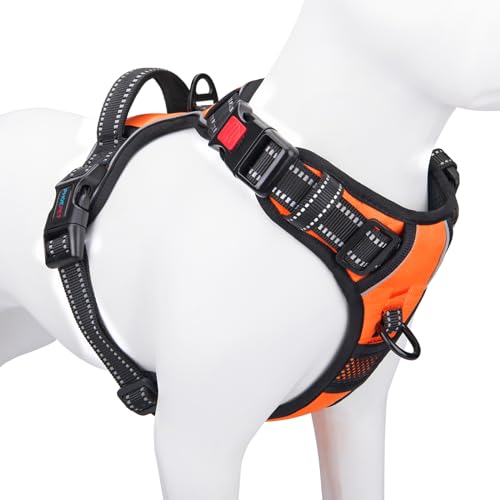
Look for a harness designed for active use rather than a basic step-in model. Features worth checking include:
- A chest strap that sits high on the sternum, not up near the throat
- Padded edges where the straps cross the chest and under the front legs
- A back attachment point for the leash, plus a front-clip option if your dog pulls
- Adjustable straps at the chest, girth and neck so you can dial in the fit
- Reflective or high-visibility trim for early-morning or evening runs
Many owners find that a front-clip design helps with pulling, though a back-clip is often more comfortable for a dog that walks steadily beside you. If you are unsure which suits your dog, read Front-Clip vs Back-Clip Dog Harness: Which One Is Better? for a side-by-side comparison.
How to Fit a Dog Harness for Running
A harness that fits well on a slow walk can shift or rub once your dog is moving fast. Before your first run, check the fit:
- Measure your dog’s chest at its widest point, just behind the front legs, and compare to the manufacturer’s size chart.
- Put the harness on and fasten all straps. Slide two fingers under each strap. If you can fit more, tighten it; if you cannot fit two fingers, loosen it.
- Check that the chest plate sits flat against the breastbone and does not ride up toward the throat.
- Walk your dog for five minutes at a brisk pace, then stop and recheck. Straps often settle after the first few minutes of movement.
For a more detailed fitting walkthrough, see How to Use a Dog Harness Correctly: Step-by-Step Fit and Walking Tips.
Setting Up Your Leash and Pace
For running, a hands-free or waist-belt leash keeps your arms moving naturally and lets you react quickly. Keep the leash short enough that your dog stays at your side or slightly ahead, but long enough that it does not tug. Many owners use a leash of about four to six feet for running. Start at a slower pace than you think you need. Dogs often sprint at the start, so warm up with a brisk walk, then add short running intervals while watching your dog’s breathing and gait.
Dog Harness for Running: Recommended Gear
A running-focused harness with a padded chest and a reflective trim is a practical starting point for most dogs. A hands-free leash with a bungee section can absorb sudden tugs. A lightweight collar with an ID tag gives a backup if the harness ever slips.
- A padded running harness with a secure chest strap for steady fit during longer runs. View on Amazon
- A hands-free bungee leash that keeps your arms free and softens sudden pulls. View on Amazon
- A reflective dog harness vest for low-light runs so drivers and cyclists can see your dog. View on Amazon
Common Mistakes to Avoid
- Starting with long distances before your dog has built up stamina
- Using a harness that is too loose, which lets it shift and chafe
- Running on hot pavement, which can burn paw pads
- Ignoring signs of fatigue such as heavy panting, lagging or stopping
- Skipping a fit check after the first few minutes of each run
FAQ
Can any dog harness be used for running?
Not every harness suits running. Choose one with a secure chest strap, padding and a fit that stays stable during quick movement. Basic step-in harnesses are often better for slow walks.
How far can I run with my dog?
It depends on breed, age, fitness and weather. Build up gradually and watch your dog for fatigue. Consult your veterinarian before starting a running routine, especially for puppies, seniors or dogs with joint or breathing concerns.
Should the leash attach to the front or back of the harness?
A front attachment can reduce pulling, while a back attachment usually feels more comfortable for steady running. Many owners choose based on their dog’s pulling habits and comfort during test runs.
Conclusion
Running with a dog harness is safest when the harness fits well, the leash is set up for hands-free movement, and your pace builds gradually. Check the fit before and during each run, and watch your dog for signs of fatigue or discomfort. With those habits in place, running becomes a routine you can both enjoy.
Related reading
- Wild Ones Dog Harness: How to Choose and Fit One for Daily Walks
- Walking Dog with a Harness: Step-by-Step Guide for Safe, Comfortable Walks
- Rough Wear Dog Harness: How to Pick One That Lasts
- PetSafe Easy Walk No-Pull Dog Harness: Fit and Use Guide (2026)
Ready to choose one?
About Claire Whitaker
Claire Whitaker is part of our editorial team and reviews and edits our everyday pet gear guides, checking product details against manufacturer specifications and owner feedback.