 By Claire Whitaker
Getting a cat into a carrier can be one of the most stressful parts of pet ownership, but it doesn’t have to be. With the right preparation and techniques, you can help your cat feel comfortable entering the carrier and make vet visits easier for everyone. This guide covers proven methods for carrier training, calming anxious cats, and traveling safely.
Why Cats Resist the Carrier
Many cats associate the carrier with unpleasant experiences like vet visits, car rides, or being confined. The carrier itself may feel unfamiliar or threatening. Understanding this can help you approach the process with patience and a plan to change your cat’s perception over time.
Choosing a Cat Carrier That Works
The design of the carrier can make a big difference in how easy it is to get a cat inside. Two types are especially helpful:
- Top-loading carrier: A carrier with a door on top allows you to lower your cat in gently, which can be less intimidating than pushing them through a front opening.
- Removable-top carrier: Some hard-sided carriers let you lift off the top, so you can place your cat inside and then reassemble the lid. This is useful for very reluctant cats.
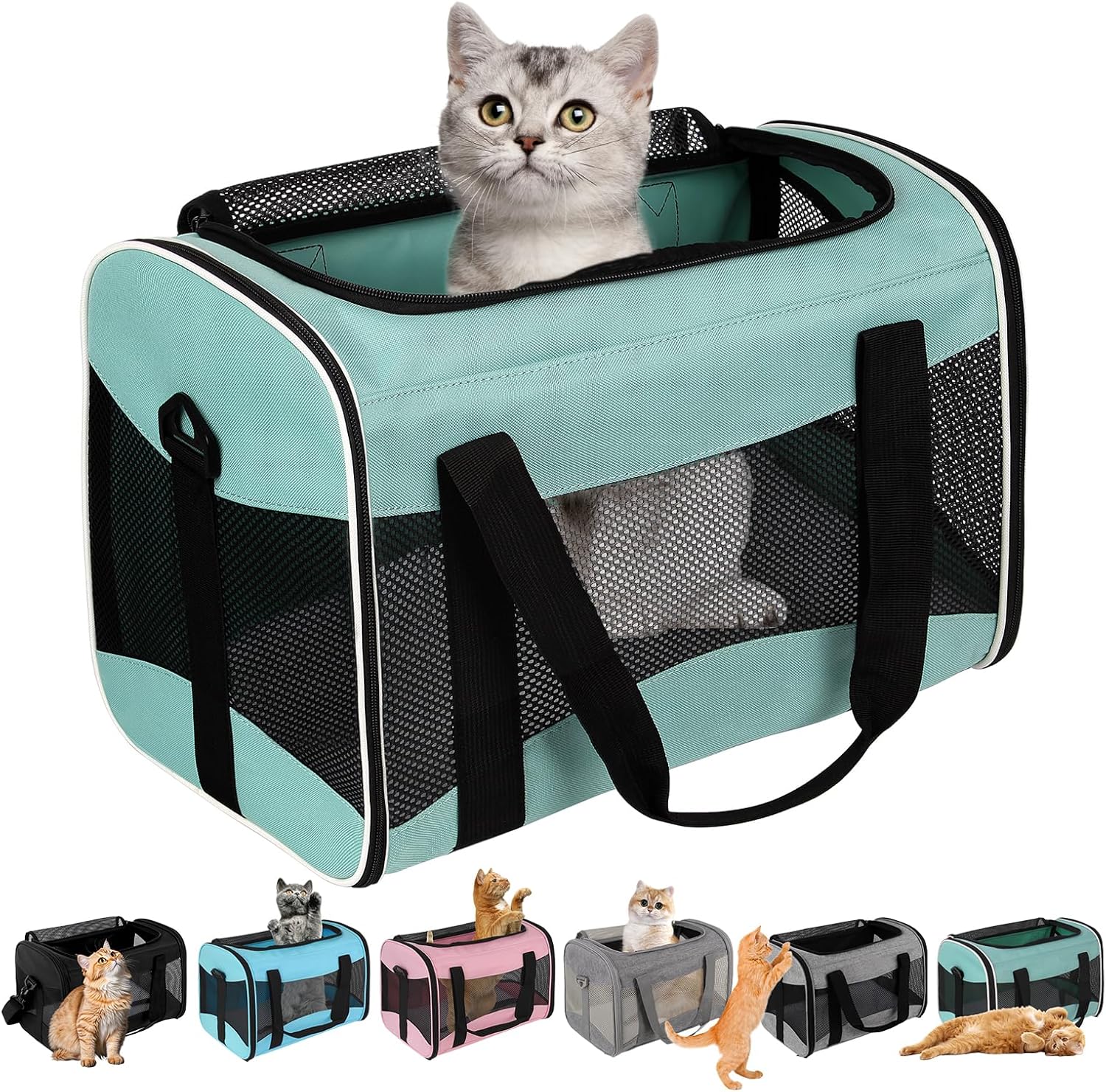
If you already own a front-opening carrier, you can still use the techniques below, but consider upgrading if your cat remains difficult. For more on carrier styles, see our guides on hard-sided pet carriers and soft-sided pet carriers.
Preparing the Carrier at Home
The most important step is to make the carrier a normal, positive part of your cat’s environment. Do not wait until the morning of a vet visit to bring it out.
- Leave the carrier out in a quiet, accessible area of your home, such as a corner of the living room or bedroom.
- Remove the door or prop it open.
- Place a soft, familiar blanket or towel inside that has your cat’s scent (or your own) on it. Avoid washing it immediately before placing it in the carrier.
- Put treats, catnip, or a small amount of wet food inside the carrier daily. Let your cat investigate and eat without pressure.
- Feed your cat their regular meals near or inside the carrier so they build a positive association.
Step-by-Step Instructions for Getting a Cat into a Carrier
When you need to actually use the carrier, follow these steps to minimize stress.
1. Stay Calm and Move Slowly
Cats pick up on your emotions. Speak softly and avoid sudden movements. If you are anxious, your cat will sense it.
2. Use the Rear-First Technique
For a front-opening carrier, guide your cat in backward. Gently place one hand under their chest and the other supporting their hindquarters. Turn them so their rear faces the carrier opening, then lower them in hind first. This can prevent them from bracing against the door and makes it harder for them to push back out.
3. Lower Them In (Top-Loading Carrier)
If you have a top-loading or removable-top carrier, lift the lid or open the top door. Place your cat inside from above, supporting their body with both hands. Close the top quickly but gently.
4. Use a Towel Wrap for Reluctant Cats
For a cat that resists, a towel wrap can help. Place a large towel or blanket on a flat surface, set your cat in the center, and wrap the towel snugly around their body, leaving the head exposed (often called a “burrito wrap”). This can calm some cats and prevent scratching. Then lower the wrapped cat into the carrier and gently unwrap once inside. Monitor your cat’s breathing and stress level—if they seem panicked, stop and try a different approach.
5. Offer Calming Aids
Speak to your veterinarian about products that may help reduce travel anxiety. Options include synthetic pheromone sprays or wipes designed for cats, calming treats, or medication for severe anxiety. Always follow your vet’s recommendations and the product instructions.
Once the Cat Is Inside: Safety and Comfort During Travel
After getting your cat securely in the carrier, follow these safety guidelines.
- Cover the carrier: Drape a light cloth or towel over the top and sides, leaving the front mesh or door uncovered for airflow. This blocks visual stimuli that can cause stress.
- Keep the carrier level and secure: Place the carrier on the floor of the back seat or in the footwell, never on a seat that allows sliding. You can also use a seatbelt to secure the carrier by threading the belt through its handle or around the body. Never place a carrier in the front passenger seat where an airbag could injure the cat.
- Never open the carrier outdoors or in a car with doors open: Cats can bolt and escape in seconds. Always open the carrier inside a closed, secure room or your home.
- Avoid loud music, sudden braking, and rolling down windows where your cat could be exposed to drafts or noises.
For more tips on car travel with pets, see our guide on pet travel gear.
Practice Trips: Building Positive Associations
Don’t let the only carrier experience be a trip to the vet. Take short practice trips to help your cat adjust.
- Start by just placing the cat in the carrier and staying home. Give treats and praise, then let them out.
- Gradually take the carrier to your car and sit inside without starting the engine. Offer treats.
- Take a short drive around the block, then return home and give a treat. Slowly increase the length of drives.
- Keep a calm, positive tone throughout. The goal is to teach your cat that the carrier leads to safe, pleasant experiences.
Common Mistakes to Avoid
- Chasing your cat: Never chase a cat to try to force them into a carrier. This increases fear and makes future attempts harder.
- Leaving the carrier out only for vet trips: If the carrier only appears when something bad is about to happen, your cat will learn to hide when they see it.
- Forcing the cat in head-first: Pushing a cat into a small opening head-first is scary and can cause injury. Always use the rear-first or top-loading method.
- Opening the carrier in an unsecured space: Even a calm cat can be startled and escape. Always ensure doors and windows are closed, and the carrier is opened only indoors.
Troubleshooting Difficult Situations
If your cat is extremely fearful, aggressive, or simply refuses to enter the carrier, consider these strategies.
- Remove the top of a two-piece carrier: Place the bottom half on the floor with bedding and treats. Let your cat become comfortable stepping into the open base. Once they are relaxed, you can slowly lower the top and secure it.
- Use a towel to guide: If your cat is hiding, gently place a towel over them, scoop them up, and place them in the carrier. This can reduce stress and prevent scratching.
- Ask your veterinarian for help: Some cats need medication or a professional behavior plan. Do not wait until the day of the appointment to seek advice.
- Consider a mobile vet service: If travel is too traumatic, some veterinarians offer home visits. This may be a long-term solution for cats with severe anxiety.
FAQ
How long does it take to train a cat to like the carrier?
The timeline varies. Some cats adjust in a few days, others need weeks or months. Consistency, patience, and positive reinforcement are key. Leave the carrier out permanently and offer treats inside every day.
My cat hisses and scratches when I try to put them in the carrier. What should I do?
Stop trying to push them in. Go back to basics: leave the carrier out with a familiar blanket and treats. Try the towel wrap method or ask your veterinarian about calming medication. Never force a cat into a carrier as it can cause injury and increase fear.
Can I use a soft-sided carrier for a cat?
Yes, many soft-sided carriers are suitable for cats. They are lightweight and can be easier to store, but ensure they have sturdy mesh and a secure zipper. Some cats feel less confined in a soft carrier. See our soft-sided carrier guide for features to look for.
What should I put inside the carrier to keep my cat calm?
A soft blanket or towel with a familiar scent is usually enough. You can also use a synthetic pheromone spray on the bedding (not on the cat) about 15 minutes before use. Avoid adding toys or food that could become choking hazards during travel.
Final Thoughts
Getting a cat into a carrier is a skill that improves with preparation and practice. By making the carrier a comfortable part of your cat’s daily life, using gentle handling techniques, and following safety guidelines for travel, you can reduce stress for both of you. Remember that every cat is different, so be patient and adjust your approach based on your cat’s reactions. For more help, consult your veterinarian, who can offer personalized advice for your cat’s anxiety and travel needs.
About Claire Whitaker
Claire Whitaker is part of our editorial team and reviews and edits our everyday pet gear guides, checking product details against manufacturer specifications and owner feedback.