 By Ethan Brooks
Collapsible dog bowls and travel feeding kits make it easy to offer food and water anywhere, whether you are picnicking, camping, or staying in a hotel. These products fold or pack down small for transport and come back to shape for use. The right setup also helps you keep your dog’s feeding routine consistent, which matters for digestion.
What collapsible dog bowls are and who they suit
A collapsible dog bowl is a feed or water dish made from a flexible material that flattens when not in use. A travel feeding kit takes that idea further by bundling one or two bowls with food storage, often a clip or strap, and in some cases a small cleaning cloth or utensil. Together, they let you serve a measured meal or a drink of water without carrying rigid, bulky dishes.
These products suit most dog owners who spend time away from home. They help on day hikes, beach trips, road journeys, and weekends at a rental cabin. They are also useful for dogs that eat in multiple locations, such as dogs that go to daycare or visit a friend’s house regularly. Owners of small and medium dogs often find them easiest to manage, though larger-capacity versions work for bigger breeds. If your dog tends to chew on soft objects, you may want to use them only while you are supervising.
Main types and how they differ
Silicone collapsible bowls
Silicone collapsible bowls are among the most common. They fold flat when empty and spring back into a bowl shape when you fill them. Most are food-safe, withstand hot and cold water, and wipe clean easily. Many can go in the dishwasher, but you should check the manufacturer’s instructions because some silicone blends are not dishwasher-safe. They are relatively stable on flat ground, although very soft models can wobble on uneven surfaces.
Fabric collapsible bowls
Fabric collapsible bowls have a soft outer shell and a waterproof inner lining. They typically fold or roll into a small pouch or close with a zip, which keeps any leftover moisture contained in your bag. Some have a stiff ring or wire at the top to hold the bowl open. Fabric bowls are light and pack small, but they are not suitable for chewing dogs and can develop mildew if you pack them away wet.
Water bottle bowls
Water bottle bowls attach directly to a water bottle. You squeeze the bottle to push water into the attached bowl, then release pressure to pull the water back for the next drink. They are convenient for walks and short outings because you carry one item instead of a bowl and a separate bottle. They are less practical for serving a full meal, and you will need to clean the bowl portion after each use.
Travel feeding kits
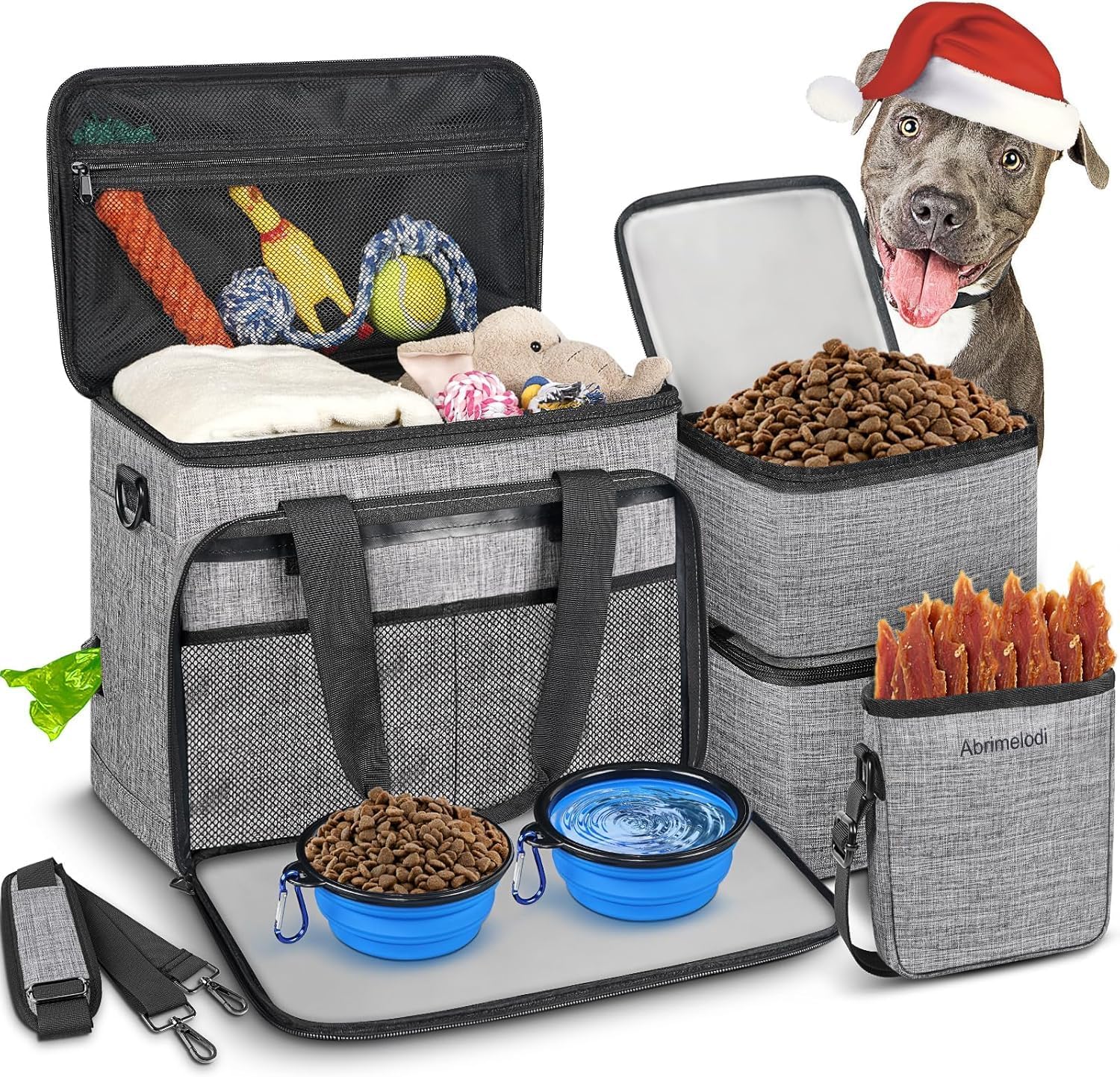
A travel feeding kit combines several pieces into one organized set. A typical kit holds one or two collapsible bowls, a sealable container for dry or wet food, and a carabiner clip to attach the whole bundle to a bag. Some kits also include a small scoop or a foldable mat to catch spills. These sets are handy if you want everything in one place and you know you will be feeding more than one meal on a trip.
| Type | Best for | Key things to know |
|---|---|---|
| Silicone collapsible bowl | Meals and water stops on steady ground | Easy to wipe clean; check dishwasher safety |
| Fabric collapsible bowl | Compact packing and light travel | Zip or roll shut; dry thoroughly before storing |
| Water bottle bowl | Walks and short hydration breaks | Combines bottle and bowl; not ideal for meals |
| Travel feeding kit | Multi-meal trips and organized packing | Bundles bowls, storage, and a clip |
Features that actually matter
When you compare collapsible bowls and feeding kits, focus on a few practical features rather than the design looks.
- Capacity: The bowl should hold roughly the amount your dog normally eats or drinks in one sitting. A bowl that is too small forces you to refill constantly, while one that is too large is awkward to carry and may encourage gulping.
- Stability: Look for a wide base or a non-slip bottom. A bowl that tips over on a slanted patch of grass wastes food and water and frustrates your dog.
- Carabiner clips: A clip lets you attach the bowl or kit to a belt loop, backpack, or leash. This keeps your hands free and reduces the chance of leaving the bowl behind.
- Leak-proof food storage: If the kit includes a food container, make sure it seals securely. Spilled kibble in your bag is messy and can attract insects.
- Easy-to-clean surfaces: Smooth silicone and removable fabric liners are easier to rinse at a rest stop or campground tap than complicated designs with seams.
- Material safety: Choose products labeled as food-grade silicone or BPA-free plastic for bowls, and check that any container is intended for pet food contact.
- Packability: A bowl that folds to a thin disc or a kit that rolls into a small pouch is easier to tuck into a travel gear bag alongside your other pet items.
Sizing and compatibility
Selecting the right size starts with your dog’s typical meal. You do not need an exact measurement for every brand, but compare the capacity listed on the spec sheet against what you normally serve. A small dog that eats a half scoop of kibble needs a small bowl, while a large dog that drinks a large amount after exercise needs a deeper water bowl.
Consider the shape of the bowl as well. Some collapsible bowls are shallow and wide, which works well for flat-faced breeds that have trouble reaching into deep dishes. Deeper models suit longer muzzles and help keep water from sloshing over the sides. If you have a puppy, you may need to upgrade the size as the dog grows, so it can be smart to buy a bowl with a capacity that allows a little extra room rather than one that fits only the current stage.
For a collapsible bowl to work, the ground underneath matters. Most are designed for hard, level surfaces. If you plan to use them on gravel or sand, check whether the base is sturdy enough to stay put. Some models have a rubber grip ring that helps on uneven ground.
Common buying mistakes
A few common mistakes can turn an otherwise good product into a source of frustration.
- Buying too small: A compact bowl saves space but makes your dog wait for refills and can spill during enthusiastic drinking.
- Ignoring stability: A bowl that folds flat easily may also tip easily. Test it with a small amount of water before a long trip.
- Forgetting the cleaning step: On the road, you will need to rinse the bowl after each meal. Choose a product you can clean with just water or a wipe.
- Not packing the dog’s usual food: Switching to a different brand or formula for a trip can cause stomach upset. Pack enough of the food your dog already eats.
- Overlooking hands-free carrying: A bowl without a clip has to stay in your hand or inside a bag, which is annoying when you are also holding a leash and a water bottle.
Care, cleaning and upkeep
Keeping a collapsible bowl clean on the road is simpler than many owners expect. After each use, rinse it with clean water and wipe it with a cloth or paper towel. At the end of the day, wash it with warm water and a mild dish soap, then rinse well. Some silicone bowls are dishwasher-safe, but not all, so follow the manufacturer’s instructions.
Fabric bowls need a little more attention. If the lining is removable, hand wash it or use a gentle machine cycle according to the label. Always air dry fabric bowls completely before folding them away. Leaving a damp fabric bowl in a pouch for a few hours can lead to an unpleasant smell or mildew. The same applies to the food container in a travel feeding kit; wipe it dry after washing, and leave it open overnight if possible.
For deeper cleaning, you can use a diluted mix of water and a pet-safe dish detergent, but avoid harsh chemicals that could leave a residue. Rinse thoroughly so your dog does not taste soap on the next meal.
Keeping feeding times and packing food
The biggest health tip for travel feeding is to keep your dog’s schedule steady. Feed at roughly the same times you use at home, and give the same portion size. If you are crossing time zones, adjust gradually over a day or two rather than changing everything at once.
Pack enough of your dog’s regular food for the entire trip, plus a little extra in case of delays. Count the number of meals you expect to be away and portion the food into a sealable container from your feeding kit or your own storage bag. If you normally feed a mix of wet and dry food, bring both. Sudden diet changes can upset a dog’s stomach, so do not use the trip as a chance to switch recipes.
When feeding in a new place, offer the meal in a calm spot away from loud noises and foot traffic. After your dog drinks or eats, pick up the bowl and wipe it before putting it back into the kit. If your dog starts vomiting or shows signs of an upset stomach after eating, contact your veterinarian for guidance.
For a full packing layout, see our guide on pet travel bags and a packing checklist for pets. It can remind you of other essentials like a bed, a carrier, and waste bags that pair well with your feeding setup.
FAQ
How do I clean collapsible bowls on the road?
Rinse the bowl with clean water after each use and wipe it with a cloth. At the end of the day, wash with warm water and mild soap, then dry completely before storing. For fabric bowls, follow the label’s washing instructions and make sure the lining is dry to prevent mildew.
How much of the dog’s usual food should I pack?
Pack enough to cover every meal your dog will eat during the trip, plus one or two extra meals in case of unexpected delays. Use a sealable container from your travel feeding kit to keep the food fresh and dry.
Can I use collapsible bowls for both food and water?
Yes, but it is better to use separate bowls for each. Many feeding kits include two bowls for this reason. If you use one bowl, wipe it out between water and food to avoid mixing flavors and leftover bits.
Are fabric bowls safe for aggressive chewers?
Fabric bowls are not chew toys. A dog that bites or scratches at the bowl may puncture the lining or the shell. For a chewer, stick to a sturdier silicone bowl that you supervise closely, and remove it as soon as the meal is finished.
Collapsible dog bowls and travel feeding kits turn feeding time into a simple part of your trip instead of a chore. Choose the type that matches your dog’s size and the surfaces you will visit, keep the setup clean, and maintain your dog’s usual feeding schedule and food to avoid surprises. With a small bundle clipped to your bag, you are ready for the next stop.
About Ethan Brooks
Ethan Brooks is part of our editorial team and reviews and edits our everyday pet gear guides, checking product details against manufacturer specifications and owner feedback.