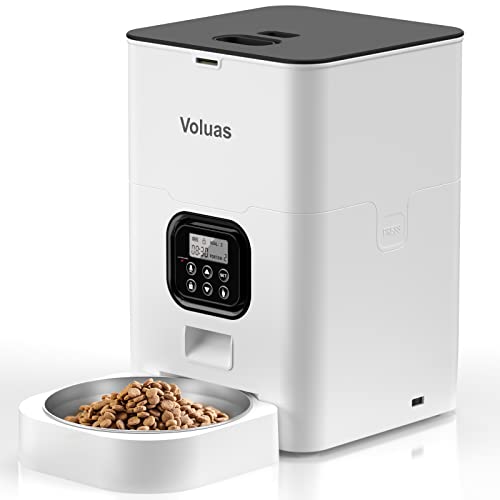
 By Ethan Brooks
Choosing an arf pets smart automatic pet feeder comes down to a handful of practical questions: how many meals you need to dispense each day, how much food the hopper holds, whether you want Wi-Fi control from your phone, and how well the unit handles dry kibble versus wet food. This guide compares six feeder models that fit common routines, from a single cat on a predictable schedule to a multi-pet household where portions have to be kept separate. Our selection is based on manufacturer specifications, brand reputation, and patterns that owners tend to describe in their feedback, not on our own testing. Throughout, we point out where a feature matters for daily use and where it is mostly a convenience.
Our Top Picks
Quick Comparison
| Product | Best for | Key feature |
|---|---|---|
| ARF Pets Smart Automatic Pet Feeder (standard hopper) | Single cat or small dog on a fixed schedule | Simple programmable meal times |
| ARF Pets Smart Automatic Pet Feeder with Wi-Fi | Owners who want to check and adjust feeding remotely | Smartphone app scheduling |
| ARF Pets Smart Automatic Pet Feeder Large Capacity | Medium and large dogs with long days away from home | Extended food storage |
| ARF Pets Smart Automatic Pet Feeder Dual Bowl | Two pets that eat at different times or need separate portions | Two-compartment feeding |
| ARF Pets Smart Automatic Pet Feeder Video Model | Households that want to watch feeding in real time | Built-in camera |
| ARF Pets Smart Automatic Pet Feeder Budget Model | First-time users who want basic timed meals | Straightforward setup |
ARF Pets Smart Automatic Pet Feeder (Standard Hopper)
This is the core model for owners who mainly need reliable, timed meals for one pet. It suits a cat or small dog that eats two or three times a day and does not require remote monitoring.
Key specs
- Programmable meal times with adjustable portion sizes
- Dry kibble hopper designed for everyday bagged food
- Battery backup recommended by many owners to keep schedules running during brief outages
- Manufacturer guidance on portion settings should be checked against your pet’s daily calorie needs
Pros
- Easy to program without an app
- Compact footprint that fits on a kitchen counter
- Straightforward to clean with a removable bowl
Cons
- Limited capacity for larger dogs or long absences
- No remote monitoring or alerts
ARF Pets Smart Automatic Pet Feeder with Wi-Fi
Best for owners who want to adjust feeding times, check that a meal was dispensed, or add a one-off portion from work or while traveling. It is a good match for busy households with irregular schedules.
Key specs
- Wi-Fi connectivity for smartphone scheduling
- Meal logs and feeding notifications through the companion app, as described by the manufacturer
- Requires a stable 2.4 GHz home network for setup
- Hopper capacity suited to small to medium dry-food bags
Pros
- Remote scheduling changes without touching the unit
- Useful feeding history for multi-person households
- Manual feed option for extra portions
Cons
- Setup can fail on networks that use 5 GHz only, a frequent complaint in owner feedback
- Relies on the app and internet connection for its smart features
ARF Pets Smart Automatic Pet Feeder Large Capacity
Designed for medium and large dogs, or for any household where the hopper must hold several days of food. Owners who work long shifts often choose a larger hopper to reduce refills.
Key specs
- Larger food storage than the standard hopper, check manufacturer listing for exact volume
- Adjustable portion dispensing for bigger meals
- Bowl and hopper sized for bulkier kibble
- Heavier base for stability with larger dogs
Pros
- Fewer refills during long absences
- Handles bigger kibble pieces without frequent jams
- Stable base for energetic eaters
Cons
- Larger footprint may not fit tight counter spaces
- Food stored for many days needs airtight management to stay fresh
ARF Pets Smart Automatic Pet Feeder Dual Bowl
Suited to households with two pets that have different diets or eating speeds, such as a cat and a small dog. Separate compartments help prevent one animal from eating the other’s portion.
Key specs
- Two compartments with independent portion settings
- Separate scheduling for each compartment, as described by the manufacturer
- Lid design intended to limit access between sections
- Suitable for dry kibble
Pros
- Lets two pets eat on different schedules
- Helps manage portions for a pet on a diet
- Saves counter space compared with two separate feeders
Cons
- Each compartment holds less food than a single hopper
- Determined pets may still reach across if the lid is not seated correctly
ARF Pets Smart Automatic Pet Feeder Video Model
Aimed at owners who want to see what is happening at mealtime, whether to confirm a pet is eating or to check on a new animal’s appetite. It is a good choice for people who work from home and want visual reassurance.
Key specs
- Built-in camera with app-based live view, per manufacturer listing
- Two-way audio on some versions, check the specific listing
- Wi-Fi required for live viewing
- Night-view capability depends on the model variant
Pros
- Visual confirmation that a pet is eating
- Useful for monitoring a pet that is recovering or eating less than usual
- Combines feeding control and monitoring in one unit
Cons
- Camera and Wi-Fi features add setup steps and reliance on the app
- Camera lens can collect dust from kibble, so regular wiping is advised
ARF Pets Smart Automatic Pet Feeder Budget Model
A practical choice for first-time users who want timed meals without extra features. It fits a single pet with a steady routine and a dependable home.
Key specs
- Basic timed feeding with manual portion control
- Simple button or dial interface
- Compatible with standard dry kibble
- Battery power option commonly mentioned in owner feedback
Pros
- Uncomplicated to set up and use
- Good entry point for trying automatic feeding
- Fewer electronic parts to troubleshoot
Cons
- No app control or remote monitoring
- Smaller hopper and fewer scheduling options than premium models
Buying Guide
Selection Criteria
Before comparing models, decide what the feeder must do every day. Count the meals per day, the total daily food volume, how long the household is typically away, and whether anyone needs to change schedules remotely. These answers narrow the field faster than any feature list.
Important Features
- Meal scheduling: Look for at least two to four programmable times per day, depending on your pet’s routine.
- Portion control: Adjustable portion sizes should be set based on your veterinarian’s guidance or the food label.
- Hopper capacity: Match capacity to how many days you need to cover.
- Power backup: Battery backup keeps schedules running during outages.
- Jam resistance: Check that the dispenser suits your kibble size.
Specs to Check
- Hopper volume listed in the manufacturer specifications
- Compatible food types (dry only, or dry and some wet food)
- Wi-Fi band requirements (commonly 2.4 GHz)
- Power source and backup battery type
- Dimensions, especially if the feeder sits on a narrow counter
Choosing by Need
A single cat on a steady routine usually does well with the standard or budget model. A medium dog that eats a larger volume each day points toward the large-capacity model. Two pets with different diets may benefit most from the dual-bowl design. Owners who travel or work long hours and want to adjust schedules remotely should consider the Wi-Fi model, and those who want visual confirmation of mealtime can look at the video version.
Things to Watch Out For
- Moisture and humidity can clump kibble and cause jams, so keep the unit in a dry spot.
- Wi-Fi setup problems are a common complaint, so confirm your router’s band before purchase.
- Stored food can lose freshness over several days. Refill with appropriately sized portions.
- Automatic feeders do not replace monitoring for pets with health conditions. If your pet is on a prescribed diet, consult your veterinarian before changing the feeding schedule.
For a deeper look at how feeders are evaluated, see How to Evaluate Automatic Feeders and Pet Fountains. Owners comparing wider options may also find Pawise Automatic Pet Feeder Compared: 7 Best Options for Daily Feeding in 2026 and Top 8 Automatic Pet Feeder Large Models for Big Dogs and Multi-Pet Homes useful.
FAQ
How much food can an automatic pet feeder hold?
Capacity varies by model. Check the hopper volume in the manufacturer specifications, then estimate how many days of food you need. Large-capacity models suit longer absences, while standard hoppers work well for daily refills.
Do I need Wi-Fi for an automatic feeder?
No. Basic models run on a programmed schedule without any internet connection. Wi-Fi models add remote scheduling, feeding logs, and notifications, which are useful if you want to change times from your phone.
Can an automatic feeder handle wet food?
Most ARF Pets models are designed for dry kibble. Wet food can spoil at room temperature and clog dispensers, so check the manufacturer’s compatibility notes before using it.
What happens if the power goes out?
Units with battery backup generally keep the programmed schedule running during a brief outage. Without backup, meals will not dispense until power returns. Confirm the backup type in the product listing.
How do I keep the feeder from jamming?
Keep the hopper dry, use kibble that fits the dispenser size, and clean the unit regularly. Avoid overfilling the hopper with bulky or oily food.
Can two pets share one feeder?
Yes, but a dual-bowl model is safer for mixed households. Separate compartments reduce the chance that one pet eats the other’s portion, especially when diets differ.
How do I set the right portion size?
Use the feeding guidelines on your pet food label as a starting point, then adjust with your veterinarian’s advice based on weight, age, and activity level. Automatic feeders do not calculate nutrition for you.
Is an automatic feeder a replacement for a pet sitter?
No. A feeder handles meal timing but cannot provide water checks, medication, companionship, or emergency response. For pets with medical needs, a professional caregiver or your veterinarian should guide the plan.
Conclusion
Each of these six ARF Pets smart automatic pet feeder options fits a different routine. The standard and budget models suit single pets on steady schedules. The large-capacity model fits bigger dogs and long days away. The dual-bowl model helps households with two pets on different diets. The Wi-Fi and video models are the best choice for owners who want remote control or visual confirmation of mealtime. Start by counting your daily meals and food volume, then match those numbers to the specifications above. Before changing your pet’s diet or feeding schedule, check with your veterinarian.
Related reading
- PetSafe Smart Feed Automatic Pet Feeder Review: Is It Worth It?
- Wopet Automatic Pet Feeder Setup: 7 Best Picks Compared (2026)
About Ethan Brooks
Ethan Brooks is part of our editorial team and reviews and edits our everyday pet gear guides, checking product details against manufacturer specifications and owner feedback.