 By Ethan Brooks
Updated November 2026
Automatic pet feeder reviews are useful only if you know how to read them. This guide walks you through what to look for in a review, how to separate real feature performance from marketing claims, and how to match a feeder to your pet’s actual feeding schedule. By the end, you should be able to compare two or three models on the same criteria and pick one that will still work on a rushed Tuesday morning.
Why Automatic Pet Feeder Reviews Vary So Much
Most automatic feeders look similar in product photos: a plastic bowl, a hopper, a small screen or buttons. The differences show up in daily use, which is why reviews should focus on routine details rather than headline features. Owners often report that a feeder works well for dry kibble but struggles with wet food, or that a timer drifts after a power flicker. Those are the details a useful review will describe.
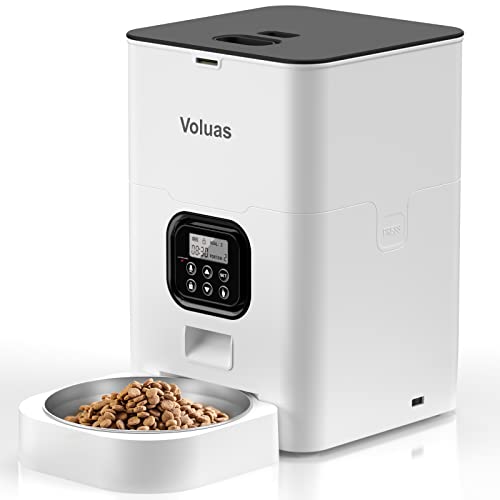
Shopping for one? See our guide: Voluas Automatic Pet Feeder Review: Features and Performance.
Reviews also vary because owners have different setups. A single cat fed twice a day has different needs from a household with two dogs on separate diets. When you read automatic pet feeder reviews, note the reviewer’s pet count, food type and home layout, then decide how closely those match your own.
Step 1: Define Your Feeding Routine First
Before reading a single review, write down how you feed your pet now. A feeder is only as good as the schedule it supports.
- List every meal time per day, including weekends if they differ.
- Note the portion size per meal in grams or cups. Check your food bag for the feeding guideline, and confirm portions with your veterinarian.
- Identify the food type: dry kibble, wet food, or a mix. Many feeders handle dry food only.
- Estimate how many hours you are away on a typical workday and on a long day.
- Record how many animals share the feeder area, and whether any need separate meals (for example, a cat that eats from a different bowl).
This short list becomes your filter. A feeder that cannot run the number of meals you need is not a good match, no matter how strong its reviews are.
Step 2: Check Capacity and Portion Accuracy
Capacity is one of the most misread specs. Manufacturers usually list hopper size in cups or liters, but the number of meals that hopper will actually serve depends on your portion size. For example, a 5-cup hopper holds roughly 20 to 25 standard half-cup meals, but if your pet eats one cup per meal, that same hopper covers only about five feedings.
When reviews mention portion accuracy, look for specifics. Owners often report that small kibble sizes can bridge inside the hopper or that very light cat food can be inconsistently dispensed. Look for comments about:
- Minimum and maximum portion settings
- Whether the dispenser jams with irregular or large pieces
- Whether the feeder can be calibrated to a specific gram weight
- How much food is left in the bottom of the hopper after dispensing
Step 3: Evaluate Scheduling and Timer Reliability
Scheduling is the core function, so reviews should address it directly. Read for comments about:
- Meal count per day: Some models allow only two programmed meals. Others allow six or more.
- Time setup: Check whether the feeder uses a clock that needs manual resetting after a power outage.
- Backup power: Battery backup keeps the clock and schedule running during outages. Owners often report that feeders without backup lose their timing, leading to missed meals.
- Missed-feed alerts: A few feeders warn when a meal fails to dispense, which matters if you rely on the feeder for a pet with medical needs.
If your pet takes medication with food, or has a condition that depends on exact meal timing, confirm the schedule plan with your veterinarian before relying on any automated system.
Step 4: Test Jam Resistance and Food Compatibility
Jams cause more daily frustration than any other issue, and reviews usually discuss them in detail. Compare how reviewers describe:
- Kibble shape and size (round, flat, large or small)
- Wet food or moist treats, which many standard hoppers cannot handle
- Humidity effects on dry food, which can cause clumping
- How easy it is to clear a jam without taking the whole unit apart
A review that says “works fine” without naming a food type tells you little. Prioritize reviews that name the brand or texture of food they used.
Step 5: Review Cleaning and Maintenance
Feeders that are hard to clean become neglected feeders. Look for comments on how many parts come apart, whether the hopper is dishwasher-safe, and whether food residue builds up in the dispensing mechanism. Owners often report that hinges and seals are the first places bacteria or odor collect, so check whether the design allows easy access there.
Step 6: Compare Build Quality and Pet Behavior
Some pets learn to paw, push or chew a feeder. Reviews from owners of large dogs, persistent cats or curious puppies are especially useful. Look for mentions of tip-over resistance, lid security, and whether the bowl stays in place during active eating. Also note whether the feeder is powered by mains or batteries, and how often batteries need replacing according to the manufacturer’s specifications.
Common Mistakes When Reading Reviews
- Reading only the top-rated reviews. The most detailed negative reviews often reveal failure patterns that positive ones skip.
- Ignoring the pet count and food type. A feeder that works for one cat may fail for two dogs with different portions.
- Trusting one-time impressions. Reviews written after a single day rarely cover jams, battery drain or timer drift.
- Overlooking manufacturer instructions. Many reported problems come from incorrect calibration. Read the manual before blaming the hardware.
- Assuming all reviews are comparable. Different reviewers test different things. Build your own comparison table using the same criteria for each model.
Tips for Comparing Two or Three Models
Once you have narrowed your list, build a simple comparison table. Use the same categories for every model so differences stand out.
| Criteria | What to check in reviews | Why it matters |
|---|---|---|
| Meals per day | Number of programmable feedings | Must match your routine |
| Hopper size | Meals covered at your portion size | Determines refill frequency |
| Food compatibility | Kibble size, wet food, clumping | Prevents jams and missed meals |
| Power backup | Battery type, duration, clock behavior | Protects schedule during outages |
| Cleaning | Parts count, dishwasher safety, residue | Affects hygiene over time |
| Pet behavior | Tip resistance, chewing, pawing | Determines durability |
For a closer look at how individual models handle these criteria, see PetSafe Smart Feed Automatic Pet Feeder Review: Is It Worth It? and PetLibro Air Automatic Pet Feeder Review: Features and Performance. If you are considering a budget option, Pawple Automatic Pet Feeder Review: Is It Worth It? shows how a lower-cost design handles everyday use. For two-meal households, PetSafe Two Meal Automatic Pet Feeder Review: Is It Worth It? covers the basic scheduling trade-offs.
Recommended gear
A few accessories make automatic feeding easier to manage day to day.
- PetSafe Smart Feed 2.0: Useful for owners who want portion control with a scheduled dispenser that handles standard dry kibble well. View on Amazon
- Digital kitchen scale: Helpful for measuring kibble by weight so you can calibrate portions accurately. View on Amazon
- Silicone feeder mat: Catches spilled kibble and makes cleanup faster around a dispenser. View on Amazon
FAQ
Are automatic pet feeder reviews reliable?
They are useful, but only when they describe specific use conditions. Look for reviews that mention pet count, food type, schedule length and how long the reviewer tested the unit.
How many meals should an automatic feeder handle?
Match the feeder to your actual schedule. Most households need two to four meals per day, but some pets on veterinary feeding plans require more frequent, smaller meals. Confirm the number with your veterinarian.
Can an automatic feeder work with wet food?
Many standard feeders are designed for dry kibble only. Check the manufacturer’s stated food compatibility and read reviews from owners who used wet or moist food before buying.
What happens to the schedule during a power outage?
It depends on the model. Feeders with battery backup usually keep the clock running, while others may reset. Check the backup specifications and confirm whether the clock needs manual resetting.
Do automatic feeders prevent overfeeding?
They control how much food is dispensed, but they do not decide how much your pet should eat. Portion size should follow your veterinarian’s guidance or the food package recommendation.
How often should the feeder be cleaned?
Follow the manufacturer’s cleaning schedule. Many owners wipe the hopper and bowl regularly and wash removable parts according to the instructions, especially around hinges and seals where residue collects.
Are cheaper feeders worth considering?
Budget models can suit simple, single-pet routines. Compare reviews on jam resistance, timer reliability and cleaning before deciding, because those issues matter more than extra features.
What if my pet is not eating from the feeder?
Some pets need time to adjust to a new dispenser. Start by feeding a small amount by hand from the same bowl, then gradually use the automatic schedule. If your pet refuses food for more than a day, contact your veterinarian.
Conclusion
Good automatic pet feeder reviews point to specific details: meal count, hopper capacity at your portion size, food compatibility and timer behavior. Define your routine first, then compare models using the same criteria. A feeder that matches your schedule and handles your pet’s food reliably will serve you far better than one with the longest feature list.
Related reading
- Pitpet Automatic Pet Feeder Review: Is It Worth It?
- Petsafe 2 Meal Automatic Pet Feeder Review: Is It Worth It?
Ready to choose one?
About Ethan Brooks
Ethan Brooks is part of our editorial team and reviews and edits our everyday pet gear guides, checking product details against manufacturer specifications and owner feedback.