 By Claire Whitaker
Updated November 2026
A harness for a blind dog gives you a secure handle, a stable point of control and a way to guide your dog without pulling on the neck. This guide walks you through choosing a harness that fits well, adjusting it so it stays put, and building simple routines that help a blind dog move with confidence. The same principles apply whether your dog lost sight suddenly or gradually. For another angle, check out Dog Harness Step Into: How to Fit One in 5 Easy Steps.
Why a Harness Works Better Than a Collar for a Blind Dog
A collar puts pressure on the neck, and a blind dog that startles or lunges can pull hard enough to cause strain. A well-fitted harness spreads pressure across the chest and shoulders, and it gives you a handle on the back that you can use to steer gently. Many owners also find that a harness with a sturdy top handle lets them guide a dog around steps, curbs and furniture without tugging. For a dog that relies on touch and sound, that steady, predictable contact is often what makes walks feel safe. Dog Friendly Co Harness: How to Choose and Fit One Safely (2026) goes further into this.
Shopping for one? See our guide: Buddy Belts Dog Harness vs Standard Step-In Harness: Which Should You Choose?.
How to Choose the Right Harness for a Blind Dog
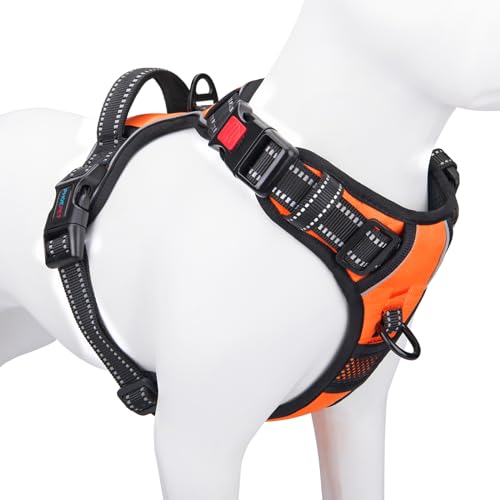
Look for a harness with a padded chest plate, adjustable straps and a reinforced handle sewn into the back panel. Avoid thin nylon webbing that can dig into the armpits. Measure your dog before you shop, since manufacturers size harnesses by chest girth and neck circumference rather than weight. A harness that fits well should let you slide two fingers under each strap, with no rubbing at the shoulders or behind the front legs. A related read: Dog Harness at Petco: How to Choose and Fit One That Works (2026).
Consider the clip position as well. A back-clip harness is simplest for guiding and is what most owners use for blind dogs. If you want more control on a dog that pulls, a front-clip design may help, but it can also make it harder to steer by touch. For more on that trade-off, see Front-Clip vs Back-Clip Dog Harness: Which One Is Better?.
Step-by-Step: Fitting the Harness on a Blind Dog
- Let your dog smell the harness first, then say the same cue word each time you put it on.
- Guide each front leg through its opening while your dog is seated or standing still.
- Fasten the buckle or clip and tighten the chest strap until it is snug but not restrictive.
- Check the fit by sliding two fingers under each strap at the chest and shoulders.
- Adjust the handle so it sits high on the back, where you can reach it without bending too far.
If you are still learning the process, How to Use a Dog Harness Correctly: Step-by-Step Fit and Walking Tips covers fit checks in more detail.
Building Safe Walking and Guiding Routines
Once the harness is on, use short, consistent cues such as “step,” “curb” or “stairs” before each change in terrain. Walk slightly ahead of your dog and let the harness handle guide the direction, rather than lifting or pulling. Keep the same route for the first few weeks so your dog can build a mental map. For the basics of structured walks, Walking Dog with a Harness: Step-by-Step Guide for Safe, Comfortable Walks offers a useful starting point.
Common Mistakes to Avoid
- Leaving the harness on for long stretches without checking for rubbing or matting.
- Using a leash clipped to the collar and the harness at the same time, which can confuse direction.
- Pulling sideways on the handle, which can startle a dog who cannot see the source of the tug.
- Buying a size by weight instead of measuring chest girth.
- Skipping the cue word, which leaves a blind dog guessing when the harness goes on.
Recommended Gear
- Padded step-in harness with a reinforced back handle: A padded chest plate and a sturdy handle make guiding comfortable and easy to hold. View on Amazon
- Lightweight nylon leash, about four to six feet: A short leash keeps you close enough to guide by touch without tangling. View on Amazon
- Reflective or bright-colored harness: Helpful for others who may not expect a blind dog nearby during evening walks. View on Amazon
FAQ
Can a blind dog wear a harness all day?
Most owners remove the harness during rest and sleep to prevent rubbing and skin irritation. Check the chest and armpits daily for redness, and consult your veterinarian if you notice sores.
Should I use a harness or a collar for a blind dog?
A harness is generally the better choice because it avoids neck pressure and gives you a secure guiding handle. A collar can still hold ID tags, so many owners use both.
How do I know if the harness fits correctly?
You should fit two fingers under each strap with no rubbing or gaps, and the dog should move freely without the harness shifting. If you are unsure, ask your veterinarian or a certified fitter for help.
Conclusion
A harness for a blind dog works best when it fits well, uses a handle you can control, and pairs with steady cues and familiar routes. Measure your dog, check the fit regularly and keep walks consistent. If your dog’s vision loss is recent or causes other health concerns, consult your veterinarian for advice tailored to your dog.
Related reading
Ready to choose one?
About Claire Whitaker
Claire Whitaker is part of our editorial team and reviews and edits our everyday pet gear guides, checking product details against manufacturer specifications and owner feedback.