 By Claire Whitaker
Updated November 2026
This dog harness sizing guide walks you through measuring your dog’s chest and neck, reading a manufacturer size chart, and checking the fit before your first walk. Done right, you’ll end up with a harness that is snug enough to stay put and loose enough to breathe, move, and not chafe. Most fit problems come from skipping the measurements or trusting a size label alone.
Step 1: Measure your dog’s chest and neck
Use a soft cloth measuring tape and take two measurements with your dog standing square on level ground. Measure the widest part of the chest, usually just behind the front legs, keeping the tape snug but not compressing the fur. Then measure the neck where a collar would sit, typically at the base near the shoulders.
Shopping for one? See our guide: Buddy Belts Dog Harness vs Standard Step-In Harness: Which Should You Choose?.
Write both numbers down in inches and centimeters, since brands differ in which unit they list first. If your dog’s measurements fall between two sizes, look at the chart’s weight range and the harness’s adjustment range before choosing.
Step 2: Match your numbers to the manufacturer’s chart
Size charts vary from brand to brand, so never assume a “medium” from one company matches another. Compare your chest and neck numbers against the specific chart for the harness you plan to buy. Many owners report that a harness sized by weight alone was too tight across the chest of a deep-chested dog.
| Measurement | What to check |
|---|---|
| Chest girth | Must fall within the listed chest range with room for two fingers underneath the strap |
| Neck girth | Should sit in the neck range if the harness includes a neck strap or a combined collar |
| Adjustment range | Ideally you want the measurement near the middle of the adjustable span, not at the limit |
Step 3: Check the fit on your dog
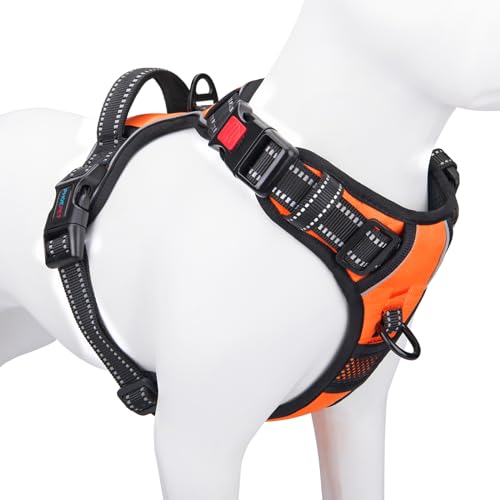
Once the harness arrives, put it on and check it while your dog stands, sits, and takes a few steps. Adjust the straps until you can slide two fingers flat under each strap at the chest and the back. A harness that is too loose can slip backward or let the dog wriggle free, while one that is too tight can rub the armpits and restrict shoulder movement.
Look at where the straps sit as well. The chest plate should lie flat over the breastbone rather than riding up toward the throat, and the back piece should sit behind the shoulder blades without pulling on the spine. Watch for fur bunching, red marks after a short walk, or a dog that keeps trying to back out of the harness. Worth reading next: Dog Harness Size Guide: How to Measure and Fit Your Dog (2026).
Quick fit checklist
- Chest and neck measured in both inches and centimeters
- Measurements compared against the specific brand’s chart
- Two fingers fit under every strap at rest
- Chest plate lies flat and does not ride up toward the throat
- Dog walks, sits, and turns without rubbing or pulling free
- Re-check after the first few walks, since coat thickness and weight change fit
Common mistakes to avoid
- Buying by weight alone and ignoring chest girth, especially for deep-chested breeds.
- Measuring over a thick coat without accounting for the fur, which can make the harness too tight once the coat lies flat.
- Leaving straps at full length, which lets the harness shift during walks.
- Assuming a puppy harness will fit for long, since puppies outgrow sizes quickly.
- Ignoring rubbing or hair loss under the armpits, which can signal a fit problem.
Recommended gear
A flexible cloth measuring tape makes it easier to get accurate chest and neck numbers, especially on a squirming dog. Look for one with both metric and imperial markings. View on Amazon
A well-fitted step-in or adjustable harness is the easiest way to test the fit described above. Choose one with clearly labeled adjustment points so you can fine-tune it. View on Amazon
FAQ
Can I use a harness from a different brand if the size matches?
Probably not without checking. Each brand builds its chart differently, so compare your measurements against the exact chart for the harness you are considering.
How often should I re-check the fit?
Check it every few weeks and after any change in weight, coat length, or season. Puppies and dogs gaining or losing weight may need frequent adjustments.
What if my dog is between two sizes?
Choose the size where your measurements sit closer to the middle of the adjustment range. If you’re unsure or your dog has a medical condition affecting the chest or shoulders, ask your veterinarian for guidance.
Conclusion
Measure your dog’s chest and neck, match those numbers to the brand’s chart, and then check the fit on your dog. Two fingers under each strap and a chest plate that lies flat are good signs you have the right size. Recheck the fit regularly, since your dog’s body will change over time.
Related reading
- Dog Harness K9 Julius: Fit, Sizing and Walking Tips for Daily Use
- Walking Dog with a Harness: Step-by-Step Guide for Safe, Comfortable Walks
- Rough Wear Dog Harness: How to Pick One That Lasts
- PetSafe Easy Walk No-Pull Dog Harness: Fit and Use Guide (2026)
- Lifting Harness for Dog: 3 Best Options for Senior and Injured Dogs (2026)
- How to Wear a Harness for Dog: A Step-by-Step Guide for Beginners
Ready to choose one?
About Claire Whitaker
Claire Whitaker is part of our editorial team and reviews and edits our everyday pet gear guides, checking product details against manufacturer specifications and owner feedback.