 By Graham Fisher
Updated November 2026
A dog harness size guide helps you get the right fit the first time, which matters for comfort, safe walks and keeping your dog from slipping out. You will learn how to take two key measurements, match them to a manufacturer chart, and run a quick fit check before you clip on the leash. The whole process takes about ten minutes and needs only a soft tape measure.
Step 1: Measure the Chest and Neck
Most harnesses are sized by chest girth, measured around the widest part of the rib cage just behind the front legs. Keep the tape level and snug but not tight, and let the dog stand naturally. Measure the neck where a collar would sit, usually just behind the ears, if the harness has a neck strap. Write both numbers down before you shop.
Shopping for one? See our guide: Buddy Belts Dog Harness vs Standard Step-In Harness: Which Should You Choose?.
Step 2: Match Your Measurements to the Brand Chart
Sizing varies by brand, so never assume a “medium” from one company matches another. Check the manufacturer’s chart and compare chest and neck ranges, not just the dog’s weight. Weight is a rough guide only, because a deep-chested breed and a barrel-shaped mix can weigh the same and need different sizes.
| Measurement | What to Check |
|---|---|
| Chest girth | Largest reading that fits within the chart range |
| Neck circumference | Snug fit where the neck strap sits |
| Dog’s weight | Only a backup reference, not the primary guide |
Step 3: Run a Fit Check
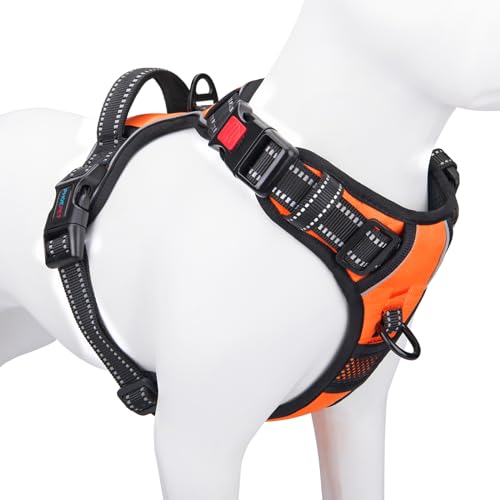
Once the harness is on, check that you can slide two fingers flat under every strap. Look for the chest strap sitting behind the front legs without rubbing the elbows, and confirm the body panel lies flat with no gaps. Ask the dog to walk a few steps and sit; straps should not shift toward the throat or ride up.
Signs the Harness Is Too Big
Watch for the dog backing out of the harness, a chest strap sliding toward the belly, or the leash clip hanging low near the ribs. Oversized harnesses can let a dog slip free during a startle, so re-measure if you see any of these. You may also like Dog Harness Sizing Guide: How to Measure and Fit Your Dog (Step-by-Step).
Signs It Is Too Small
If you cannot fit two fingers under a strap, or the dog shows pinched skin, rubbing at the armpits or reluctance to move, the harness is too tight. Adjust the straps first, and if they are already at full length, move up a size.
Common Mistakes to Avoid
- Buying by weight alone instead of chest measurement.
- Measuring over a thick coat or a dog that is standing hunched.
- Assuming a size carries over from a different brand.
- Skipping the fit check after the first walk, when straps often stretch or shift.
- Choosing a size for a puppy’s future growth, which can leave the current fit loose.
Recommended Gear
A flexible cloth tape measure makes the chest and neck readings easier to take accurately, especially on a dog that wiggles. Keep it with your leash supplies so you can re-check sizing as your dog gains or loses weight.
A harness with adjustable straps at the chest, neck and belly gives you room to fine-tune fit between sizes. Look for this feature when your dog falls between two charted ranges. View on Amazon
FAQ
How often should I re-measure my dog for a harness?
Re-measure at least once a year and any time your dog gains or loses a noticeable amount of weight. Puppies need checks every few months because they grow quickly.
Can I use the same size for a harness and a collar?
Not always. A collar sizes to the neck alone, while a harness sizes to the chest, so a dog may need different sizes for each item.
What if my dog is between two sizes?
Choose the size whose chest range fits your measurement, and use the adjustments to dial in the fit. If the dog has a deep chest or unusual build, consult the manufacturer or a certified professional trainer for guidance.
Conclusion
Measure the chest and neck, match those numbers to the brand’s chart, and run a two-finger fit check before every new harness. Taking these steps prevents rubbing, slipping and wasted returns. Re-check sizing regularly as your dog changes.
Related reading
- Dog Harness Top Paw: How to Choose and Fit the Right Size (2026)
- Dog Harness Size Chart: How to Measure and Pick the Right Fit
- Walking Dog with a Harness: Step-by-Step Guide for Safe, Comfortable Walks
- Rough Wear Dog Harness: How to Pick One That Lasts
- PetSafe Easy Walk No-Pull Dog Harness: Fit and Use Guide (2026)
- Lifting Harness for Dog: 3 Best Options for Senior and Injured Dogs (2026)
Ready to choose one?
About Graham Fisher
Graham Fisher is part of our editorial team and reviews and edits our everyday pet gear guides, checking product details against manufacturer specifications and owner feedback.