 By Ethan Brooks
Updated November 2026
A puppy kitty automatic pet feeder lets you set separate meal times and portions for a young dog and a cat, so each animal eats what it should without the other one raiding the bowl. In this guide you will learn how to choose a feeder that suits both species, place it where the cat can reach it and the puppy cannot, program portions that match each animal’s age and weight, and troubleshoot the most common problems.
What a Puppy Kitty Feeder Needs to Do
Dogs and cats have very different eating habits. Puppies eat more frequently and in larger volumes relative to body size, while cats often prefer several small meals and may graze. A feeder that works for both needs to deliver accurate portions on a timer, keep food dry and fresh, and resist being opened by a determined puppy. Many feeders sold for “pets” are really built around cats, which means their openings and bowl sizes may not suit a dog. Check the feeder’s dispensing mechanism and food container before you buy.
Shopping for one? See our guide: 4 Best Automatic Pet Feeder PetSafe Models Compared (2026).
Step 1: Choose the Right Feeder Type
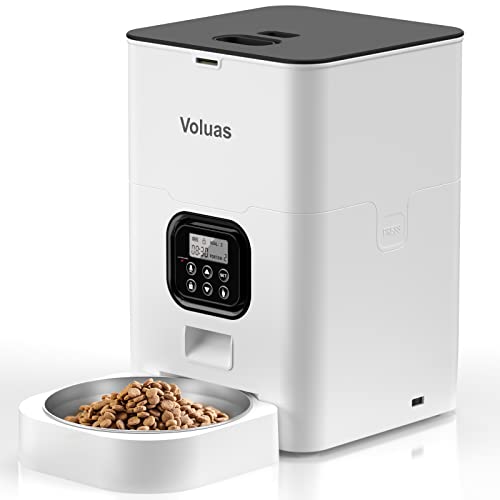
There are three common designs. Gravity or hopper feeders release food from a reservoir through a lid or chute. Carousel feeders rotate a tray of separate compartments, which suits households with more than one animal. Tray or bowl feeders are simpler and often pair a timer with a single bowl. For a puppy and a cat, a carousel-style or single-portion timed feeder with a lockable lid is usually easiest to manage.
- Lockable or locking lid to keep a puppy from reaching the food.
- Adjustable portion settings, ideally in grams or cups, so you can increase amounts as the puppy grows.
- Programmable timer with at least two or three daily meal slots.
- Food container capacity that suits your animals’ daily intake.
- Power option: batteries, mains adapter, or both. Battery backup helps when power drops.
Step 2: Gather What You Need Before Setup
- The feeder, its power adapter or batteries, and the manual.
- Your puppy’s current weight and the feeding guideline on its food bag.
- Your cat’s current weight and its daily calorie or portion target from your vet or food label.
- A measuring cup or kitchen scale, since kibble volume varies by brand.
- A stable, dry surface near an outlet, out of direct sun and away from heaters.
Step 3: Set Up the Feeder and Program Meal Times
Start by assembling the feeder and loading it with food so you can confirm the dispensing mechanism works. Then program meal times. Feed the puppy at least three times daily until about six months of age, and then move to two meals. Adult cats often do well with two to four smaller meals. Because a timed feeder can only dispense at set times, space the cat’s meals so they do not overlap with the puppy’s feeding window, or place the cat’s meal in a location the puppy cannot reach.
Sub-step: Calculate Portions Accurately
Work from the daily total on the food label, then divide it across the meals you programmed. Use a kitchen scale for accuracy, since one cup of kibble can weigh noticeably different amounts depending on the formula. Record the weight per portion so you can adjust later. Keep in mind that puppies grow quickly, and an adult cat may need fewer calories if it is less active or neutered.
| Animal | Typical meals per day | Starting approach | Adjust when |
|---|---|---|---|
| Puppy (under 6 months) | 3 to 4 | Use label amount for current weight, split evenly | Weight gain or growth spurts; check with your vet |
| Puppy (6 months and up) | 2 | Use label amount, split into two equal meals | Body condition changes |
| Adult cat | 2 to 4 | Follow vet-recommended daily amount, divided | Weight gain or loss; activity changes |
Sub-step: Test Before You Leave the Feeder Running
Run a manual dispense or set a test meal a few minutes ahead of your current time. Watch whether the portion comes out as expected and whether the lid seals. Confirm the clock matches your local time, especially after a power interruption, because a wrong clock can shift every meal.
Step 4: Place the Feeder Where Each Animal Can Eat Safely
Location matters more than most owners expect. Put the feeder somewhere the cat can jump to or access through a gap the puppy cannot fit through, such as a counter-height shelf or a baby gate that only a cat can clear. If both animals must share a room, use a double feeder setup or keep the dog’s bowl and the cat’s feeder physically separated. Never leave a feeder reachable by a puppy that chews, since swallowed plastic and kibble can cause blockages.
Step 5: Monitor Results for the First Two Weeks
Track each animal’s eating for about two weeks. Note whether the puppy finishes its portion, whether the cat leaves food in the bowl, and whether either animal seems to be stealing from the other. Weigh both animals weekly if you can. If the puppy is gaining weight unusually fast or the cat is losing weight, adjust the portion and talk to your veterinarian rather than guessing.
Common Mistakes
- Using a cat-only feeder for a puppy. Puppies can knock feeders over or pull food out, so choose a sturdy, lockable design.
- Setting one portion for both animals. A puppy and a cat need different amounts and foods. Program separately.
- Forgetting the clock after a power cut. Recheck the time and meal schedule every time the feeder has lost power.
- Overfilling the reservoir. Stale or moist food can clump and jam the dispenser. Refill in smaller amounts.
- Ignoring the puppy’s growth. Portion needs change as the puppy grows. Reassess monthly.
- Feeding human food through the feeder. Dispensers are built for dry kibble. Sticky or large pieces can jam them.
Tips for a Smoother Routine
- Keep a small log of portions and weights on the fridge or in a phone note.
- Clean the bowl and dispensing path weekly to prevent dust and oil buildup.
- Use a stable mat under the feeder to catch spills, especially if the cat is a picky eater.
- Introduce the feeder gradually, pairing it with a hand-fed treat so the animals associate it with food.
Recommended gear
A sturdy, lockable timed feeder is the core piece. Look for a model with a clear food window so you can check levels without opening the lid, which helps prevent accidental overfilling. A small digital kitchen scale is useful for weighing kibble and checking the real portion size against the label. A slow-feed bowl or a mat that catches spills can help a fast-eating puppy and a messy cat alike.
- Sturdy timed feeder with lockable lid: View on Amazon
- Digital kitchen scale for measuring kibble by weight: View on Amazon
- Spill-catching feeding mat: View on Amazon
FAQ
Can one automatic feeder serve both a puppy and a cat?
Yes, if the feeder is sturdy, lockable and programmable, and you place it where only the cat can reach it. Many households use a separate feeder or bowl for the puppy to avoid mixing food types.
How often should a puppy eat with an automatic feeder?
Most puppies under six months eat three to four times daily, and older puppies usually move to two meals. Check your vet’s recommendation, since needs vary by breed and size.
How many meals per day should an adult cat get?
Two to four smaller meals is common, but the right pattern depends on the cat’s health and activity. Follow your vet’s guidance on daily totals.
What if the puppy keeps trying to get into the feeder?
Use a lockable lid, keep the feeder on a raised surface, and block access with a gate the cat can clear but the puppy cannot. Supervise the first few days.
Why did the feeder skip a meal?
Common causes include a wrong clock setting, an empty or jammed reservoir, or a power interruption. Check these first and consult the manufacturer’s manual for error codes.
How do I know if the portion is right?
Watch body condition and weight over several weeks. A healthy puppy should have visible ribs under light fat cover and a waist when viewed from above. For a cat, adjust with your vet if weight trends up or down.
Is it safe to leave the feeder running all day?
Only if the food is dry, the feeder is clean and the schedule matches your animals’ needs. Because dispensers can fail or jam, check them daily and speak to your veterinarian about any health concerns, especially for young or senior animals.
Conclusion
A puppy kitty automatic pet feeder works well when you match the feeder design to both animals, set separate portions and times, and place it where the cat can eat and the puppy cannot reach it. Track weight and eating habits for the first few weeks and adjust as the puppy grows. When in doubt about portions or health, check with your veterinarian before changing the plan.
Related reading
- Yuposl Mushroom Automatic Pet Feeder: A Step-by-Step Guide for Beginners
- Wopet Automatic Pet Feeder: 4 Best Picks Compared in 2026
- Wopet Automatic Pet Feeder User Manual: Step-by-Step Setup Guide
- Wopet Automatic Pet Feeder Troubleshooting: Fix 6 Common Problems
- Wopet Automatic Pet Feeder Setup: 7 Best Picks Compared (2026)
Ready to choose one?
About Ethan Brooks
Ethan Brooks is part of our editorial team and reviews and edits our everyday pet gear guides, checking product details against manufacturer specifications and owner feedback.