By Claire Whitaker
Updated November 2026
A southwest airlines approved pet carrier is one that fits under the seat in front of you, stays fully closed, and keeps your pet inside the enclosure for the whole flight. This guide walks through how to check the size limits, pick between soft and hard styles, measure your pet properly, and avoid the mistakes that cause gate agents to send travelers back to the ticket counter. Use it as a checklist before you book and again the night before you fly.
Start with the Southwest in-cabin size limits
Southwest allows small dogs and cats to travel in the cabin in a carrier that is placed on the floor under the seat in front of you. The carrier must fit within the space available under that seat, and the airline publishes maximum outside dimensions that you should confirm on its official pet travel page before purchase, since policies can change. Manufacturers of carriers often label their products as “airline compatible” or “under-seat,” but that label does not guarantee acceptance, so compare the listed outside measurements against the airline’s current numbers yourself.
Check three things before you shop:
- The maximum outside length, width and height allowed for in-cabin carriers.
- The weight limit for the combined pet and carrier.
- Whether your pet must be able to stand, turn around and lie down comfortably inside the carrier.
Because rules can be updated, check the official Southwest site for current hours, fees and restrictions before you travel. For broader context on the rules, see Southwest Airlines Pet Carrier Rules: What Fits Under the Seat and Southwest Airlines Pet Carrier Policy: What You Need to Know Before You Fly.
Measure your pet before you measure the carrier
Many travelers buy a carrier that fits the airline’s maximum dimensions but leaves their pet cramped. Measure your pet first, then work backward to find a carrier that is both legal and comfortable.
How to measure your pet
- Length: measure from the base of the neck to the base of the tail, with your pet standing naturally.
- Height: measure from the floor to the top of the head or ears, whichever is taller, while your pet is seated upright.
- Width: measure across the widest part of the body, usually the shoulders or hips.
- Weigh your pet on a bathroom scale, holding the pet and subtracting your own weight.
A good rule of thumb is that your pet should be able to stand up, turn in a full circle and lie down without touching the top or sides. Add a little room for bedding and a comfort layer.
Measuring the carrier you already own
Measure the outside length, width and height of the carrier, including handles, wheels and any mesh pockets that stick out. Airlines usually measure outside dimensions, so a carrier with thick padding or a bulky base may fail a check even if the interior looks roomy.
Choose between soft and hard carriers
Both styles can work for Southwest cabin travel. The right choice depends on your pet’s temperament, your luggage habits and how much the carrier needs to flex.
| Feature | Soft-sided carrier | Hard-sided carrier |
|---|---|---|
| Flexibility under the seat | Can compress slightly to fit tight spaces | Fixed shape, so measurements must be exact |
| Ventilation | Mesh panels on multiple sides | Usually vents on fewer sides |
| Weight | Typically lighter | Typically heavier |
| Best for | Calm pets and frequent travelers | Pets that need firm walls or a stable base |
For a deeper comparison, read Southwest Airline Pet Carrier Requirements (2026): Soft vs Hard Carrier Compared and Soft vs Hard Pet Carriers (and Backpacks vs Totes). Soft-sided options are covered in more detail in Soft-Sided Pet Carriers: Airline Travel, Sizing and Comfort.
Checklist before you buy a pet carrier for Southwest
- Confirm the airline’s current maximum outside dimensions.
- Measure your pet and confirm the interior allows standing, turning and lying down.
- Check that the carrier stays fully zippered or latched with no open gaps.
- Verify it has ventilation on at least two sides, with mesh that a pet cannot push through.
- Look for a waterproof or leak-resistant liner and a secure, anchored floor.
- Test the carrier at home with a sample of bedding to confirm it still fits when packed.
Prepare the carrier for the flight
Get your pet used to the carrier
Leave the carrier out in your home with the door open and a familiar blanket inside. Place treats near and then inside the carrier. Short practice sessions of a few minutes each, spread over several days, help many pets settle when it is time to fly.
Pack the carrier correctly
Use a absorbent pad or washable blanket on the floor. Avoid loose toys with small parts and avoid heavy bedding that could overheat your pet. Keep identification tags on your pet and make sure the carrier has an identification tag with your name and a current phone number.
Plan for the airport
Measure how the carrier fits under a seat before you leave home if you can. At the gate, agents may ask you to verify the carrier size, so keep your pet’s health documentation and any required paperwork easily accessible. Call ahead or check the official site to confirm any documentation requirements for your route.
Common mistakes that get travelers turned away
- Buying based on a brand’s “airline approved” label without checking the current airline dimensions.
- Measuring the carrier’s interior instead of its outside dimensions.
- Forgetting that handles, wheels or padded bases add to the outside size.
- Overpacking the carrier with bedding, which can make it bulge past the limits.
- Choosing a carrier that fits your pet only when lying down, not when standing or turning.
- Leaving the carrier open or using a zipper that does not fully close.
Recommended gear
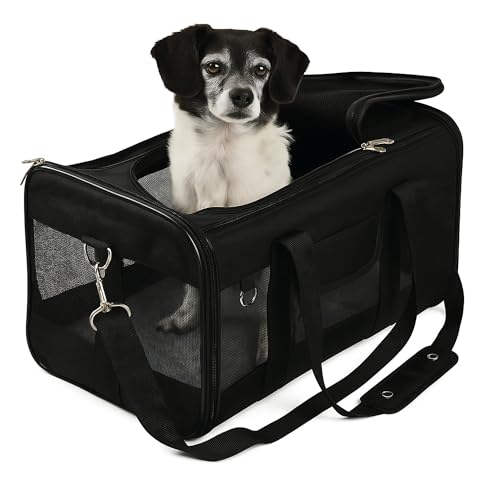
A soft-sided, mesh-paneled carrier sized to the airline’s limits is the most common choice for under-seat travel. Look for one that sits flat, holds its shape and has a removable, washable liner. View on Amazon
A small, washable absorbent pad helps keep the carrier clean on long flights and makes cleanup easier at the destination. View on Amazon
A soft collapsible water bowl that attaches to the carrier door can help you offer water without opening the carrier during the flight. View on Amazon
FAQ
Does Southwest require a specific brand of pet carrier?
No. Southwest sets size and safety requirements rather than endorsing a particular brand. Any carrier that meets the published outside dimensions and keeps your pet fully enclosed can be used.
Do I need to measure the carrier myself if it says airline approved?
Yes, it is a good idea. Marketing labels vary, and the airline’s dimensions can change. Measure the outside length, width and height of the carrier and compare them to the current numbers on the official Southwest site.
Can my pet come out of the carrier during the flight?
Pets generally must remain inside the carrier for the entire flight, including during boarding and deplaning. Check the official policy for exact rules, since they can be updated.
Is a soft carrier or a hard carrier better for Southwest?
Either can work. Soft carriers can flex to fit under the seat, while hard carriers offer firmer walls. Choose based on your pet’s temperament and how precisely the carrier matches the airline’s limits.
What should I put inside the carrier?
A washable absorbent pad and a small amount of familiar bedding are usually enough. Avoid bulky items that could push the carrier past its size limit or make your pet overheat.
What if my carrier is slightly too big at the gate?
Gate agents may refuse boarding if the carrier does not fit the required space. Measure carefully before you travel, and if your carrier is borderline, consider a slimmer option that still gives your pet enough room.
Should I consult a veterinarian before flying with my pet?
Yes. A veterinarian can confirm whether your pet is fit to fly, advise on anxiety management and tell you what health documentation may be needed. This is especially important for brachycephalic breeds, senior pets and pets with medical conditions.
Conclusion
A southwest airlines approved pet carrier starts with the airline’s current outside dimensions, a realistic measurement of your pet and a carrier that stays closed and ventilated. Choose a soft or hard style based on what your pet tolerates best, and practice with the carrier at home before the trip. Check the official Southwest site for current rules before you book, and you will avoid most of the surprises that cause trouble at the gate.
Ready to choose one?
About Claire Whitaker
Claire Whitaker is part of our editorial team and reviews and edits our everyday pet gear guides, checking product details against manufacturer specifications and owner feedback.