 By Claire Whitaker
Updated November 2026
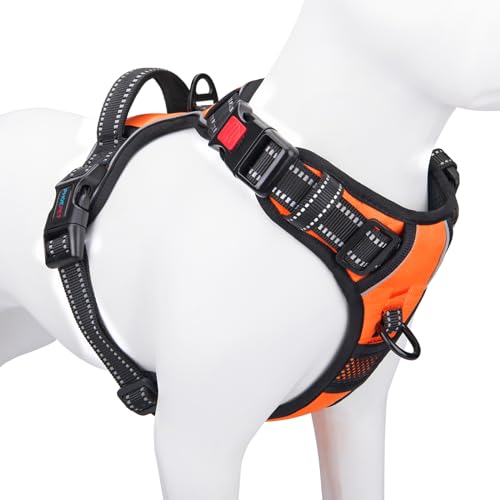
A dog harness 2 hounds design fits best when you measure your dog correctly, adjust each strap to the right tension, and check the fit before every walk. This guide walks you through measuring, fitting, and testing the harness so it sits comfortably on your dog’s chest and shoulders without rubbing or slipping. Once you finish, you will know whether the harness is working for your dog or needs a small change.
Measure Your Dog Before You Buy or Adjust
Manufacturers of the 2 Hounds Design harness publish size charts based on chest girth, measured around the widest part of the rib cage just behind the front legs. Use a soft tape measure and keep it snug without compressing the fur. Also measure neck circumference if the chart lists it, since that affects the collar-style strap placement.
Shopping for one? See our guide: Buddy Belts Dog Harness vs Standard Step-In Harness: Which Should You Choose?.
Compare your numbers to the chart rather than guessing from your dog’s breed or weight. Two dogs of the same weight can have very different chest shapes, and a deep-chested hound will need a different size than a broad, short-bodied dog. Worth reading next: Dog Harness Size Guide: How to Measure and Fit Your Dog (2026).
Fit the Harness Step by Step
Lay the harness flat, then guide your dog’s front legs through the openings. Fasten the buckle on the back, then tighten the adjustment straps evenly on each side. Consult a veterinarian or certified trainer if your dog has a shoulder, spine or joint condition before changing how a harness sits on the body.
- Slide two fingers under the chest strap. If you can’t, loosen it.
- Check the strap behind the front legs. It should sit flat and not dig into the armpit.
- Make sure the leash attachment sits in the center of the back or on the chest, as the design specifies.
- Walk your dog a few steps indoors and watch for rubbing, bunching, or the harness shifting toward the neck.
Check Leash Attachment and Pulling Control
The main reason owners choose this style of harness is the way it distributes pressure across the chest rather than the neck. Owners often report that dogs who pull on a collar settle more easily when the leash clips to a chest or front point, though results vary by dog and training history. If your dog still pulls hard, the front-clip versus back-clip choice matters; the article Front-Clip vs Back-Clip Dog Harness: Which One Is Better? explains the trade-offs.
Keep the leash loose and short enough that you can guide your dog without lifting the front of the harness off the chest. Lifting the harness can shift it up toward the throat and reduce comfort.
Recognize a Harness That Fits Wrong
A harness that is too loose will slide and may let your dog slip out. One that is too tight restricts breathing and movement. Use this table as a quick reference during your first few weeks.
| What you see | Likely cause | What to do |
|---|---|---|
| Harness slides toward the neck | Chest strap too loose or wrong size | Tighten the chest strap or check the size chart |
| Red patches under the legs | Strap too tight or rubbing | Loosen slightly and check again after a walk |
| Dog backs away when you lift it | Discomfort or poor fit | Stop use, recheck measurements, consult a professional if it persists |
Common Mistakes to Avoid
- Buying by weight alone instead of chest girth.
- Leaving the harness on for long periods without checking the fit.
- Tightening straps until the fur is flattened, which hides real tightness.
- Skipping the indoor test walk before going outside.
- Assuming a harness that fits one dog will fit a puppy, since growth changes the sizing.
Recommended gear
- Soft tape measure: Gives an accurate chest girth reading that matches the size chart. View on Amazon
- Short padded leash: Keeps the leash line close to the chest attachment for better control. View on Amazon
- Reflective strap set: Improves visibility on early-morning or evening walks. View on Amazon
FAQ
How tight should a dog harness 2 hounds design be?
You should be able to fit two fingers flat under the chest strap without force. It should stay in place when your dog moves but not restrict breathing or walking.
Can I use this harness on a puppy?
Puppies grow quickly, so check the size chart often and adjust the straps every few weeks. Ask your veterinarian if you are unsure whether the fit is safe for your puppy’s stage.
How often should I check the fit?
Check it before each walk for the first few weeks, then at least once a week after that. Recheck after your dog gains or loses weight.
Conclusion
Measuring your dog, fitting each strap evenly, and testing the harness indoors will cover most fit problems. Recheck the fit regularly, especially for puppies and dogs whose weight changes. With a well-fitted harness, daily walks become more comfortable for both of you.
Related reading
- 2 Hounds Design Freedom No Pull Dog Harness: Fit and Use Guide (2026)
- 2 Hounds Freedom No-Pull Dog Harness: How to Fit and Use It for Calm Walks
- Walking Dog with a Harness: Step-by-Step Guide for Safe, Comfortable Walks
- Rough Wear Dog Harness: How to Pick One That Lasts
- PetSafe Easy Walk No-Pull Dog Harness: Fit and Use Guide (2026)
Ready to choose one?
About Claire Whitaker
Claire Whitaker is part of our editorial team and reviews and edits our everyday pet gear guides, checking product details against manufacturer specifications and owner feedback.